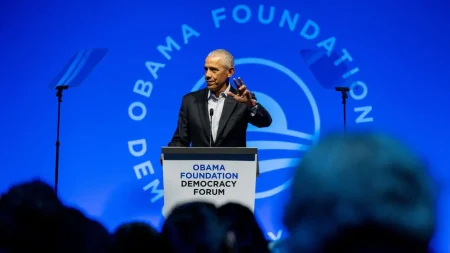



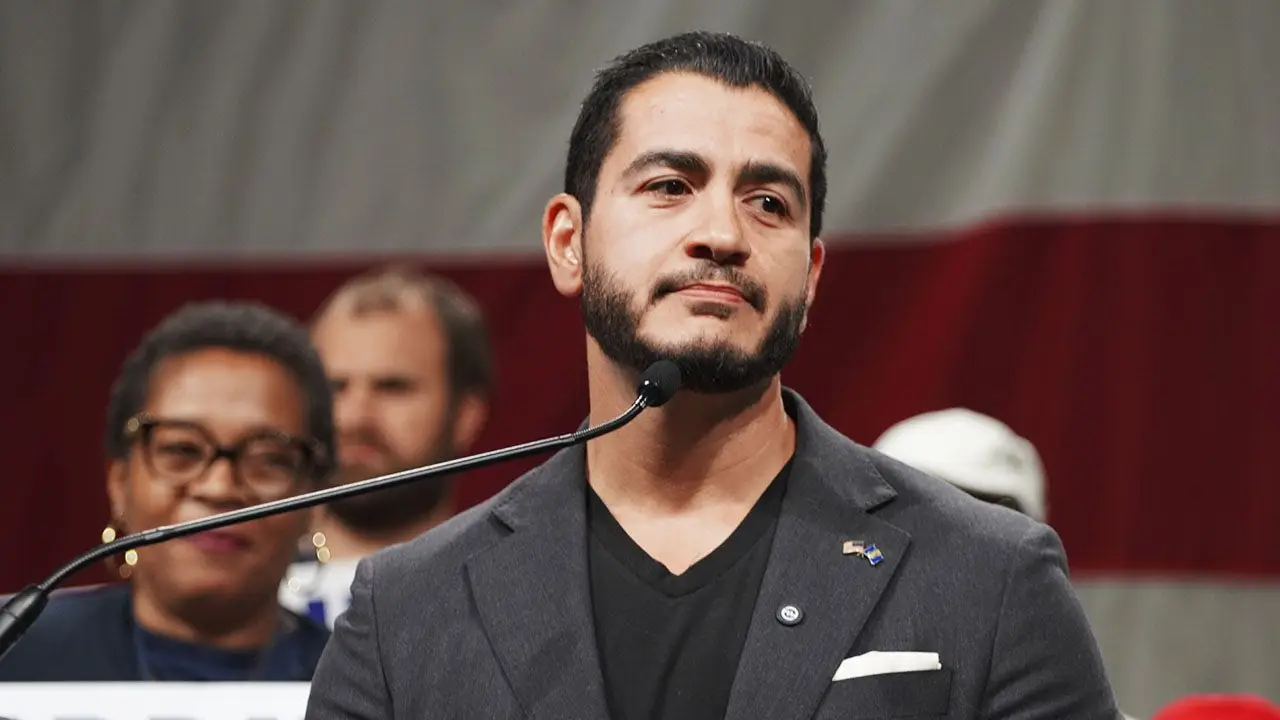
It was one of those moments in a political campaign when the private and the public suddenly collide, and there is no time to prepare, no script to soften the blow. Abdul El-Sayed, the Michigan Democratic Senate candidate, stood before Fox News senior correspondent Mike Tobin and heard a question that had been circling in the shadows for days: Was his sister-in-law, Mariam Jukaku, really on the federal government’s terrorist watchlist? The court documents said yes, she had been a plaintiff in a 2016 lawsuit challenging her placement in the Terrorism Screening Database. El-Sayed paused, then answered with a simple, heavy “Yeah.” It was not a confession of wrongdoing, and he did not treat it as one. For El-Sayed, this was not a national security scandal but a family story wrapped in the machinery of suspicion — a story about his sister-in-law, a woman he clearly loves and defends, who was flagged at an airport, never given a clear answer, and had to fight her way through the courts to try to clear her name. And the timing could not have been more awkward, because only days later, former President Barack Obama was scheduled to stand beside El-Sayed at a rally in Michigan, hoping to energize voters ahead of the Nov. 3 midterm election. The attack had landed just before the biggest moment of the campaign.
To understand what happened, you have to go back to 2012, when Mariam Jukaku’s ordinary travel through an American airport became something else entirely. She was pulled aside for additional screening, questioned, searched, and delayed — not because of anything she said or did that day, but because her name apparently appeared on the federal government’s Terrorist Screening Database, more commonly known as the terrorist watchlist. No one ever told her why she was flagged. No explanation was offered, no evidence presented, no hearing held. She was simply treated as a threat, then released into the world with the unspoken suspicion hanging over her. In 2016, she joined a lawsuit challenging her alleged placement on that list, not necessarily because she wanted to make a political statement, but because she wanted her life back. The complaint described her experience in stark terms: being stopped at security, being treated differently from other travelers, and never being told what she had done or whether she would ever be free from the shadow. By the time the lawsuit was filed, she and her lawyers believed she had been removed from the watchlist, but the damage had already been done. Imagine the feeling of walking through an airport, knowing that somewhere in a government computer system your name is marked, and not knowing why or how to fix it. That is the reality Jukaku faced, and it is the reality that eventually pushed her into federal court.
For El-Sayed, the defense of his sister-in-law was immediate and personal. “She did nothing wrong and was captured on that and then sued and got off,” he said, his words carrying the frustration of someone who has watched a loved one be treated unfairly. Then he turned the criticism outward, toward his Republican opponent Mike Rogers, arguing that the system itself is broken. “You’ve got this system where folks are guilty until proven innocent because they’ve got different kinds of names, because of the infrastructure that people like Mike Rogers set up,” El-Sayed said. It was a sharp political jab, but it was also a deeply human one. He was not just talking about policy; he was talking about his family, about what it feels like to see someone you love judged not by their actions but by their name, their background, their faith. The reality of the legal case, however, is more complicated than El-Sayed’s summary suggested. Jukaku did sue, and at one point there was a ruling that favored the plaintiffs, but a federal appeals court overturned that ruling in 2021, and a separate lawsuit seeking damages was dismissed in 2017. So while El-Sayed said she “sued and got off,” the legal record is mixed. But for a family, vindication is not always a court ruling. Sometimes it is simply the ability to tell their side of the story, to stand in front of cameras and say, “My sister-in-law did nothing wrong,” and mean it with every ounce of conviction they have.
This latest controversy did not appear out of nowhere. It came after weeks of escalating attacks in a fiercely competitive Senate race, with Rogers and his allies trying to paint El-Sayed as too radical, too disconnected from mainstream voters, and even dangerous. Earlier, there had been separate allegations about El-Sayed’s family’s purported connections to the Muslim Brotherhood, claims that his campaign dismissed as “racist and untrue.” But Rogers did not back away. He called the watchlist allegations “disqualifying” on Saturday, using them to suggest that El-Sayed’s judgment was somehow compromised by his family ties. It is a familiar pattern in American politics: when candidates cannot be attacked directly, their families are dragged into the spotlight, held up as evidence of some hidden loyalty or secret agenda. The human cost of this strategy is real, because behind every attack line is a real person. Mariam Jukaku is not a political symbol; she is a wife, a sister-in-law, a professional, a traveler who once went to an airport and found herself caught up in a national security net. She did not ask to become a campaign issue, and she did not choose to have her name splashed across cable news. But she has become a pawn in a larger battle, and the momentum of the race has turned her private ordeal into public entertainment.
The FBI, for its part, offered the same answer it always offers in such cases: it will neither confirm nor deny whether any individual is on the watchlist. That policy is designed to protect intelligence sources and methods, but it also creates an impossible situation for people like Jukaku. If the government will not tell you why you are being watched, and will not even confirm that you are being watched, how are you supposed to clear your name? You can sue, but the government can hide behind procedure. You can demand answers, but the answers never come. This is the “guilty until proven innocent” system El-Sayed spoke of, and it is one that falls hardest on people whose names sound unfamiliar to the authorities. The lawsuit itself did not establish any wrongdoing by Jukaku or El-Sayed, and no one has ever presented evidence that she was involved in terrorism. But in the court of public opinion, the accusation alone is enough to leave a stain. The family is left to fight not only for legal vindication but for basic human dignity, trying to prove a negative, trying to show that they are exactly who they say they are: ordinary Americans with ordinary hopes, who happen to have a name that was once flagged in a database.
In the end, this is a story about what happens when politics comes for a family. El-Sayed is not asking voters to feel sorry for him; he is asking them to understand that his sister-in-law was caught in a system that treated her as a threat without ever proving it. He is asking them to see the human being behind the court documents, the woman who went through extra screening at an airport, who had to hire lawyers, who had to wait years, who had to live with the uncertainty of not knowing whether her name would ever be cleared. And he is asking them to question the people who built that system, including his opponent. Whether voters will accept that framing is another question. In a race defined by attacks and counterattacks, by Israel and Iran, by debates that erupted into personal clashes, this moment may not change many minds. But it does reveal something about character. El-Sayed chose to stand with his sister-in-law, publicly and unapologetically, even at a moment when it might cost him votes. He chose to talk about her as more than a legal case, more than a campaign controversy, more than a political footnote. And in doing so, he reminded us that behind every name on a watchlist, behind every headline and every lawsuit, there is a person with a family, a history, and a story that cannot be reduced to a simple question of guilt or innocence. Before Obama arrives in Michigan, before the election decides which man will represent the state in the Senate, there is a sister-in-law standing in the glare of the spotlight, hoping that the truth will be enough.