


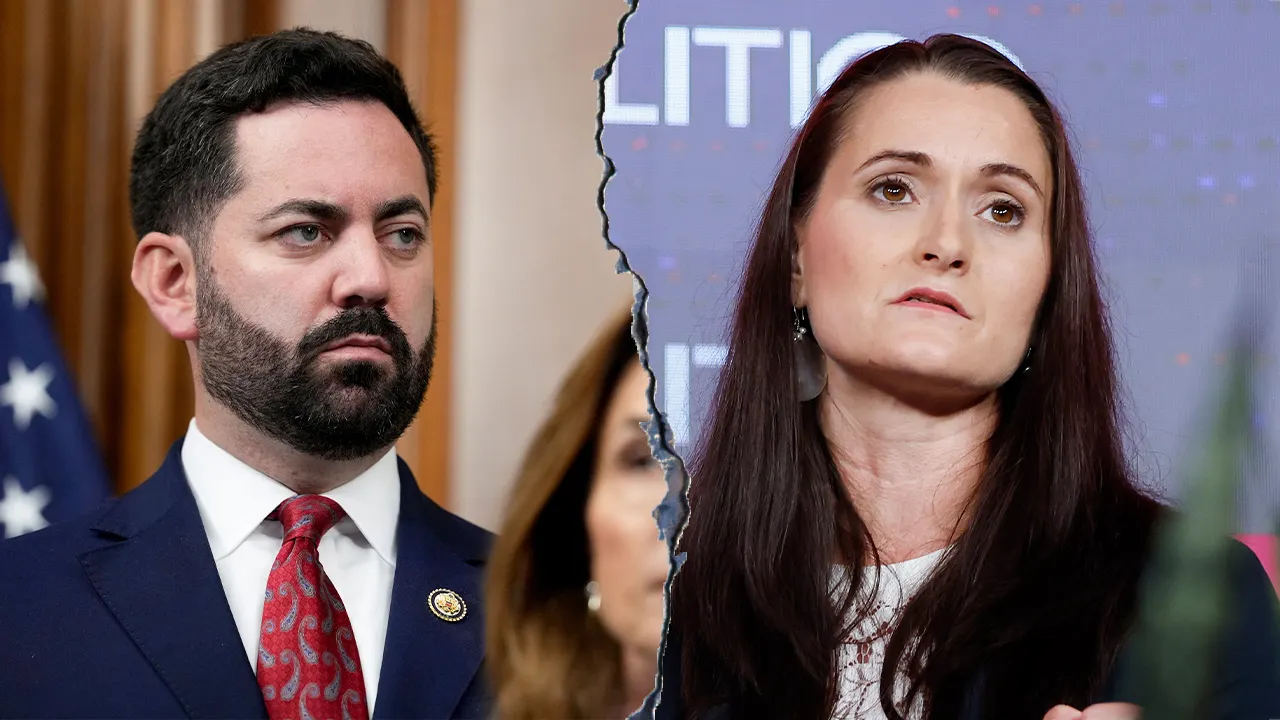
In the dimly lit auditorium of a suburban New York high school, with less than three weeks to go before Election Day, Representative Mike Lawler and his Democratic challenger Cait Conley faced off Wednesday night in a debate that crackled with tension from the opening handshake to the final, almost apologetic moment of civility. The district they are fighting for—New York’s 17th Congressional District—is not just another seat in the House. It is a fiercely contested, politically moderate slice of the New York City suburbs, a place where the national divide often feels uncomfortably personal. Lawler, a Republican who has positioned himself as an independent voice within his conference, is seeking a third term in a district that has become ground zero for the battle over control of the House. Conley, a former national security official who recently moved to the district from Virginia, argues that Lawler has traded his moderate credentials for loyalty to Donald Trump. Both candidates came prepared for a fight, but neither anticipated just how quickly the night would unravel into a series of interruptions, accusations, and raw emotional exchanges that laid bare the stakes not only for the district but for the country.
The most explosive clashes came over immigration, a topic that has transfixed the region after a series of high-profile incidents involving federal agents and local sanctuary laws. The moderator raised the recent shooting of an illegal immigrant by U.S. Immigration and Customs Enforcement agents in New York City, a moment that left a five-year-old child in the car and ignited a firestorm of controversy. Conley seized on the incident, her voice sharp with frustration, arguing that while border security is a matter of national security, the conduct of ICE in that moment represented what she called a “public safety hazard.” She invoked her own background in law enforcement to insist that no officer should be firing into a vehicle with a child present. Lawler, however, refused to let the framing stand. He pointed out that the man in question had a lengthy criminal record and was considered a danger to the community, and he pivoted to what he described as the root cause: New York’s sanctuary policies that prevented local law enforcement from turning the man over to ICE in the first place. “She supports making New York a sanctuary state,” Lawler charged, his voice rising. “She prohibits cooperation between local law enforcement and federal immigration officials.” The exchange set the tone for the rest of the debate, with both candidates talking over each other and the moderator struggling to regain control.
The immigration debate only intensified when Lawler brought up the case of Sheridan Gorman, a college student from his district who was killed while out with friends near her campus in Chicago earlier this year. The illegal immigrant accused of her murder had a prior shoplifting charge, but Chicago’s sanctuary policies meant that local authorities did not hand him over to ICE. Conley called Gorman’s death “an atrocious crime,” but she repeatedly noted that it happened in Chicago, suggesting that it was not directly relevant to the district’s own policies. Lawler would have none of it. He tried to interrupt, calling the death “preventable,” and Conley snapped back, “Can I finish?” The moment was visceral, the kind of raw exchange that defines local elections in an era of nationalized politics. Conley tried to pivot, insisting that she supports federal law enforcement and the deportation of violent criminals. But Lawler pressed his advantage, laying out the logical chain of events: if the suspect had been turned over to ICE after his shoplifting arrest, he would not have been free to commit murder. “Under the new law that you support, he will not be turned over to ICE,” Lawler said, referring to sanctuary policies and cashless bail. “He will be released under cashless bail.” The moderator stepped in, reminding Lawler that there was no cross-examination round, but the damage was done. For voters watching at home, the exchange crystallized the divide between the candidates on one of the most emotional issues in American politics.
Beyond immigration, the debate delved into tax policy and legislative records, where Lawler accused Conley of misrepresenting his voting history. Conley had claimed that Lawler votes with Trump 100 percent of the time, a statement Lawler called a flat-out lie. “I’ve been rated the third most independent member of my conference,” he said, listing the times he had broken with the president, including lifting the cap on the State and Local Tax (SALT) deduction, extending Temporary Protected Status for Haitians, and supporting an extension for the Affordable Care Act’s enhanced premium tax credit. Conley, undeterred, tried to paint Lawler as a rubber stamp for Washington Republicans, focusing on the One Big Beautiful Bill Act and what she described as tax breaks for companies building data centers. Lawler responded with a pointed critique of Conley’s own connection to the district, noting that she had recently moved from Virginia. “I know you just moved here from Virginia, so it’s hard for you to understand the local communities,” he said, before explaining that the provision she referenced was actually $80 billion for 100 percent expensing that would benefit small businesses across the Hudson Valley. “Your attack on that rings hollow,” he added. “You clearly don’t understand what’s actually in the tax bill. And part of the problem is you don’t pay property taxes.” Conley fired back that her opponent was dodging the real issues, but Lawler’s attack on her status as a newcomer—and his repeated emphasis on local knowledge—seemed to resonate with the moderator and the audience.
Amid the heat and acrimony, there were brief flickers of humanity that reminded viewers these two were not just opponents, but fellow citizens trying to serve their country in different ways. After the debate concluded, both candidates shook hands and exchanged pleasantries. Lawler made a point of thanking Conley for her military service, a gesture that cut through the tension of the previous hour. It was a stark contrast to the heated exchanges over immigration and taxes, and it highlighted the complexity of a race that has drawn millions of dollars in outside spending. The district is one of only three in the country that was won by both Donald Trump and Kamala Harris in recent presidential cycles, making it a bellwether of the national mood. Both parties understand that capturing this seat could determine the narrow balance of power in the House for the remaining years of Trump’s presidency. For the local voters who packed the auditorium, the debate was not just a political spectacle; it was a chance to see the candidates tested under pressure, to hear them respond to the issues that matter most in their daily lives, and to decide whether they can trust either one to represent them in Washington.
In the end, the debate offered no clear knockout, but it revealed the fault lines that will decide the election. Lawler presented himself as a pragmatic legislator who can work across the aisle while still standing firm on issues like border security and public safety. Conley offered herself as a fighter for the district’s progressive values, but her recent move from Virginia opened her to attacks about authenticity, and her nuanced position on immigration left her vulnerable to Lawler’s relentless framing. For voters, the choice is not just between two candidates, but between two visions of what the suburbs want in the age of Trump. Do they want an independent-minded Republican who can leverage his position to protect tax deductions and bring home federal dollars, or do they want a Democrat who will stand against the administration’s immigration policies and push back against the GOP agenda? The debate did not answer that question, but it sharpened the stakes. With just three weeks to go, and with the eyes of the nation fixed on this small corner of New York, both candidates left the stage knowing that every word they said—every interruption, every accusation, every moment of civility—could make the difference in a race that might very well determine who controls Congress. And as the lights dimmed and the crowd filed out, the only certainty was that this fight was far from over.