


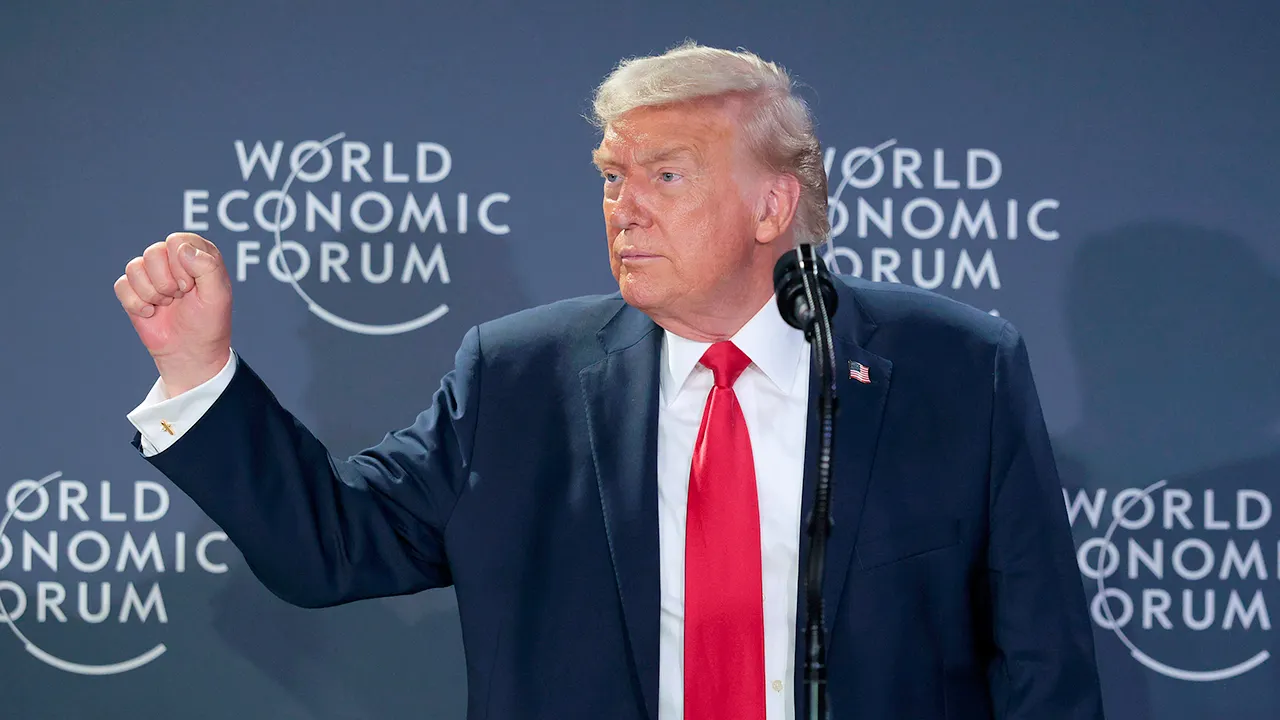
President Donald Trump has once again put Greenland front and center on the world stage, and this time he is promising something big. In a characteristically bold Truth Social post on Wednesday, Trump announced that “massive” oil, gas and mineral exploration was “getting ready to begin in our new and beautiful Greenland!” The words “our” and “beautiful” are classic Trump flourishes, painting the icy island not just as a strategic asset but as something almost personal. He described the island as a treasure chest of natural resources, writing, “There are Experts that are saying that the amount of easily available Oil is far greater than that of almost any land, anywhere in the World.” That is an enormous claim, especially for a place where large-scale commercial oil extraction has never actually taken off. But Trump wasn’t just talking about money or energy independence. He framed Greenland as the ultimate shield and sentry for the Western world. “Any future attack on the United States will have to come across Greenland, where our Defense will routinely knock down drones, missiles, or any other form of weapon not yet even conceived,” he said. It is a striking image: the vast, frozen expanse of Greenland serving as a first line of defense in a world where threats can come from anywhere, at any time, in forms we cannot yet imagine.
Trump went on to explain why the island is so uniquely valuable from a military standpoint, and he did so in the kind of simple, almost poetic language that defines his public speaking style. “Greenland gives us time, location, and sightline, like nowhere else in the World!” he wrote. For people who follow military strategy, that phrase actually makes a great deal of sense. Greenland sits right between North America and Europe, and its position along the Arctic routes means that anything coming over the North Pole toward the United States would likely pass near or over its territory. Having advanced radar, missile defense systems, and air bases there would give the U.S. crucial extra minutes to react to an incoming threat. It also gives the U.S. a front-row seat to everything happening in the Arctic, a region that is becoming more crowded and contested as ice melts and new shipping lanes open. Trump’s enthusiasm, while often dismissed as impulsive, taps into a real and growing concern among military planners: the Arctic is no longer a frozen backwater, but a potential flashpoint. And Greenland, with its massive size and relatively small population, offers something that almost nowhere else can: vast open space, relative isolation, and a location that is strategically unmatched. Trump did not provide any details on when or how this exploration would actually begin, and the White House has not commented yet, but the message was unmistakable. He sees Greenland as America’s northern fortress, a place to watch, protect, and profit from all at once.
But there is a huge gap between Trump’s vision and the current reality on the ground in Greenland, and that gap is where things get complicated. For all the talk of vast oil and gas reserves, the people who actually run Greenland have not been eager to drill. In fact, Greenland’s government stopped issuing new oil and gas exploration licenses back in 2021, citing serious concerns about the environment and climate change. That decision was not a small one; it reflected a real political shift on the island, where many people worry that oil development could damage the pristine natural environment that is central to their identity, their tourism industry, and their way of life. Some previously issued licenses are still technically valid, but even those would require additional government approvals before any actual drilling could begin. That is a high hurdle. And while geologists believe Greenland could hold significant untapped oil and gas resources, no one has actually established that these resources can be extracted at a cost that makes commercial sense. The Arctic is brutal. The weather is extreme, the ice is unpredictable, and the infrastructure is almost nonexistent. Companies have tried before, and they have mostly walked away disappointed. So Trump’s “massive exploration” is far from a done deal. It is more like a political statement, a vision, or maybe even a wish. But it does put the spotlight back on Greenland’s mineral wealth, which includes rare earth elements, zinc, gold, and other critical minerals that are increasingly important for modern technology, defense systems, and the global transition away from fossil fuels. That part of the equation is real, and it is why so many countries are suddenly paying attention to this remote island.
The context for Trump’s latest comments is a new security agreement signed last month between the United States, Denmark, and Greenland, and that agreement is a genuinely big deal in the world of geopolitics. Under the previous arrangement, a defense agreement from 1951, the U.S. already had extensive military rights in Greenland, including the famous Thule Air Base, which serves as a critical early-warning radar site and air base. But the new pact goes much further. It expands Washington’s ability to establish additional military facilities on the island, subject to consultation and procedures laid out in the agreement. That means the U.S. can build new bases, radar stations, or other infrastructure in places it might not have been able to before. The agreement also contains provisions that restrict military installations by non-NATO countries, a clear message aimed at Russia and China, both of which have been increasing their presence and influence in the Arctic. It even sets up safeguards against potentially threatening foreign investments in sensitive sectors, including natural resources and critical infrastructure. That is a significant step, because it means Greenland and Denmark are now actively working with the U.S. to keep hostile foreign money and influence out of the island’s most important assets. Security experts have called the pact a “big deal,” with some comparing its significance to the Alaska Purchase in terms of strategic importance. But one thing the agreement does not do is give the U.S. sovereignty over Greenland. Despite Trump’s repeated interest in buying the island, which he has argued is necessary for national security, Denmark and Greenland have made it clear that Greenland is not for sale.
To understand why this all matters so much, you have to look at the broader picture of what is happening in the Arctic right now. Climate change is rapidly melting ice that used to make the region impassable for much of the year. New shipping routes are opening up between the Atlantic and Pacific Oceans, cutting travel times for cargo ships and, more importantly, for naval vessels. The Arctic is believed to hold roughly 13 percent of the world’s undiscovered oil and about 30 percent of its undiscovered natural gas, according to some estimates, along with vast deposits of critical minerals. Russia has been pouring resources into its Arctic bases and icebreaker fleet, and China has declared itself a “near-Arctic state” and has been investing in infrastructure and research in the region. The United States has been playing catch-up, and Greenland is a key piece of that puzzle. It is strategically located along the shortest path between North America and Europe, and it commands the air and sea lanes that any adversary would have to use to threaten the U.S. homeland. For decades, this was all theoretical. The Cold War made the Arctic a tense but quiet frontier. But now, with great power competition returning, with new technologies like hypersonic missiles and drones, and with the physical environment changing faster than ever, Greenland is no longer a frozen afterthought. It is a frontline. Trump’s fixation on Greenland, which once seemed like an odd obsession, now looks more and more like foresight. He saw the strategic importance long before many others were willing to say it out loud. And while his methods and his language can be blunt, the underlying message is one that military planners on both sides of the Atlantic are increasingly taking seriously.
So where does this leave us? It is entirely possible that Trump’s “massive” exploration announcement is more about political messaging than immediate action. There is no clear timeline, no announced investment, no companies signed up, and no indication that Greenland’s government has changed its position on new drilling licenses. The reality on the ground is that any oil and gas exploration in Greenland would take years, if not decades, to get through the legal, environmental, and logistical hurdles. And the people of Greenland, who have been navigating their own path between Denmark and the wider world, are not going to simply hand over their land to foreign interests, even those of a powerful ally. They have their own government, their own laws, and their own priorities. At the same time, the broader trend is undeniable. The United States is deepening its military and strategic relationship with Greenland, and that relationship is now more formalized and more expansive than it has been in decades. The new security agreement, the growing interest in Arctic resources, and the increasing threats from Russia and China all point in the same direction: Greenland matters, and it matters more now than at any time since the Cold War. Trump’s words may be characteristically oversized and full of bravado, but they reflect a real and important shift in how the United States views the Arctic and its own security. The island may not be “new” in any literal sense, and it is not “ours” in any legal sense, but it is undeniably at the center of a new era of geopolitics. Whether the massive oil and gas exploration ever actually begins remains to be seen. But the conversation Trump has started, and the agreements his administration has pushed forward, have already changed the way the world looks at this vast, frozen, and suddenly very important island.