


Paragraph 1: A Radical Proposal Enters the Spotlight
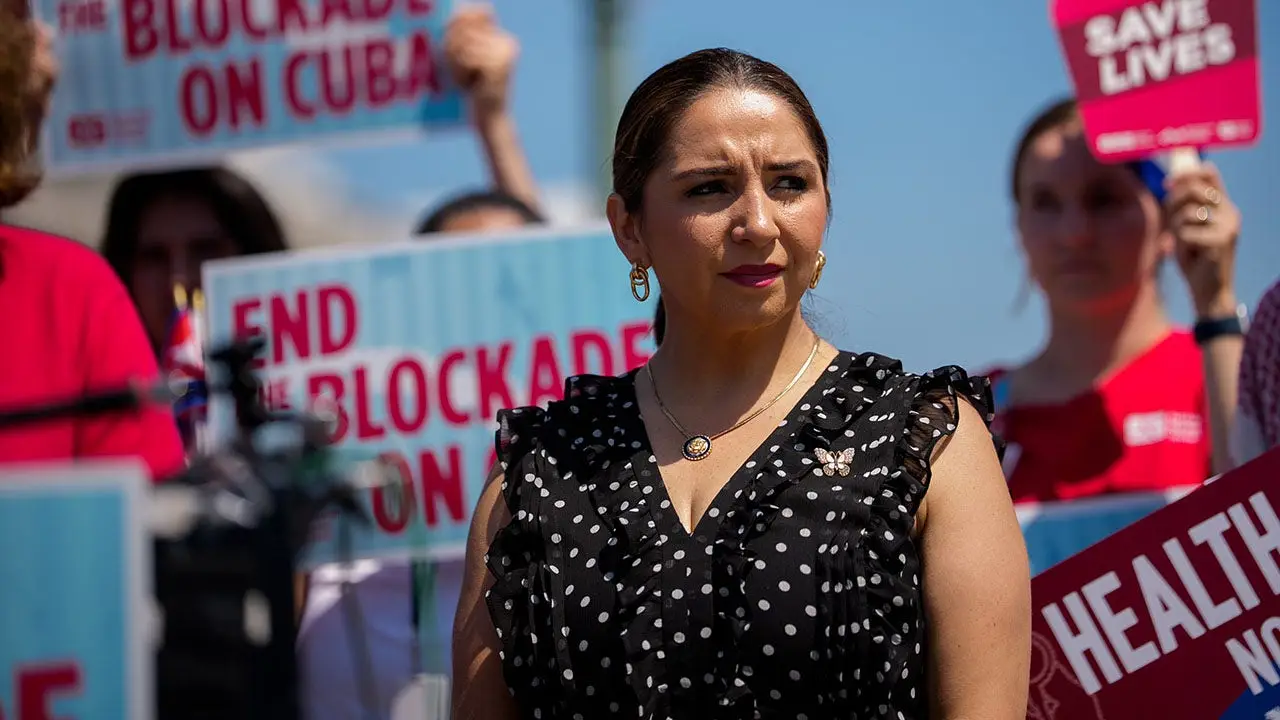
Imagine waking up to a headline that says the very agency designed to protect the country after 9/11 might one day cease to exist. That’s exactly the kind of conversation that Representative Delia Ramirez of Illinois wants to start. The Democrat, a member of the progressive “Squad,” has formally introduced a sweeping piece of legislation called the Reimagining Safety Act, and it’s not a modest tweak or a simple budget adjustment. It’s an all-out proposal to dismantle the Department of Homeland Security, abolish Immigration and Customs Enforcement, and eliminate Customs and Border Protection entirely. For many Americans, these agencies are the face of federal immigration enforcement—the officers at the border, the agents who conduct workplace raids, the symbol of a system that has often been criticized as harsh and unforgiving. For Ramirez and her allies, they represent something far more troubling: an infrastructure of enforcement that prioritizes punishment over humanity. The bill would replace the sprawling DHS with a brand-new Department of Community Safety, a name that signals a complete philosophical shift. It’s not just about changing names or reorganizing boxes on a government flowchart. It’s about reimagining what safety means in a country that has spent two decades investing heavily in militarized border control and mass deportation. To understand why this bill exists, you have to understand the deep frustration many progressives feel watching immigrant families torn apart, children held in detention, and communities living in fear. Ramirez’s proposal is a direct response to that pain, and she’s framing it as a moral necessity rather than a political stunt. But the reality is that this is one of the most radical proposals to emerge from Congress in years, and it has already ignited a firestorm of criticism from the Trump administration and from those who believe that dismantling these agencies would leave the country dangerously exposed. It’s a conversation about values, about what we owe to each other, and about whether the machinery of enforcement can ever be reformed or whether it needs to be replaced entirely.
Paragraph 2: Inside the Reimagining Safety Act
Let’s dig into what the Reimagining Safety Act would actually do, because the details matter. The bill doesn’t just erase DHS and walk away. It attempts to carefully redistribute some of the critical functions that Americans rely on every day. For example, the Transportation Security Administration, the folks who check your boarding pass and screen your luggage at airports, would be moved to the Department of Transportation. The Coast Guard, which handles maritime rescue and port security, would also go to Transportation. The Federal Emergency Management Agency, known as FEMA, would be relocated into the new Department of Community Safety, along with the Cybersecurity and Infrastructure Security Agency. So in some ways, the proposal preserves the everyday services that keep people safe during hurricanes, cyberattacks, and holiday travel. But the truly controversial parts are the ones that target immigration enforcement head-on. Customs and Border Protection, which includes the Border Patrol, would be eliminated. That’s a massive shift. For decades, CBP has been responsible for securing the nation’s borders, screening travelers and goods, and intercepting drugs and contraband. Under Ramirez’s plan, some customs functions would move to the Treasury Department, and certain immigration functions would be handed over to the Justice Department. But the enforcement structure that currently exists—the checkpoints, the patrols, the detentions—would be dismantled. The bill also prohibits federal funding for border walls starting in fiscal year 2027, and it requires the closure of the military detention center at Guantánamo Bay within sixty days of enactment. That last part is particularly symbolic, because Guantánamo has long been a flashpoint for human rights advocates who see it as a black hole of detention and abuse. The bill’s original cosponsors include fellow Squad member Rashida Tlaib of Michigan, along with Representatives Adelita Grijalva of Arizona and Jim McGovern of Massachusetts. These are not fringe unknowns; they are vocal progressive lawmakers who have consistently pushed for immigrant rights and criminal justice reform. But even with that support, the bill faces an impossible road in a divided Congress. Still, the very act of introducing it sends a message: that the current system is so broken that some lawmakers are willing to propose starting over from scratch. It’s a bold, some would say reckless, vision of a future where safety is measured not by how many people we exclude, but by how well we support the communities we have.
Paragraph 3: The Heated Backlash from the Trump Administration
The reaction to Ramirez’s proposal was swift, sharp, and deeply personal. Department of Homeland Security Secretary Markwayne Mullin didn’t hold back in an exclusive statement to Fox News Digital. He called the plan a radical leftist dream that would never happen, and he painted Ramirez as someone who cares more about illegal aliens than American citizens. “Radical leftists are calling to defund the police and abolish DHS. It’s NEVER going to happen. Our 270,000 DHS patriots are keeping Americans SAFE— unlike this open-borders politician who refuses to prioritize Americans over illegal aliens,” Mullin said. That kind of language is a direct challenge, and it frames the debate as a stark choice between safety and chaos. A DHS spokesperson also took aim at Ramirez personally, suggesting that she should be thanking law enforcement for removing dangerous criminals from her district instead of vilifying the officers who do the job. The implication is clear: that her proposal is not just misguided, but ungrateful. But Ramirez is not backing down. She has defended her legislation by arguing that DHS has become the greatest threat to our safety, a phrase that echoes a sentiment she expressed after an ICE-involved shooting. She said that every day, Americans wake up with a new reason to dismantle DHS, reimagine safety, and build something that honors our shared humanity. That’s a powerful framing. It turns the argument from one about budgets and bureaucracy into one about moral identity. For Ramirez, the department is not a protector; it’s a source of trauma, particularly in immigrant communities where a knock on the door can mean the end of a family’s life as they know it. The clash between these two views is not just a political disagreement. It’s a fundamental divide over what makes a nation safe. The administration sees deterrence and enforcement as essential tools, while Ramirez sees them as instruments of cruelty. And in the middle are ordinary people—immigrants, border patrol agents, airline passengers, disaster survivors—who just want a system that works without causing unnecessary suffering. The debate over this bill is unlikely to change minds anytime soon, but it forces both sides to articulate their deepest assumptions about power, justice, and who belongs in America.
Paragraph 4: The Broader Context of the Progressive Movement
To really understand this legislation, you have to look at the broader moment in which it was introduced. The Squad, a group of progressive Democrats in Congress, has been pushing for years to reimagine public safety. That push has included calls to defund the police, to abolish ICE, and to close detention centers. Ramirez’s bill is the latest and most comprehensive attempt to translate that vision into actual legislation. It’s part of a larger movement that argues that our current approach to safety is rooted in a history of racism, nativism, and economic inequality. Progressive advocates point to the disproportionate number of Black and brown people who are detained, deported, and criminalized by the immigration system. They argue that spending billions of dollars on border walls and enforcement has not actually made anyone safer, but it has created a lucrative industry of surveillance and detention. They also point to the human cost: children separated from parents, asylum seekers turned away, and workers afraid to report crimes because they fear being deported. For them, safety is not about building more barriers; it’s about building more trust. That means investing in healthcare, housing, education, and community-based violence prevention programs. The Reimagining Safety Act is an attempt to put those values into policy language, even if it has no realistic chance of passing. It’s a messaging bill, a way to rally supporters and to push the conversation to the left. But it’s also a serious statement of intent. It says that the status quo is unacceptable and that a different world is possible. Critics, of course, see this as pure fantasy. They argue that abolishing ICE and CBP would lead to open borders, increased crime, and a loss of national sovereignty. They point to the fentanyl crisis and to the tragic cases of criminals who entered the country illegally. They see the proposal as an invitation to chaos. And so the debate continues, with each side talking past the other. What makes this moment particularly intense is the political context: the Trump administration has made border security a top priority, with massive deportation operations and a renewed push for detention space. In that environment, a bill that calls for abolishing the very agencies doing that work is more than a policy proposal; it’s a declaration of war in the culture war.
Paragraph 5: What Would Actually Happen If It Passed?
Let’s talk about the practical side of the Reimagining Safety Act, because even if it never becomes law, it’s worth asking what it would mean if it did. The bill would need to pass both chambers of Congress and be signed by the president, which is essentially impossible in the current political climate. But hypothetically, the changes would be enormous. First, the Department of Homeland Security would cease to exist as we know it. That means the largest federal agency created after 9/11 would be dissolved. Its components would be scattered across other departments. The TSA would report to the Department of Transportation, FEMA would be part of a new Department of Community Safety, and customs and immigration functions would be split between Treasury and Justice. For the average American, the most visible change might be at the airport, where the TSA experience might remain similar but the organizational structure would be different. For immigrant communities, the changes would be even more profound. Without ICE and CBP as enforcement agencies, there would be no federal immigration police to conduct raids, detain people, or deport them. Instead, immigration cases would go through the Justice Department, likely shifting from a punitive to a more judicial approach. Border enforcement would no longer be the job of a single powerful agency; it would be fragmented and potentially less militarized. The prohibition on border wall funding would stop construction that has already been a central part of the administration’s agenda. And the closure of Guantánamo would be a major victory for human rights groups, but it would also require deciding what to do with the people currently held there. There’s also the question of funding. The bill would effectively defund a massive portion of the federal government, and it’s not clear that the new departments would have the capacity to absorb all those functions. Transitional chaos would be likely. But supporters would argue that chaos is better than cruelty. They would say that dismantling these agencies is not about eliminating safety, but about redefining it. Instead of spending money on detention beds and surveillance technology, we could invest in mental health services, addiction treatment, and community centers. We could train social workers instead of officers. We could welcome immigrants instead of criminalizing them. That’s the dream behind the bill, and it’s a dream that resonates with a significant portion of the Democratic base, even if it terrifies Republicans and even some centrist Democrats. The truth is that America is deeply divided on immigration, and this bill is a reflection of that division. It forces us to ask uncomfortable questions: Who are we as a nation? What does safety really mean? And are we willing to change a system that, for all its power, has failed to solve the very problems it was created to address?
Paragraph 6: A Human Reflection on Safety and Belonging
At its heart, the Reimagining Safety Act is not just about agencies and jurisdictions. It’s about people. It’s about the mother who crosses the border with her child, hoping for a better life, only to be met with a wall and a helicopter. It’s about the Border Patrol agent who risks his life every day, who sees himself as a protector, and who feels disrespected when politicians call him a threat. It’s about the asylum seeker who has fled violence in her homeland and now sits in a detention cell, unsure if she’ll ever see freedom. It’s about the American citizen who wants secure borders, who worries about drugs and crime, and who wonders if we’ve lost control of our own country. These are real people with real fears, and no piece of legislation can erase the tension between them. What Ramirez is asking us to consider is whether the current system actually serves any of them well. Does it make the mother safer? Does it honor the agent’s sacrifice? Does it protect the citizen’s community? For too many, the answer is no. The system is expensive, harsh, and often ineffective. It tears apart families and creates a shadow class of people who live in fear. And yet, the alternative proposed by this bill is so drastic that it feels impossible to imagine. But perhaps that’s the point. Sometimes you have to propose something big and bold to even begin a conversation about change. You have to say the unsayable to make a more moderate solution seem reasonable. Whether you support or oppose the Reimagining Safety Act, it forces a conversation that too often gets reduced to slogans and sound bites. It asks us to move beyond partisan anger and to think about what kind of country we want to leave to our children. Do we want a nation defined by fences and checkpoints, or by open doors and helping hands? Do we want safety to mean protection from others, or protection for everyone? There are no easy answers, and this bill will almost certainly never become law. But the questions it raises are not going away. As long as there are families separated at the border, as long as there are agents struggling to do an impossible job, as long as there are communities living in fear, we will have to keep asking them. And maybe, just maybe, by listening to each other with compassion and honesty, we can find a way to build a future that is truly safe for all of us. That’s the hope that drives this legislation, and it’s a hope that deserves to be heard, even by those who disagree with every word.