


Paragraph 1: The Sudden Setback and the Weight of Expectations
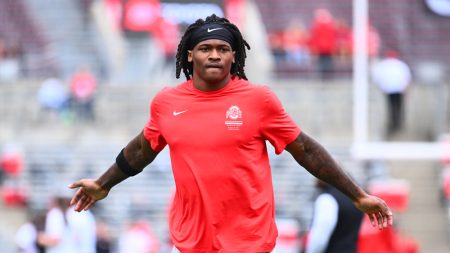
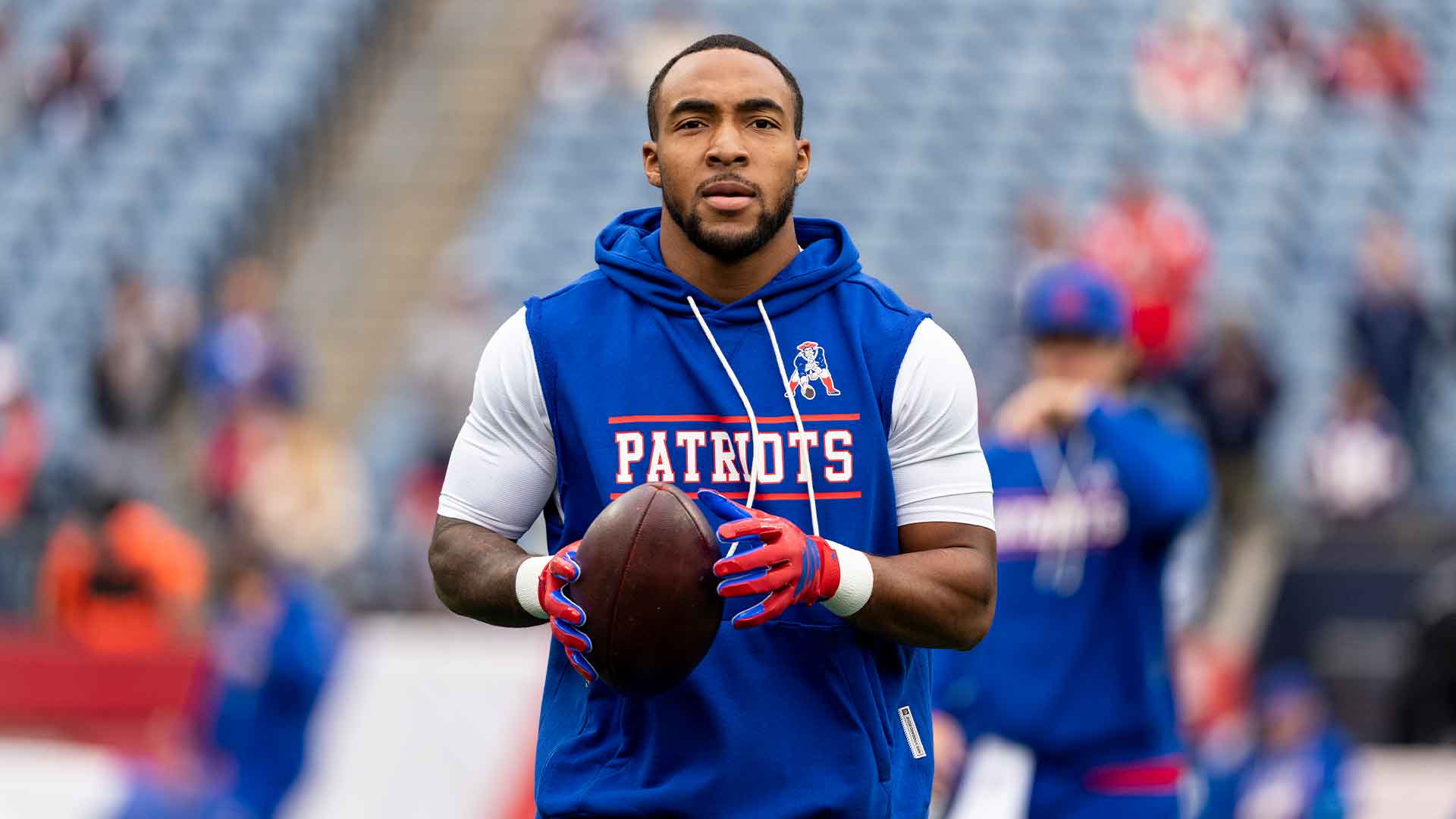
The news hit Patriots fans like a cold New England drizzle on an already gloomy day: TreVeyon Henderson, the dynamic running back who was supposed to be a centerpiece of the offense, is once again watching from the sideline. During Sunday’s hard-fought victory over the Las Vegas Raiders, a routine carry turned into a grimace, a slow walk to the sideline, and ultimately the dreaded diagnosis of a high-ankle sprain. For a player who has already spent more time in the training room than on the grass this season, it feels like a cruel twist of fate. The initial report, first broken by ESPN on Tuesday morning, offers a sliver of hope—no surgery is required, and the injury might not be as severe as initially feared. But for a 23-year-old with a history of ankle trouble, the words “miss multiple weeks” cut through any optimism like a cold wind. The shuffle through the tunnel, the supportive pats on the back from teammates who know exactly what it means, the quiet frustration in his eyes—this is the unglamorous side of professional football, where promise is constantly tested by physical fragility. For Henderson, this isn’t just another injury; it’s the latest chapter in a recurring story of setbacks that have threatened to define his career before it truly takes flight.
Paragraph 2: A Recurring Theme of Resilience and Frustration
If there is a silver lining in Henderson’s career thus far, it is that he has never been one to surrender to the cruelty of the sport. But the pattern is impossible to ignore. Back in August, with the pads barely on, he suffered a Grade 1 ankle sprain during training camp—a seemingly minor issue that stubbornly refused to heal, costing him precious reps and ultimately the season opener against the Seahawks. Now, a second ankle sprain, this time to the same leg, has again forced him to the sidelines. The question lingers: is this a coincidence, or is his body simply rebelling against the rigors of the NFL? Coming out of Ohio State, Henderson was a dazzling talent—a second-round pick with breakaway speed and elusiveness that made defenders look silly. His rookie season offered a glimpse of that brilliance, a showcase of explosive runs and a natural feel for the zone-blocking scheme. Yet, the league takes its toll, and Henderson’s body has been a unreliable accomplice. Each time he begins to build momentum, something snaps, twists, or tears. The frustration is palpable, not just for him but for a coaching staff that knows what he could bring if healthy. His teammates see the work he puts in, the grueling rehab sessions, the cautious optimism that turns into another setback. This isn’t a matter of effort or commitment; it’s a battle against his own physical limitations, and it’s taking an emotional toll that goes beyond the box score.
Paragraph 3: The On-Field Struggle and the Weight of a Sophomore Season
When Henderson has been on the field this season, the results have been sobering. Through four games, he has rushed for only 163 yards, averaging a pedestrian 3.9 yards per carry, with just a single touchdown. The numbers don’t lie—they paint a picture of a player who is a shadow of the dynamic force he was in his rookie year. But the raw stats fail to capture the full story. His hesitancy, the slight pause at the line of scrimmage before hitting the hole, the extra second of indecision—all telltale signs of a runner who is not trusting his body. Ankle sprains linger not just in the ligaments, but in the mind. The explosive cuts that defined his game have become tentative, and the confidence that makes great backs great has been eroded. His vision, once his greatest asset, is now clouded by the fear of re-injury. Offensive coordinator Alex Van Pelt has tried to scheme around him, but defenses are keenly aware that Henderson isn’t hitting the second level with the same burst. The touchdown he scored earlier in the season was a moment of relief, a flash of his former self, but it has been too sporadic. For Henderson, the mental battle is as fierce as any physical opponent. He knows he is better than this, and he knows the clock is ticking. Every week on the injury report, every miss, only deepens the frustration and the doubt. He needs a reset, a chance to heal completely and regain the fearless mindset that made him a star in Columbus.
Paragraph 4: The Backfield Shuffle and the Emergence of a New Threat
In Henderson’s absence, the Patriots’ backfield is once again entrusted to a familiar and reliable figure: veteran Rhamondre Stevenson. Known for his punishing running style and incredible balance, Stevenson is a three-down workhorse who has proven time and again that he can carry a heavy load. With Henderson out, Stevenson is expected to reclaim that role, handling carries, catching passes out of the backfield, and serving as a pass protector. He is a steady presence, a durable runner who may not break many 40-yard runs but consistently grinds out tough yards and moves the chains. His presence allows the offense to function, but it also places a premium on his health, as the depth behind him is thinning. Enter rookie Corey Kiner, a sixth-round pick with a surprising burst. In the Raiders game, after Henderson left, Kiner seized the moment, rumbling for 52 yards on just six carries—an 8.7-yard average—including a dazzling 32-yard run that showcased his speed and vision. It was the kind of performance that makes coaches sit up and notice, and it has earned him a more prominent role as the primary change-of-pace back. Kiner’s emergence is a welcome development, adding a different dynamic—quickness and explosion—that complements Stevenson’s power. But it also underscores Henderson’s absence. The Patriots’ running game, which was designed to be multifaceted, now leans heavily on Stevenson’s durability and Kiner’s youthful exuberance. It’s a patchwork, but one that gives offensive coordinator Van Pelt some intriguing options, even as he awaits Henderson’s return.
Paragraph 5: The Offensive Pressure Cooker and the AFC East Race
At 3-2, the Patriots are very much in the thick of an AFC East race that is far from decided. But the margin for error is razor-thin. Every game in a division featuring the reigning Super Bowl champion Buffalo Bills, a resurgent Miami Dolphins team, and the always-dangerous New York Jets carries immense weight. The offense, which has been inconsistent all season, is now dealing with the loss of its primary explosive back, compounded by the continued absence of wide receiver A.J. Brown, who remains on injured reserve. The pressure is mounting on quarterback Drake Maye, the second-year signal-caller who has battled turnovers and inaccuracy. With Henderson sidelined and Brown out, opposing defenses can stack the box against the run and double-team the remaining receivers, daring Maye to beat them with his arm. Maye has shown flashes of brilliance, but he has also displayed the classic sophomore jitters, forcing throws and making questionable decisions. The offensive line, already struggling with injuries, must now hold up longer against aggressive blitzes. It’s a perfect storm of adversity, and the team’s identity is being tested. The coaching staff, led by Jerod Mayo, is preaching a next-man-up mentality, but the reality is that the offense is missing its two biggest playmakers. That’s not just a tactical loss; it’s an emotional one. The energy that Henderson brings when he is healthy—the energy that lifts the huddle—is noticeably absent. The remaining players have to summon every ounce of grit to keep the unit afloat, fully aware that a losing streak could quickly bury their playoff hopes before the midway point of the season.
Paragraph 6: The Road Ahead and the Human Spirit of a Comeback
For Henderson, the immediate future is one of rehabilitation, ice baths, and the slow, tedious process of regaining strength and range of motion. The medical staff is optimistic, pointing to the fact that he avoided surgery as a positive sign. He could be back in the lineup in a few weeks, or the injury could linger, requiring more patience. But regardless of the timeline, this is a moment of reflection for the young runner. He has been here before, and he knows the path. The player who emerges from this setback will be defined not by his injuries, but by how he responds to them. He has the support of his teammates, the guidance of his coaches, and the unwavering belief of a fanbase that saw his potential. The road to full health is not a straight line; there will be good days and bad days, moments of hope and fleeting doubts. But Henderson has shown he has the character to fight. He will run again, and when he does, he will be reminded of the pure joy of the game, the roar of the crowd, and the simple act of breaking through a hole at full speed. For the Patriots, his eventual return will be a welcome boost, a shot of adrenaline to an offense desperately in need of a spark. Until then, the team will lean on Stevenson and Kiner, on Maye, and on the collective belief that they can weather the storm. The season is a marathon, not a sprint, and Henderson’s story is far from over. His journey back from this ankle sprain is not just about football; it’s about the resilience of the human spirit, the refusal to let circumstances define one’s destiny, and the quiet determination to prove that every setback is merely a setup for a stronger comeback.