


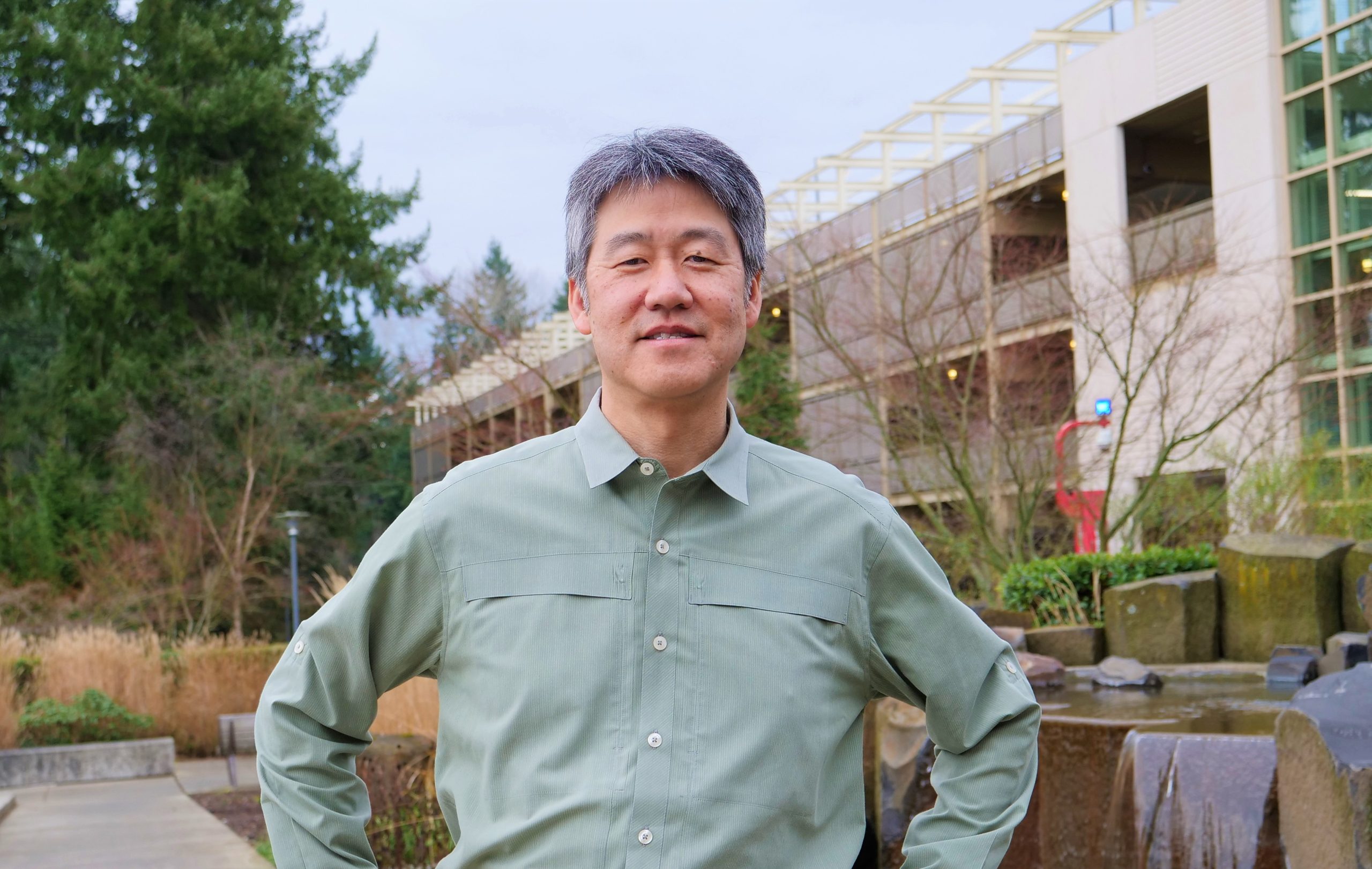
When Peter Lee told the world two weeks ago that he was leaving Microsoft, he did not give the usual polished executive explanation. He simply said that his next job would fulfill a dream he had had since childhood. For a man who had spent more than sixteen years inside one of the most powerful technology companies on Earth, that was a tantalizingly vague statement. Now the mystery is solved, and the dream, it turns out, comes with a pit crew. According to a report from Fortune, Lee, who currently serves as president of Microsoft Science, will be joining the Mercedes Formula 1 team in a newly created role focused on artificial intelligence. It is a career move that seems, at first glance, like a strange leap from the quiet corridors of research to the roaring, gasoline-scented world of Grand Prix racing. But for anyone who has paid attention to Lee’s private obsessions, the decision makes a kind of perfect sense. He did not simply stumble into motorsport. He raced karts and Formula Ford as a kid. He was once a licensed auto body technician. He has spent countless hours in his garage restoring and modifying cars, including a replica 1955 Porsche 550 Spyder that he converted to electric power, and, more recently, a 1968 Ford Mustang GT Fastback that he was in the middle of converting. The image of a top Microsoft executive with grease under his fingernails is not one that most people would conjure, but it is entirely real. Lee has often described cars as more than a hobby. He called them “a great laboratory” for AI models that decide an agent’s next move. And in an interview with GeekWire last year, he explained why working on cars satisfies something that software never could: “The thing I’ve always loved about cars, and why I love to work on cars, is you actually finish something. That never happens in software.” That sentence may be the key to understanding his entire career and his surprising next chapter.
At Mercedes, Lee will not be expected to change tires or design aerodynamic wings. His mandate is more interesting. He will focus on using AI to tackle physics problems for the team’s car, breaking down organizational and data silos, building financial and predictive models, and advising the team on how Formula 1’s regulators might govern the use of AI. The role is newly created, which suggests that Mercedes is not entirely sure what they are getting, but they know they want it. Lee is expected to sign on for one year, with an option for a second year. His exact title is still being worked out, according to Fortune. That detail alone says a lot about the nature of the job: it is less about a predefined set of responsibilities than about bringing a particular mind into a high-pressure environment and letting that mind do what it does best. Lee told Fortune, “I’m completely thrilled, and I’m in disbelief that they would think of me for something like this.” The disbelief is understandable. Formula 1 is an unforgiving sport, where every decision is measured in tenths of a second and where the gap between victory and defeat can be as thin as a coat of paint. But it is also a sport that runs on data. Modern F1 cars are covered in sensors, generating vast streams of information about tire temperature, fuel consumption, downforce, and engine performance. Teams employ hundreds of engineers to make sense of all that data. The idea that AI could help find patterns that humans miss is not far-fetched. It is, in fact, the logical next step. Lee’s job will be to help Mercedes take that step without losing the human judgment and intuition that remain essential in racing.
To understand why this move is not as surprising as it seems, it helps to know more about Lee’s relationship with cars. He grew up racing karts and Formula Ford, which means he learned early that motorsport is not just about speed. It is about preparation, precision, and the ability to react in an instant. He also worked as a licensed auto body technician, a job that taught him the value of hands-on craftsmanship. Those experiences stayed with him even as he rose through the ranks of Microsoft Research. His personal projects are revealing. A replica of the 1955 Porsche 550 Spyder, converted to electric power, is a striking blend of classic design and modern technology. The 1968 Ford Mustang GT Fastback, a classic American muscle car, was being converted in his garage. These are not investments or collectibles. They are experiments, labors of love, and, in a way, expressions of his belief that old things can be made new with technology. When he told GeekWire that cars are “a great laboratory” for AI, he was not speaking metaphorically. A car is a physical system with constraints: it has weight, drag, friction, and limited energy. An AI that controls an agent’s next move has to work within those constraints. It has to make decisions under uncertainty, in real time, with real consequences. That is exactly the kind of problem that artificial intelligence is beginning to solve. And unlike software, a car gives you immediate, tangible feedback. If your model is wrong, you feel it. If your design is right, you see it. Lee loves that. He loves the fact that you can finish a car, close the garage door, and look at what you have done. In the world of research, there is always another paper, another experiment, another breakthrough. At Mercedes, there will be a race on Sunday, and the results will be written in the standings.
Lee’s departure is part of a broader moment of change at Microsoft. This year has seen a wave of senior exits, including LinkedIn and Office chief Ryan Roslansky and communications chief Frank Shaw. When a company loses multiple top leaders in a single year, it can feel less like a few individual decisions and more like the end of an era. For Microsoft, Lee’s exit carries particular weight because he represented the part of the company that was always looking further ahead. Microsoft Research has long been a jewel in the company’s crown, a place where scientists can pursue ideas that might not pay off for a decade or more. Lee, as president of Microsoft Science, was the public face of that ambition. He oversaw efforts that connected cutting-edge research to real products and, perhaps more importantly, to the broader scientific community. His departure does not mean Microsoft is abandoning that legacy, but it does mean that the company is losing a leader who understood how to bridge the worlds of pure research and practical application. It is also a reminder that even the most loyal executives have dreams that have nothing to do with quarterly earnings. Lee gave the company sixteen years of his life. He helped shape the way Microsoft thinks about AI, science, and innovation. Now he is going to chase something he has loved since childhood. There is something almost poetic about that. For all the talk of algorithms and models, Lee’s decision is ultimately a human one. It is about the pull of an old passion, the desire to try something different, and the courage to leave a powerful position for an uncertain but exciting adventure.
The significance of Lee’s move goes beyond one executive’s career change. It is a sign that artificial intelligence is moving out of the cloud and into the physical world. For years, AI has been associated with chatbots, image generators, and recommendation algorithms. Those are important, but they are also relatively safe. A chatbot that makes a mistake is annoying; an AI that makes a mistake in a Formula 1 car could be dangerous. That is why F1 is such an interesting laboratory. It is a place where AI must be both powerful and trustworthy, where the margin for error is almost zero, and where every decision has immediate consequences. Lee will be working on physics problems, which means he will be thinking about how to model the behavior of a car that is moving at over two hundred miles per hour, through curves, under braking, with changing weather and track conditions. He will also be working on organizational problems, breaking down the silos that often separate engineers, strategists, and managers. And he will be thinking about governance, a word that rarely appears in the context of racing but is becoming increasingly important. How should F1’s regulators define the boundary between human and machine intelligence? Should teams be allowed to use AI to make real-time decisions, or should there be limits to preserve the human element of the sport? These are not just technical questions. They are philosophical questions, and Lee is uniquely positioned to help answer them. He has spent his career at the intersection of research and application. He understands both the potential and the limits of AI. And he genuinely loves the sport, which means he will care about the outcome in a way that a consultant never could.
In the end, this is a story about the power of a childhood dream. Peter Lee could have remained at Microsoft, continued to lead scientific research, and enjoyed the prestige and security of one of the most important jobs in technology. Instead, he is choosing to go to a race team, with a one-year contract, an unclear title, and the kind of risk that most people would avoid at his level. But that is exactly what makes the story so compelling. The dream he mentioned two weeks ago was not just about working with cars. It was about finishing something, about being part of a team that lives or dies by its results, about the adrenaline of competition and the satisfaction of a job well done. He is trading research labs for racetracks, but he is not leaving behind his intellect or his curiosity. He is bringing them with him, along with a lifetime of hands-on experience and a deep understanding of what makes machines work. The Mercedes Formula 1 team is getting more than an AI advisor. It is getting someone who has spent years thinking about how intelligent agents make decisions, who knows what it means to break down complex problems, and who will bring a childlike enthusiasm to the paddock. The exact title may still be being worked out, but the mission is clear. Use AI to make a fast car even faster. Break down the barriers that slow people down. And enjoy every moment of it. For Peter Lee, the lab has become a racetrack, and the dream has finally come true. For the rest of us, his journey is a reminder that it is never too late to follow the thing that made you fall in love with the world in the first place.