


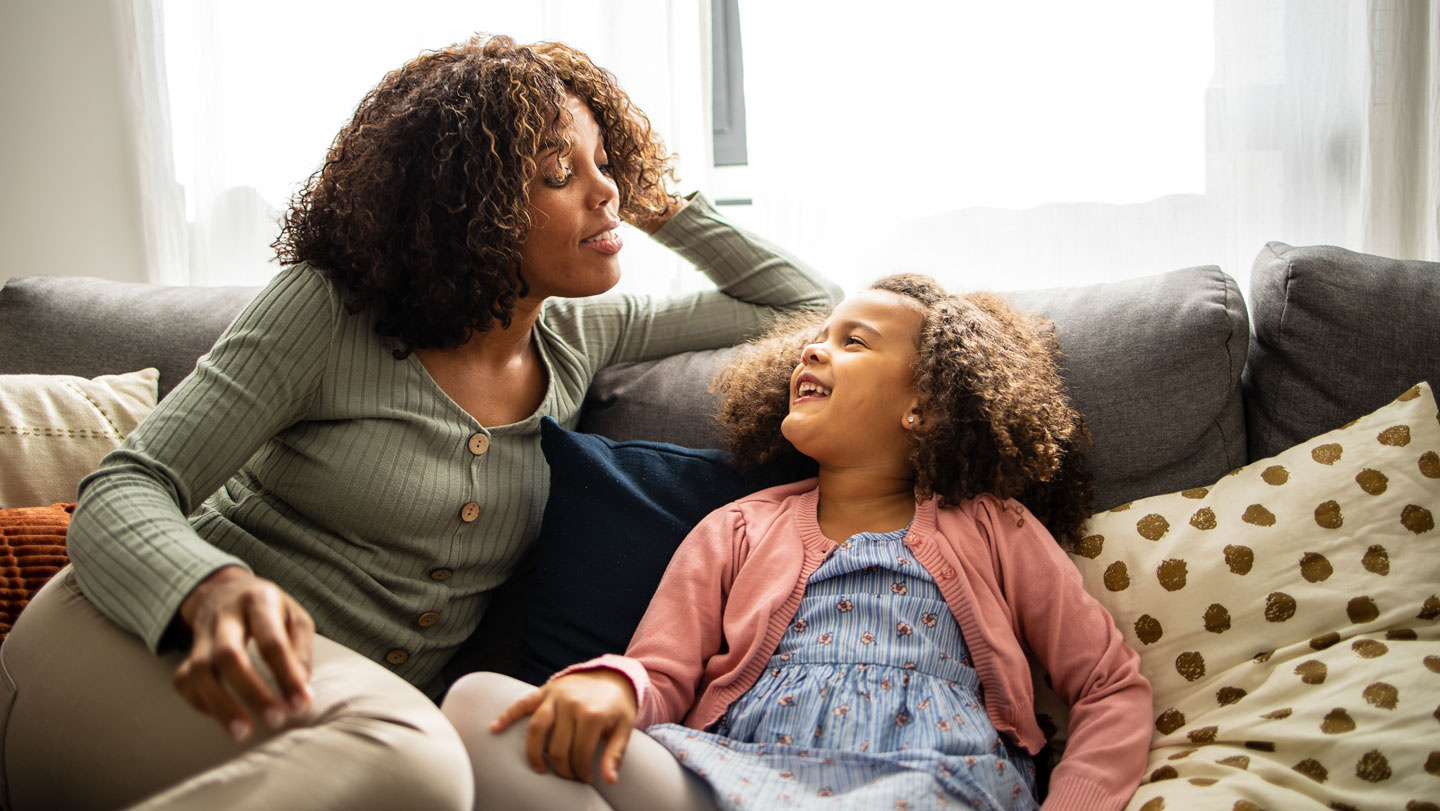
A voice is never just a voice. It is the carrier of warmth, fear, love, humor, history, and comfort. We often take it for granted until it starts to disappear. In the second episode of The Deep End: Talk to Me, Science News reporter Laura Sanders opens with a powerful reminder of this truth: a study from 2012 in which girls between the ages of seven and twelve were asked to perform stressful tasks in a lab, and then were divided into groups. Some were reunited with their mothers in person, some spoke with their mothers on the phone, some texted with them, and some had no contact at all. When the researchers measured the girls’ stress hormones afterward, the results were striking. The girls who heard their mothers’ voices, whether in person or over the phone, had significantly lower levels of cortisol, the body’s main stress hormone. Texting, on the other hand, did nothing. There is something ancient and almost magical in the sound of a familiar voice, something that can reach into the body and quiet its alarms. The study made Laura do what many of us do in moments of need: she called her own mother to complain, and in the warmth of that call, the science became deeply personal. It wasn’t just an interesting finding; it was a truth many of us know intuitively. We call the people we love when we are overwhelmed, not because they will solve everything, but because hearing their voices somehow makes the world feel safer. The episode asks us to sit with this idea: a voice matters not only to the person who speaks, but to everyone who listens. A voice is not just an output. It is an embrace, a lifeline, a presence that can reach across distance and soothe a racing heart.
This is why losing a voice can feel like losing a person. Jules Rodriguez, a former science teacher, podcaster, comedian, husband, and father living in Miami, knows this better than most. He was diagnosed with ALS in 2020, a progressive disease that slowly takes away the ability to move and speak while leaving the mind painfully intact. Long before his voice disappeared, Jules and his wife, MA, had started a podcast called The Couple Shift, a sweet, playful archive of their marriage, their jokes, their arguments, and their love. As the disease progressed, the podcast captured something heartbreaking: the slow decay of Jules’s voice. In the early episodes, he sounds bright and full of energy, teasing MA and laughing with her. Later episodes are slower, fuzzier, more labored. Jules describes the experience as feeling like he was fading away, like the photograph in Back to the Future when Marty McFly watches his family slowly erase from existence. It is a haunting image. A piece of him was disappearing, a piece that told other people who he was, how he felt, where he had been. His voice had always been part of his identity, and as it slipped away, he felt himself becoming less visible, less present. MA remembers the first crack in his voice, the moment she knew something was changing. She describes the podcast as a living legacy of a life lived, a record of two people evolving together through joy and devastation. But it was also a painful reminder that some things cannot be saved, no matter how carefully you record them. The episode lingers on this grief because it wants us to understand what is at stake: a voice is not just a tool for communication. It is a fingerprint of the soul, a living expression of a person’s history, emotion, and humanity. To lose it is to lose a part of the self that other people can hold on to.
But what exactly is a voice, biologically speaking? The episode takes a deep and wonder-filled dive into the mechanics behind every word we speak. As speech-language pathologist Jessica Pietrowski explains, something as simple as talking uses nearly a hundred muscles. Breath moves up from the lungs, the diaphragm contracts, air vibrates the vocal folds, and that vibration travels through the throat and mouth, where it is shaped into vowels and consonants. Smiling changes the sound of a voice because it alters the shape of the vocal tract, shifting the formants, those resonating bands of energy that make a voice sound bright or dark, warm or cold. Voices carry all sorts of signals without us even trying: whether we are big or small, young or old, tired or energized, from the South or from Canada, whether we are smiling or frowning. Voices also carry emotion. A smile can be heard, not just seen. As UCLA researcher Greg Bryant notes, these subtle cues are embedded in the acoustic signal, and our brains are exquisitely tuned to pick them up. But the magic goes even deeper. Neuroscientist Sergey Stavisky describes voice as telepathy through mechanical means. An idea forms in one person’s brain, is translated into language, then into precise movements of the tongue, jaw, and larynx, sending ripples of air across a room. Those ripples hit another person’s eardrum, vibrate the tiny hair cells inside, and are transformed into nerve signals that recreate the idea in another mind. It is an astonishing feat, one we perform thousands of times a day without a second thought. The episode invites us to marvel at this everyday miracle, not just because it is scientifically impressive, but because it is the foundation of everything we are. Civilization, learning, science, love, connection: all of it rests on this fragile, invisible bridge of vibrating air. When that bridge collapses, the isolation can be unbearable.
The episode introduces another person living inside that silence: Casey Harrell, a 47-year-old climate campaigner in the Bay Area who also has ALS. Like Jules, Casey lost his ability to speak clearly after his diagnosis in 2020. He describes the experience as a slow-motion car crash, a long, agonizing decline that left him dependent on his wife and assistant to translate for him. He could not go anywhere, even on a video call, without one of them by his side. Casey’s story is a reminder that losing your voice is not just about losing the ability to speak. It is about losing your independence, your privacy, your ability to participate in the world on your own terms. But the episode also shows the resilience of people in this situation, and the tools that exist to help them hold on to something of their voice. Speech-language pathologist Kate Nilson walks listeners through two approaches. Voice banking involves recording a set of predetermined sentences that give software the sounds it needs to build a synthetic voice that sounds like the person. Message banking, on the other hand, is about recording whole messages, real moments, with the true inflection and meaning of the original voice: a joke, a nickname, a phrase that only that person would say in exactly that way. Nilson shares touching and funny stories from her work, including a client who recorded an entire folder of swear words because, as she points out, you don’t want to sound monotone when you’re frustrated. The right emphasis matters. These small, quirky recordings are not just sounds; they are personality, preserved in amber. They capture the inside jokes, the familiar rhythms, the love and humor that make a person irreplaceable. The episode makes clear that these tools are not just about speaking. They are about remaining recognizable to the people you love, about leaving behind a trace of who you were, not just in words, but in the music of your voice.
For Jules, however, a banked voice was not enough. He tried it and found it robotic, emotionless, a robot trying to imitate him rather than actually being him. This was more than a matter of vanity. Jules wanted to do stand-up comedy after his diagnosis, and a monotone, computerized voice simply could not carry a joke. Comedy is all about timing, tone, inflection, the little crack in the voice, the mischievous grin you can hear, the pause that says everything. A banked voice could say words, but it could not perform. As his original voice became more labored, especially because he often needed extra oxygen through a mask, live performance became impossible. The loss was devastating. But Jules and MA were also facing an even bigger decision, one that many people with ALS must confront: whether to get a tracheostomy. This procedure involves placing a tube in the throat and connecting it to a ventilator that breathes for the person. It can extend life, but it also means giving up whatever voice remains. For Jules, who had already watched his voice fade, this decision was enormous. He had been clear that he did not want a tracheostomy. His plan, as MA says, was that once he was done, that was it. It is a heart-wrenching choice, made all the more painful by the fact that a person’s voice is so tied to their sense of self. The episode does not rush past this. It sits in the weight of it, in the reality that time is short, and every decision carries consequences not just for the person with ALS but for the family who loves them. In the middle of all that, the idea of a better, more realistic digital voice appears. Could a sophisticated voice clone, one that sounded almost exactly like Jules before he got sick, change the story? Could it give him a reason to choose more life, more time, more jokes? Could it bring him back from the edge of fading away?
The answer, for Jules, was emotional and transformative. When he first heard his cloned voice, he says, it felt like he reappeared. His wife MA cried because it sounded so close to the voice he had before ALS took so much from him. This is the central thread of the episode: the voice is not just a convenience, not just a way to transmit information. It is deeply tied to identity, connection, and the feeling of being alive in the presence of others. The cloned voice did not undo the disease. It did not take away the hard decisions or the grief. But it did something profound. It gave Jules back a piece of himself that he thought was gone. It allowed him to imagine a future where he could still perform, still joke, still be recognized by the people he loves as himself. The episode ends on this cliffhanger, with Jules and MA facing the possibility that a voice could influence the most difficult decision of their lives. What makes this so moving is that it is not really about technology. It is about what we need from one another, and what we need to leave behind. A voice is a thread that connects us to other people. When it breaks, we feel it in our bodies. When it returns, even in digital form, it can feel like a resurrection. The story of Jules, Casey, and all the people who work to preserve voices is ultimately a story about love. We want to be heard. We want to be remembered. We want to know that the people we love can still hear us, even when everything else has changed. And if a machine can carry the sound of a human heart, then maybe there is a little more hope in the world than we thought.