


There is a certain magic in the idea of a city break—a long weekend away where every street, café and corner feels like a small adventure. In a world that often feels hurried, these short escapes offer a chance to slow down, to wander without a fixed plan, and to let a new place shape your mood. According to a fresh ranking by European Best Destinations, the best place in Europe for that kind of escape in 2027 is Sofia, Bulgaria’s capital. The city was chosen from a list of ten finalists with “very different personalities” and took the top spot thanks to an “especially rewarding combination” of ancient history, contemporary culture and mountains. It beat strong contenders: Lisbon in second, Copenhagen third, Cannes fourth, Basel fifth, followed by Bristol, Leuven, Milan, Calpe and Verona. The list reads like a dream itinerary of European personalities, from Mediterranean seaside charm to northern design capitals. But the winner’s appeal is in its balance—a city where you can spend a morning exploring Byzantine churches and an afternoon on forest trails, then an evening in modern restaurants. This is not a ranking built around only grand monuments; it is about places that make you feel something, that fit into a weekend yet leave you wanting more. With 2027 on the horizon, the announcement is a reminder that Europe is full of cities waiting to be rediscovered, and that sometimes the most memorable breaks come from choosing somewhere you hadn’t considered before. The announcement carries a sense of excitement, especially for travellers who feel they have already seen the usual capitals. Sofia, once overlooked by many, now finds itself in the spotlight—and it is easy to see why.
The ranking comes from European Best Destinations, a travel organisation known for its annual lists and its ability to capture the changing tastes of modern tourists. This particular survey was built on a 33-day voting period that attracted 11,614 subscribers to the organisation’s newsletter. Each participant could cast up to three votes from a shortlist of 64 destinations, which had been selected by independent travel journalists. It was, in other words, a people-powered verdict rather than an elite panel decision. The top ten were arranged in order of votes received, giving the final list a democratic feel and a sense of genuine travel enthusiasm. The organisation described a great city break as one that gives you “plenty to do and enough time to enjoy it,” adding that the chosen cities offer room for “a romantic escape, a weekend with friends, a few days by the sea or a special occasion worth celebrating in style.” That phrasing is key to understanding why the list is so varied. There are large cultural capitals, smaller university towns, beachside destinations and Alpine-adjacent cities. It suggests that a city break no longer means one thing. For some, it is a cultural marathon; for others, it is a slow meander with good food and good company. The survey results also reveal a growing appetite for places that feel authentic and walkable, where you can live like a local, even for a couple of days. The inclusion of destinations like Calpe, Leuven and Bristol, alongside more obvious choices like Milan and Lisbon, shows that travellers are increasingly willing to trade the well-trodden path for a more individual experience. Perhaps that is why Sofia, with its layered history and unpretentious charm, came out on top: it offers the richness of a great European capital without the overwhelming crowds of the usual hotspots. This is a list that feels personal, as if thousands of travellers were saying: give us somewhere real, somewhere we can connect with, somewhere we will remember long after we return home. It is a reminder that Europe’s smaller and lesser-known cities are often its most charming.
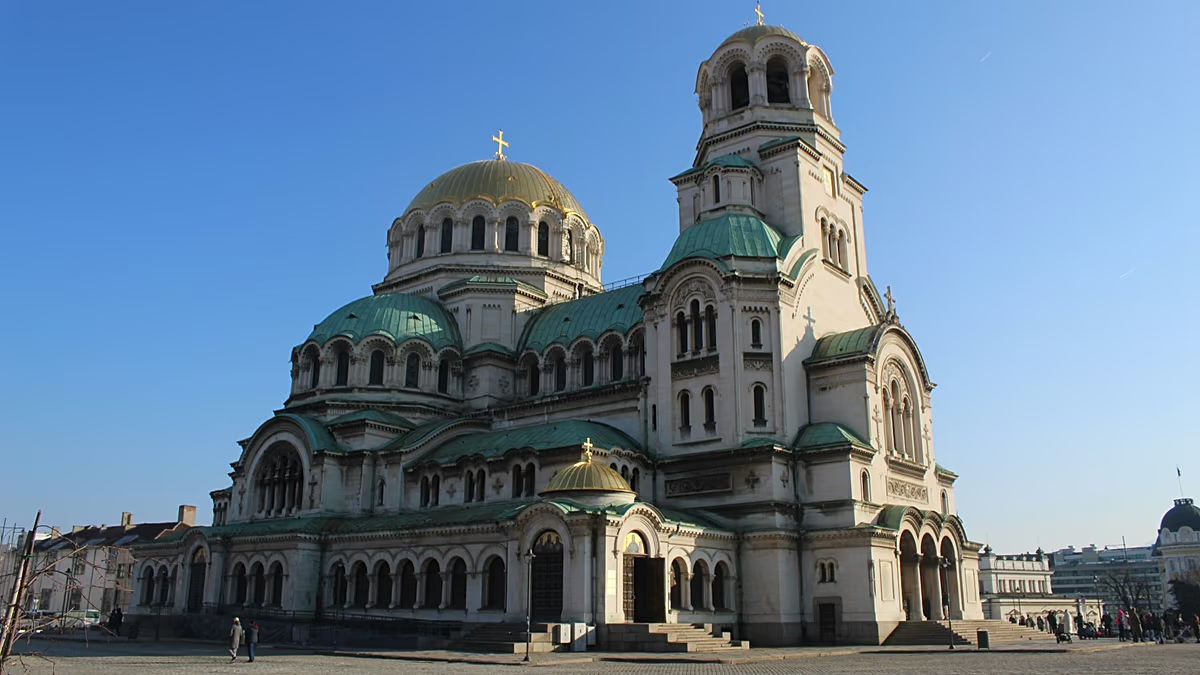
Sofia’s win is not just a victory for Bulgaria; it is a celebration of a city that has been quietly impressing those who take the time to explore it. European Best Destinations highlighted its “variety of experiences within a relatively compact area.” That compactness is a huge advantage for a short break. You can wake up in a hotel in the city centre, walk past Roman ruins on the way to breakfast, visit a grand Orthodox cathedral, and still have time to escape the urban bustle for a forest trail or a mountain viewpoint before dinner. The nearby Vitosha mountain is not just a backdrop; it is part of the city’s identity, visible from many streets and inviting you to trade the pavement for a woodland path within minutes. Sofia’s history is deep and visible. Once known as Serdica, it was among the most important cities in the Byzantine Empire. The city is often described as a place where old meets new “quite literally”—ancient stone walls sit beside modern glass buildings, and centuries of history unfold in the course of a short stroll. Among the standout sights are the Saint George Rotunda, one of the oldest preserved buildings in the city; the Saint Alexander Nevsky Cathedral, whose golden domes dominate the skyline; the Square of Tolerance, a symbolic meeting point for different religions; and Boyana Church, Sofia’s only UNESCO World Heritage Site, famed for its remarkable medieval frescoes. But the human side of Sofia is just as compelling. Locals are proud of their city, its coffee culture, its lively taverns, and its sense of continuity. A city break here feels less like checking off a list of attractions and more like stepping into a living, breathing place that has weathered empires and emerged with character. For travellers, the practical appeal is strong too: prices are often lower than in Western European capitals, meaning a weekend of good food, nice hotels and memorable excursions can be surprisingly affordable. It is easy to imagine returning from Sofia with a suitcase full of souvenirs and a mind full of stories—about the woman who sold you roses at the market, the waiter who insisted you try a local wine, and the sight of snow-capped mountains framing the city as the sun goes down. There is an authenticity here that cannot be manufactured, and that is precisely what makes it so special.
Lisbon, the runner-up, has long been a favourite among travellers, and this ranking confirms its enduring appeal. The report calls it “a city to enjoy from morning coffee to the last view of the river,” and it suits travellers who “like a little structure and plenty of freedom.” That combination might sound contradictory, but anyone who has wandered Lisbon’s hills knows exactly what it means. You can plan your day around a neighbourhood or a single restaurant reservation, but the city itself will guide you: the slopes are steep, the trams are charming, and the best route is often the one you didn’t plan. The report’s top tip is simple and wise: save time for art, time for the historic centre, and time to linger over a meal. Lisbon rewards the unhurried. The light is famous, the food is comforting, and the atmosphere is a blend of Atlantic freshness and Mediterranean warmth. It was recently voted the world’s happiest travel destination, and there is something about its tiled facades, miradouros, and fado music that gets under your skin. For a city break, Lisbon offers both structure and spontaneity: a morning at a museum, a long lunch of grilled fish, a slow climb to a viewpoint, an evening in a neighbourhood restaurant where the wine flows and conversations drift across tables. The river Tagus is never far away, providing a sense of horizon and calm. Walk across the city and you’ll find old bakeries, bustling markets, quiet courtyards and viewpoints where locals gather to watch the sunset. The pastel-coloured buildings seem to glow in the afternoon light, and every tram that rattles past feels like a scene from a film. Perhaps the real reason Lisbon ranks so high is that it doesn’t try too hard. It is comfortable in its own skin, a city that knows how to live well and invites visitors to do the same. If Sofia is the surprise champion, Lisbon is the beloved perennial—the friend you can always return to and pick up right where you left off. For anyone planning a 2027 break, choosing between the two is a pleasant dilemma; both promise days filled with colour, flavour and a gentle sense of discovery.
Copenhagen, in third place, offers a different kind of city break, one rooted in the everyday. The Danish capital “makes a strong case for spending a weekend enjoying the everyday details of a city,” according to the report. That is a lovely and increasingly rare perspective. Rather than rushing from one sight to the next, you can spend your days exploring neighbourhoods, stopping at design shops, cycling along the waterfront, and settling into restaurants that feel like extensions of someone’s home. Copenhagen is an “appealing choice” for friends and couples who enjoy design, neighbourhood restaurants and exploring by bike. The report suggests that “a few carefully chosen stops can shape the day, with plenty of space between them for another coffee or a waterside pause.” This vision of a city break is less about ticking boxes and more about absorbing the atmosphere. Copenhagen is the kind of city where the simple pleasures—a pastry, a canal view, a red bike ride across the bridges—become the highlights of the trip. The weather can be brisk, but the mood is warm, and the architecture is a perfect blend of old warehouses, royal palaces, and modern glass towers. It is also a city that feels safe, clean and easy to navigate, which makes it an ideal choice for a relaxed weekend. The concept of hygge—roughly translated as cosy togetherness—is not just a slogan; it is a way of life that visitors quickly feel. You can start your day with a cinnamon roll at a neighbourhood bakery, cycle past the colourful houses of Nyhavn, spend an afternoon at a contemporary art gallery like Louisiana, and end the evening in a restaurant where the menu is short but everything is delicious. The city’s streets are designed for people, not just cars, and there is a reason so many visitors leave with a desire to move there. In Copenhagen, a city break doesn’t have to be intense. It can be a slow Saturday at a bakery, a Sunday stroll through a cemetery park, an afternoon at a contemporary art gallery, and an evening in a restaurant where the menu is short but everything is delicious. This is a reminder that sometimes the most luxurious thing a city can offer is the permission to do nothing in particular, and still feel completely fulfilled.
Beyond the top three, the rest of the top ten reflects the wonderful diversity of Europe’s city break offering. Cannes, in fourth place, brings the glamour of the French Riviera, with its seafront boulevard and film festival pedigree, but it also offers the simple pleasure of a coastal walk and a cool drink in the sunshine. Basel, in fifth, is a cultural powerhouse in Switzerland, known for its art museums, medieval old town and position on the Rhine. Bristol, in sixth, is a creative British hub with street art, music, and a lively food scene. Leuven, in seventh, is a compact Belgian university town with a stunning city hall and a rich brewing heritage. Milan, in eighth, needs no introduction for fashion lovers, but it also offers world-class art, architecture and some of the best food in Italy. Calpe, in ninth, is a Spanish coastal town dominated by the great rock of Ifach, offering beaches and relaxed Mediterranean living. Verona, in tenth, is a romantic Italian gem, famous for its Roman arena and Shakespearean associations, yet still delightfully authentic and manageable. What this list makes clear is that the ideal city break for 2027 is not necessarily the most famous or the most expensive destination. It might be a place where you can combine culture with nature, or where you can spend a weekend cycling along a river, or where you can sit on a terrace and watch the world go by. The ranking also suggests that travellers are looking for a balance: enough to do, enough to see, but also enough time to simply be. Whether you choose Sofia’s mountain-fringed streets, Lisbon’s sun-drenched hills, Copenhagen’s calm waterfront, or one of the other seven wonderful destinations, the message is the same. A city break is an invitation to step into another rhythm, to let a place shape your days, and to return home with a heart a little fuller and a head a little clearer. The best cities don’t just show you their sights; they welcome you into a story. And according to this year’s ranking, no European city tells that story better than Sofia—at least until the next list comes along. But that is exactly the joy of travel: there is always another city, another weekend, another chance to be surprised.