

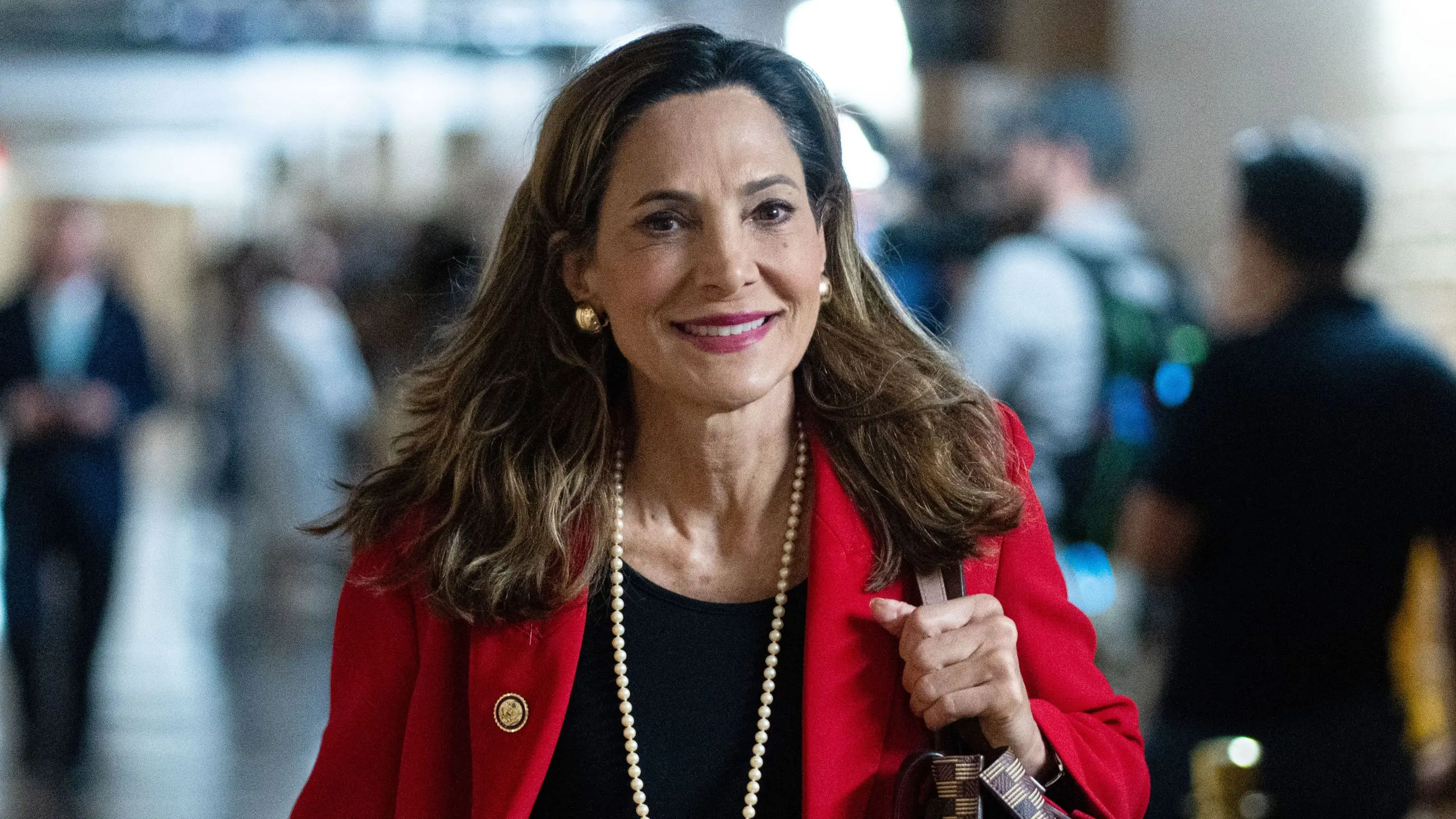
In the warm, sunlit world of South Florida politics, where alliances are often forged in the kitchen over coffee and in the pews of neighborhood churches, a new video has landed with the weight of a personal blessing. Representative María Elvira Salazar, the Republican congresswoman from Florida’s 27th District, recently shared a clip that she received with visible emotion: a message from Abelardo de la Espriella, a man she calls “President,” a Colombian leader who speaks directly to the camera in Spanish, calling Salazar Colombia’s “best friend” in the United States Congress. For Salazar, who has spent much of her political career championing the causes of the Latin American diaspora, this is not just another endorsement to file away in a campaign binder. It is a familial kind of validation, a public embrace from a figure who represents the very people she greets at the grocery store, at the quinceañera, at the community center. In her Spanish-language post on X, Salazar wrote with genuine pride that she receives the support of her friend, President Abelardo de la Espriella, and she made clear that representing thousands of Colombians in South Florida has turned Colombia into a personal cause she carries into the halls of Congress every single day. The video, warm and unscripted, feels less like a political advertisement and more like a conversation between two old friends who happen to live their lives in the public eye, and Salazar’s response was equally heartfelt: “Abelardo has in me a friend. Colombia, an ally. And Colombians, a steadfast voice in the United States Congress.”
But behind the warmth of the video lies a deeper web of personal history, shared roots, and political investment that makes this endorsement more than a simple photo opportunity. De la Espriella is not a distant figure looking in from abroad; he is a Colombian-American citizen who owns property right in Salazar’s congressional district, a man with one foot in his native country and the other firmly planted in the vibrant, bustling neighborhoods of Miami-Dade County. His connection to Salazar is not abstract or transactional in the cold sense of the word. According to NBC News, de la Espriella and his wife have donated nearly ninety thousand dollars to her campaigns over the years, a substantial sum that speaks to a long-standing belief in her vision and her leadership. This is the kind of support that doesn’t appear overnight. It is built on years of shared dinners, shared concerns about the future of Latin America, and a mutual understanding of what it means to be an immigrant community striving for a voice in American democracy. For Salazar, whose own family story is rooted in the Cuban exile experience, the relationship with de la Espriella carries an emotional resonance that transcends typical political endorsements. It is a bond between people who understand what it means to leave a homeland, to carry its hopes and sorrows in your heart, and to fight for its freedom from the corridors of power in Washington. When de la Espriella calls her Colombia’s best friend, he is not just praising a politician; he is acknowledging a kindred spirit, someone who has made the struggles of his people her own.
What makes this mutual admiration even more striking is that Salazar did not wait for de la Espriella’s support to arrive before offering her own. Earlier this year, she publicly backed him for election, a gesture of loyalty that shows this relationship is a two-way street. In politics, endorsements are often carefully calculated, traded like currency, and measured by polling data. But this particular alliance feels more personal, more rooted in shared values and a shared vision for Latin America. Salazar has long positioned herself as a fierce advocate for democracy and human rights across the Western Hemisphere, and her vocal support for de la Espriella aligns with that larger mission. She sees in him a leader who shares her concerns about the rise of authoritarianism, the dangers of socialist regimes, and the need for strong alliances between the United States and its Latin American neighbors. For the Colombian community in South Florida, this public friendship sends a powerful signal: their concerns are not ignored in Washington, their leaders are not forgotten, and their voices are amplified by a congresswoman who takes her role as a bridge between cultures seriously. It is no wonder that Salazar speaks of the Colombian cause with such passion, because for her, it is not a foreign policy talking point. It is a daily reality, lived out in the stories of the constituents she serves, in the phone calls from family members worried about loved ones back home, and in the hope she sees in the eyes of new immigrants who have come to America seeking safety and opportunity.
Now, as Salazar fights for re-election, this endorsement takes on an even more practical significance. She is facing a challenge from Democrat Eliott Rodriguez, and the race is unfolding in a district where every vote matters, where the Colombian-American community is a powerful and active force, and where identity and heritage can make the difference between victory and defeat. In a political environment increasingly defined by national controversies and partisan battles, local endorsements from respected community leaders can cut through the noise in a way that television ads cannot. When a leader like de la Espriella steps forward to say, “This is our friend, this is the person who understands us,” it carries a weight that no amount of campaign spending can replicate. For many voters, it is a signal of trust, a reminder that Salazar has been there for their community not just during election season, but all year round. It also serves as a subtle rebuke to her critics, who might try to paint her as out of touch or disconnected from the concerns of everyday people. The endorsement humanizes her, reminding voters that she is not just a congresswoman in a suit, but a neighbor, a friend, and a tireless advocate who has earned the respect of leaders across Latin America. In a district where a large portion of the electorate has deep ties to Colombia, Venezuela, Cuba, Nicaragua, and other nations, Salazar’s ability to build these cross-cultural alliances is not just a political asset; it is a core part of her identity as a representative.
Since taking office in early 2021, Salazar has carved out a distinctive role for herself as a voice for Latin America in the Republican Party, often speaking with a passion that sets her apart from the typical floor speech. She has been unafraid to take strong positions on foreign policy, at one point declaring that “after Cuba, Nicaragua is next,” a phrase that captured her deep concern about the spread of authoritarianism in the hemisphere. For her, the fight for democracy is not abstract; it is deeply personal, shaped by her own family’s experience with communism and her lifelong exposure to the stories of exiles and refugees who have found a new home in South Florida. This worldview resonates with the Colombian community, many of whom have watched with alarm as political instability and violence have threatened their homeland. They see in Salazar someone who understands that what happens in Bogotá or Caracas or Havana does not stay there, that it ripples across borders and into the living rooms of Miami. Her relationship with de la Espriella is thus part of a larger narrative, a story of a congresswoman who has refused to see Latin America as an afterthought in American foreign policy. Instead, she has made it a central part of her legislative agenda, fighting for sanctions against oppressive regimes, advocating for humanitarian aid, and using her platform to amplify the voices of those who cannot speak freely in their own countries. In doing so, she has earned a reputation as a lawmaker who is willing to go to the mat for her community, even when it means ruffling feathers or breaking with the conventional wisdom of her party.
Ultimately, this endorsement is a reminder that politics, at its best, is not just about policy positions and party loyalty. It is about relationships, about the bonds we form with one another, about the shared experiences that make us human. When President Abelardo de la Espriella looks into the camera and calls María Elvira Salazar Colombia’s best friend in Congress, he is telling a story that resonates far beyond the borders of Florida. It is a story about friendship, about loyalty, about the ties that bind a diaspora to its homeland and a representative to her constituents. It is a story about a woman who grew up hearing tales of exile and loss, who learned early that freedom is precious and fragile, and who has dedicated her career to ensuring that the voices of Latin Americans are heard loud and clear in the halls of American power. For Salazar, this endorsement is not just a campaign boost; it is a moment of personal pride, a validation of the work she has done and the person she has become. And for the Colombian community of South Florida, it is a message of hope, a reminder that they have a champion in Washington who will not forget them, who will not abandon them, and who will carry their hopes and dreams into every vote, every speech, and every negotiation. In a political world that often feels cold and calculating, this moment stands out as something warmer, something more human, a glimpse of the connections that make democracy meaningful.