


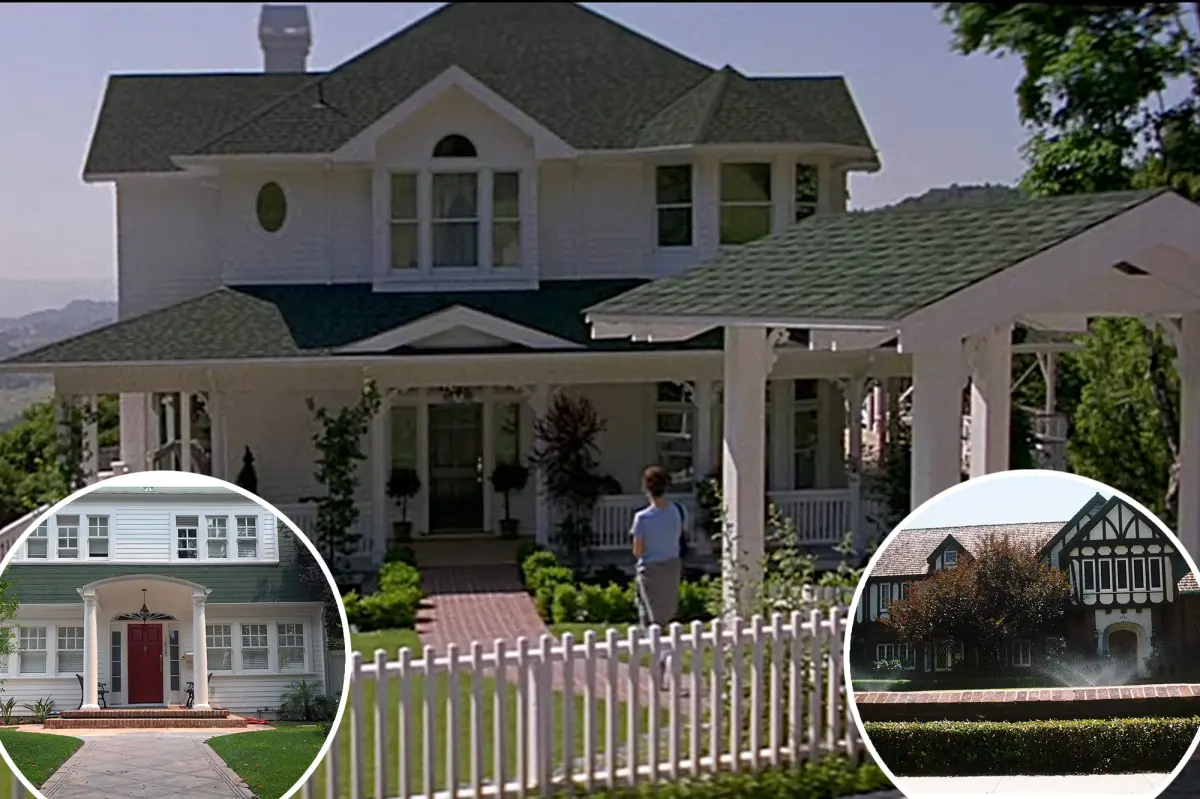
If you’ve ever watched a horror movie and found yourself more fascinated by the architecture than the actual bloodshed, you’re not alone. The biggest jump scare in famous horror films might not be the ghost in the attic or the knife in the hallway—it’s the sticker shock when you realize what those iconic homes would cost in today’s real estate market. A new study from AI video platform Magic Hour took a deep dive into real estate data from Redfin and Zillow to track down the legendary properties featured in some of cinema’s scariest movies and estimate their present-day market values. The result is a delightfully unnerving ranking of horror’s most famous homes, complete with price tags that could make even a ghost pause. Some of these properties are Los Angeles landmarks worth millions, while others are surprisingly modest small-town houses. But all of them have one thing in common: they’ve earned a permanent place in movie history, and their real-world value sometimes feels just as terrifying as anything that happened on screen.
Claiming the top spot as the priciest property on the list is the Loren mansion from the 1959 classic House on Haunted Hill. Nestled in Los Angeles, California, this residence is valued at a staggering $16,800,000—roughly 45.6 times the average U.S. home price. That kind of valuation puts it in a completely different tax bracket from the typical suburban haunted house, and it’s easy to see why. The mansion last changed hands for an eye-popping $18 million in October 2019, and it’s known in architectural circles as the historic Ennis House. Over the years, this landmark building has racked up more than 80 screen appearances, including memorable roles in Blade Runner (1982) and The Rocketeer (1991). There’s something almost poetic about a house that has played so many different on-screen personas, yet still carries a real-world mystique all its own. For horror fans and architecture buffs alike, this is the ultimate dream home—if you happen to have a few million dollars lying around, and if you don’t mind a little cinematic baggage along with the breathtaking design.
Runner-up honors go to the Hudson sisters’ mansion from What Ever Happened to Baby Jane?, a film that remains one of the most unsettling psychological thrillers of the 1960s. The home is estimated to be worth $8,540,000, and it’s located in the prestigious Hancock Park neighborhood of Los Angeles. The property actually sold for $8.5 million in December 2025, which puts its current valuation just barely above that recent sale price. It’s a fittingly dramatic setting for a movie about faded Hollywood glamour, family secrets, and deliciously sinister behavior. Meanwhile, properties from the 1996 slasher Scream sliced through the competition to claim the next two spots on the list. Casey Becker’s home in Glen Ellen, California, took third place with a value of $7,680,000, followed closely by Stu Macher’s house at $4,660,000. Stu’s home, which appears in four of the Scream movies, is located in Tomales, California, and sits on a sprawling 300-acre estate. It currently serves as an event venue, which means fans can actually tour the macher mansion, soak in the history of the 1990 modern Victorian, and imagine what it might have been like to survive a horror movie in such a stunning setting.
The rest of the top five is equally intriguing, especially for anyone who loves a good ghost story wrapped around a rising property value. The Darko family home from Donnie Darko (2001) closes out the top five with a valuation of $4,120,000. That may sound like a lot, but it’s even more striking when you consider that the home was estimated to be worth around $746,000 when the film first debuted. That’s an increase of about 453% before inflation—a return on investment that would make any real estate agent swoon. It also proves that even a movie about time travel, oversized rabbits, and existential dread can be a surprisingly solid property market predictor. Sidney Prescott’s home from the same fright franchise also secured a place in the top ten, landing in sixth place with a $3,810,000 price tag. There’s something fitting about the fact that a franchise built on suspense and survival also features homes that generate their own kind of suspense when the listing prices come out. For fans, these houses aren’t just backdrops—they’re characters in their own right, and their evolving market values add yet another layer to the terrifying fun.
Of course, not every horror home comes with a price tag that requires a lottery win. For horror fans looking for a real steal, Magic Hour also calculated the most budget-friendly spooky residences on the list. Buffalo Bill’s home from The Silence of the Lambs takes the crown as the most affordable property, valued at just $295,000 in Perryopolis, Pennsylvania. It last traded hands in February 2021 for $290,000, and it now operates as a themed short-term rental and event space. That means you can actually stay overnight in the same house where one of cinema’s most terrifying villains lived, and you won’t have to remortgage your life to do it. The Grabber’s house from The Black Phone (2021) and Jay’s home from It Follows (2014) rounded out the top three most budget-friendly options. The Grabber’s Wilmington, North Carolina pad is valued at $309,000, while Jay’s Sterling Heights, Michigan residence sits at $322,000. These modest price tags are a reminder that horror doesn’t require a Beverly Hills mansion to be effective. Sometimes the scariest places are the ones that look the most ordinary—because you can imagine them sitting right down the street from your own childhood home, waiting for the lights to go out.
Ultimately, the study offers a wonderful, humanizing look at the relationship between movies, memory, and real estate. Some of these homes sit in expensive neighborhoods with large plots of land and distinctive architecture, while others that feel just as iconic on screen are far more modest in real life. As Magic Hour co-founder and CEO Runbo Li put it, “Some of these homes sit in expensive neighborhoods with large plots of land and distinctive architecture, while others that feel just as iconic on screen are far more modest in real life. Once you take away what happened in the film, there’s often quite an appealing property underneath it all.” That observation cuts to the heart of why these places fascinate us. They are, at the end of the day, houses—places where people cook dinner, watch television, and go to sleep. The movies merely borrowed them for a time and filled them with shadows, screams, and unforgettable moments. When the credits roll and the cameras stop rolling, the houses remain, quietly waiting for their next chapter. Whether they’re worth millions in Los Angeles or a few hundred thousand in small-town Pennsylvania, these homes remind us that the mundane and the macabre are often two sides of the same address. And for anyone who loves horror, that’s a comforting, strangely beautiful thought: even the most terrifying houses can become homes again.