

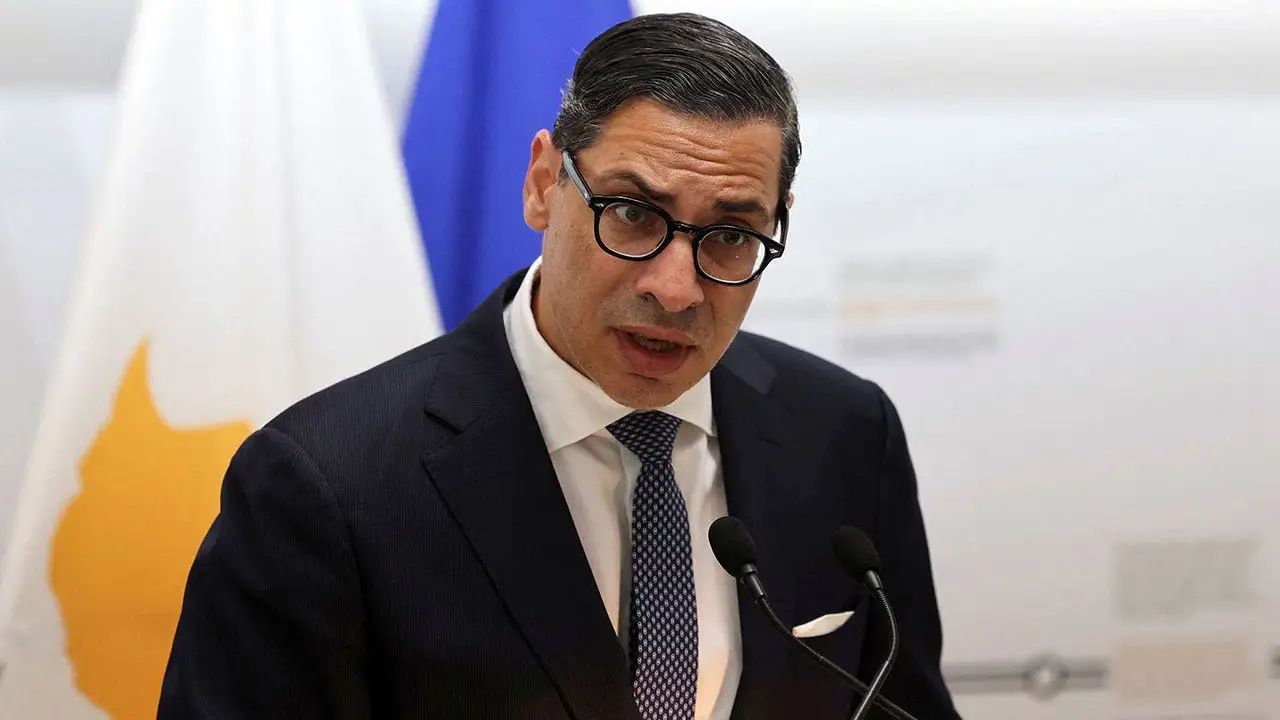
At the United Nations General Assembly in New York, where world leaders trade speeches about peace and justice, Cyprus’s foreign minister found himself sitting through a moment he found hard to stomach. As Turkish President Recep Tayyip Erdoğan took to the podium and passionately condemned Israel’s actions in Gaza—calling it a “genocidal mindset” and comparing the enclave to a “concentration camp”—Foreign Minister Constantinos Kombos listened with quiet fury. He was seated alongside Cyprus’s president, Nikos Christodoulides, and the two exchanged glances that said everything. To them, Erdoğan’s speech was not just political theater; it was a study in contradiction. Here was the leader of a country that, in Kombos’s eyes, continues to violate international law every day by occupying the northern third of a European Union member state, invoking the United Nations Charter to lecture others about morality. Kombos later told Fox News Digital that he and the president deliberately remained in the chamber to hear Erdoğan out, but both kept thinking the same thing: this is hypocritical and provocative. He said the gap between Erdoğan’s words and Turkey’s actions could not be wider—an ongoing violation, an act of aggression, an invasion, an occupation. The speech, in other words, was a sharp reminder that on the world stage, rhetoric often has very little to do with truth.
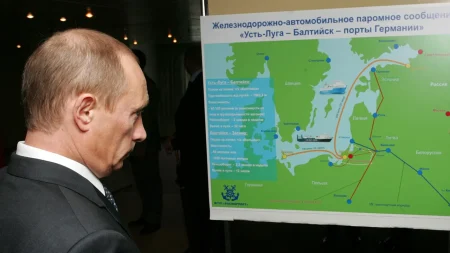
Kombos’s anger is rooted in a long and bitter history, but it is also anchored to a very specific modern-day dispute. He pointed to the Great Sea Interconnector, a massive planned subsea electricity cable that would connect the power grids of Israel, Cyprus, and Greece, finally pulling Cyprus out of its energy isolation and linking the eastern Mediterranean directly to the European network. The project is enormous—roughly 1.9 billion euros, more than 1,200 kilometers of cable, capable of transmitting up to 1,000 megawatts. The European Union has already committed 657 million euros to the Cyprus-Crete leg, seeing the cable as vital infrastructure for European energy security and for ending Cyprus’s decades-long dependence on its own isolated grid. But there is one massive obstacle: Turkey. Kombos said that Ankara has been threatening Cyprus and acting on those threats, especially in the island’s exclusive economic zone. Turkey has made illegal claims about maritime boundaries in the eastern Mediterranean, and in doing so, Kombos says, it has effectively blocked the project. He doesn’t mince words. The electrical connection between Greece, Cyprus, and Israel is being held hostage by Turkish expansionism. The project, which should be a symbol of regional cooperation and progress, has instead become another front in a geopolitical battle over who controls the waters of the eastern Mediterranean and the resources beneath them.
To understand why Kombos feels so strongly, one has to understand the island’s painful history. Cyprus has been divided since 1974, when a coup backed by the Greek military junta triggered a Turkish invasion. Since then, the island has remained split: the Republic of Cyprus in the south, internationally recognized, and the northern third controlled by Turkish Cypriots with the support of the Turkish military. That northern territory unilaterally declared itself the Turkish Republic of Northern Cyprus, but no country except Turkey recognizes it. A United Nations patrol buffer zone runs across the island, dividing communities and families. For fifty years, the world has paid lip service to reunification, and for fifty years, every effort has collapsed. The U.N.-backed framework calls for a bi-zonal, bi-communal federation—two communities living under one roof, with political equality and territorial adjustment. Turkey, in recent years, has pushed instead for a two-state solution, essentially asking the world to legitimize the division. Kombos is adamant that this is unacceptable. He says Cyprus wants negotiations to resume from where they stopped in 2017, but the key to any progress is Ankara. Turkey needs to give the green light to the Turkish Cypriot leadership, he said, and until that happens, there is no movement. He also stressed that a two-state approach runs contrary to the decisions of the United Nations Security Council and the entire international institutional framework. The U.N. recently tried to jolt the process back to life, with Secretary-General António Guterres traveling to Cyprus at the end of July to meet separately and jointly with the Cypriot president and the Turkish Cypriot leader. The fact that these meetings happened at all was encouraging, but Kombos remains cautious. He has seen too many promising starts collapse into frustration. What he wants is not new speeches or optimistic statements, but a concrete change in behavior.
The gap between what countries say and what they do is truly at the heart of Kombos’s testimony. Erdoğan spoke at the General Assembly with great moral outrage about Gaza. He described it as the most inhumane and shameful concentration camp of our time. He accused Israel of refusing to end its occupation and of possessing a genocidal mindset. Israel, for its part, strongly rejects these accusations, pointing to the complex realities of its fight against Hamas and the deeply difficult security environment in the region. But regardless of how one weighs the conflict in Gaza, Kombos says it is deeply uncomfortable for Erdoğan to invoke international law and human dignity while Turkish troops remain stationed in northern Cyprus. It is, he argued, a very clear example of the distance between rhetoric and action, words and deeds. For Cyprus, the memory of 1974 is still raw. Thousands of people were displaced, thousands were killed, and the island’s identity was violently carved in two. To hear Ankara now speak of occupation in Gaza was, for Kombos, almost too much to take. He did not deny the suffering of civilians in Gaza, but he insisted that when a country builds its foreign policy on double standards, it robs itself of any moral authority. The same international rules that Turkey invokes to criticize Israel are the very rules that Turkey refuses to apply to itself in Cyprus. That, to Kombos, is the essence of hypocrisy.
The shadow of Turkish military power also looms over other decisions, especially in the realm of armaments. Kombos expressed deep concern over the possibility that Turkey might be allowed to purchase U.S. F-35 fighter jets. For a country like Cyprus, which lives in the constant shadow of Turkish military action, this is not an abstract issue. It is existential. The F-35 is one of the most advanced fighters in the world, and introducing it into Turkey’s arsenal would undoubtedly shift the balance of power in the eastern Mediterranean. Kombos said this is something that concerns Cyprus as well as other countries in the region. He insisted that this cannot be accepted as the usual day at the office—this is important, and it upsets regional balances. At the same time, Cyprus has been building a closer relationship with Washington than ever before. Kombos described the U.S.-Cyprus relationship as probably at the highest level it has ever been. There are strategic dialogues, military cooperation, joint exercises, and efforts to make Cypriot infrastructure compatible with U.S. and NATO assets. Earlier this month, Washington renewed Cyprus’s exemption from U.S. International Traffic in Arms Regulations restrictions, allowing the transfer of American defense articles and services to the island. Cyprus is also eligible for U.S. Foreign Military Sales and excess defense articles programs. For a small country often overshadowed by larger powers, these are significant steps. They signal that Cyprus is no longer just a beautiful island in the sun, but an active, strategic player in a very volatile region.
For Kombos, the path forward is not through military bravado or nationalist ambition, but through consistent adherence to international law and genuine partnership. Cyprus, he says, wants to make sure it is an active and useful partner in the international system. Its location—poised between Europe, the Middle East, and North Africa—makes it naturally important, but its value is amplified by its relationships. Cyprus has close ties with Israel, with the Gulf states, with Europe, and increasingly with the United States. It is a voice for sanity in a region full of chaos. Kombos believes the Great Sea Interconnector, when it is ultimately built, will be more than just a cable under the sea. It will be a bridge between civilizations and economies, a symbol of what cooperation can achieve when greed and nationalism are set aside. But first, the world must confront the reality that Turkey is undermining the very principles it preaches. The United Nations, which was founded on the idea that dialogue can replace conflict, has a responsibility to address this gap between word and action. Kombos is not naive; he knows that progress will be slow. But he remains committed to a vision of Cyprus that is reunified, peaceful, and connected—economically and politically—to the broader world. This year, amid the storms of Gaza, Ukraine, and the many other conflicts that haunt the international order, his voice is one of principle. He speaks for a small nation, but the issues he raises are as large as any facing the global community. In a world where too many leaders use the United Nations as a stage for propaganda, Cyprus’s foreign minister wants to remind everyone that words matter—but deeds matter far more.