


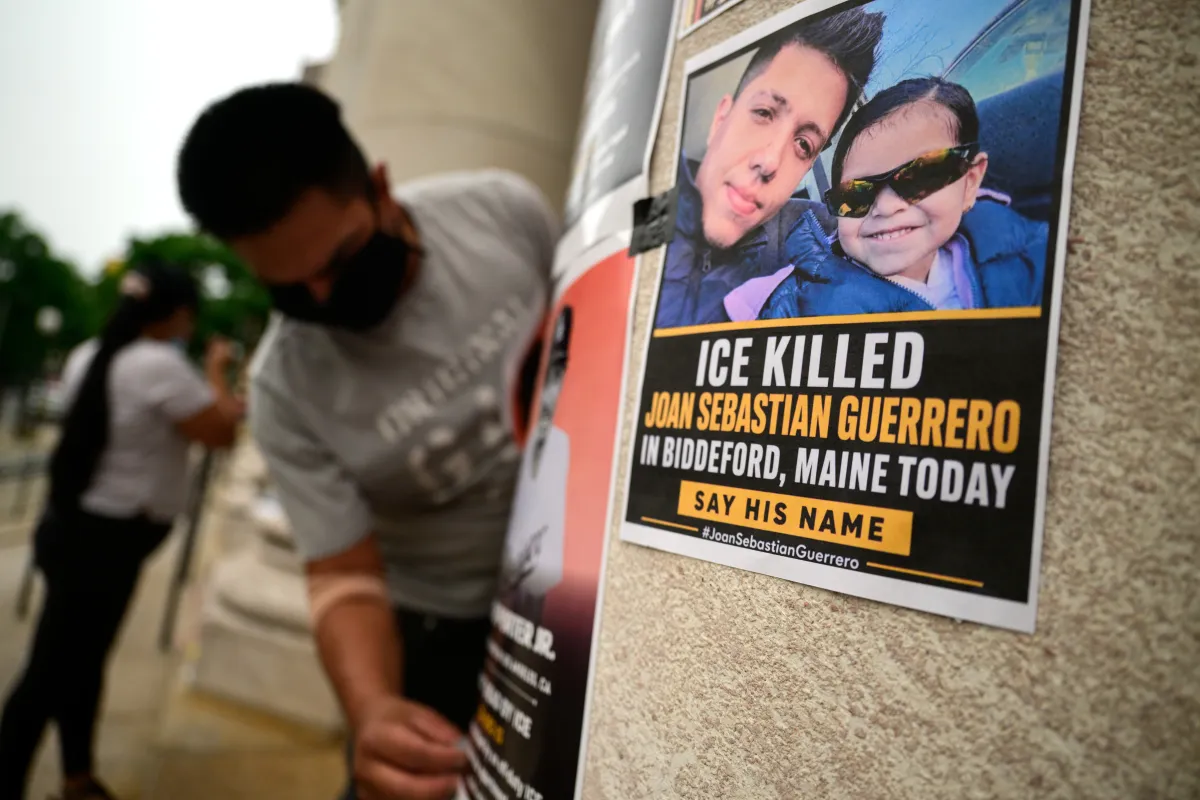
For the Durán Guerrero family, the request was simple: they wanted their daughter’s car seat back. It was a small piece of ordinary life, a practical object that belonged to Dulce, a child whose father had been taken from her. But on Tuesday, at a House Oversight Committee hearing, the family’s attorney, Sean P. Murphy, revealed why that simple request could never be granted. The car seat was still in evidence, and it would not be coming home. When Carolina, Joan Sebastian Durán Guerrero’s wife, asked the Maine Attorney General’s Office why the seat could not be returned, the answer came with a terrible clarity: a bullet fired by a federal agent had struck and pierced Dulce’s car seat. That same kind of bullet, from the same kind of agent, had killed her husband. Joan Sebastian had been shot and killed by a U.S. Immigration and Customs Enforcement (ICE) agent in Biddeford, Maine, in July, as he drove away from his own home. The car seat was not a piece of evidence to the family. It was a reminder that their daughter had come within inches of losing her life too. Murphy repeated the haunting fact: early reporting had suggested Dulce was in the car with her father at the moment of the shooting. “She was not, thank God, but if she had,” he said, before pausing. The unfinished sentence hung over the hearing like a weight, carrying an imagined version of that July day in which a child’s life ended alongside her father’s.
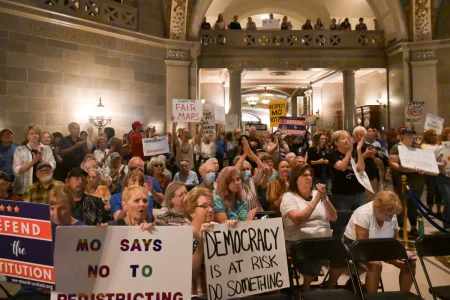
The moment was part of a larger and angrier story about federal power, fatal force, and the families left behind. The hearing, led by Democratic members of the House Oversight Committee, was convened to examine fatal shootings connected to Department of Homeland Security (DHS) agents during the Trump administration. It was not just about one man in Maine, though one man’s story anchored the emotional testimony. Around the table sat people whose lives had been broken by similar tragedies. There were the sons of Lorenzo Salgado Araujo, another immigrant who had been shot dead in Houston just days before Joan Sebastian was killed. There was the mother and brother of Renee Nicole Good, the mother of Ruben Ray Martinez, and a friend of Alex Pretti. Each had come to Washington not because they wanted to testify, but because they had been thrust into a grief they never asked for. They spoke about the ordinary details of their loved ones’ lives, the sudden calls, the impossible news, and the silence that followed. Murphy called the gathering an exclusive club whose membership dues no one would ever want to pay, a congregation whose baptism by hellfire no one should ever have to endure. The phrase was stark, but it captured the strange fellowship among these families. They were strangers from different cities and different backgrounds, bound together by a single terrible experience: someone they loved had been killed by a federal agent, and they were still searching for answers.
The story of Dulce’s car seat became a symbol of that unanswered search. Murphy explained that the family had asked for the return of evidence collected from the scene of the shooting. It was a natural request. People want to gather what is left, to hold objects that were touched by someone they have lost. But for the Durán Guerrero family, the process of grieving was interrupted by a painful bureaucratic truth. The car seat could not be returned because it too had been struck by a bullet. In some ways, the seat was evidence of what might have been. It had been placed in the car for Dulce, to keep her safe. It was built to protect a child in a crash. But it could not protect her from a bullet fired by a federal agent, and the fact that the seat was damaged meant the family could not even bury it, display it, or keep it close. It remained locked away in an evidence room, a relic of violence that the authorities still considered important to the investigation. For the family, the car seat was not an exhibit. It was a piece of their daughter’s life, a life that had almost ended on the same day her father’s did. The pause in Murphy’s testimony, the unfinished thought, asked every listener to imagine the alternative: what if Dulce had been in the car? What if the bullet that pierced the seat had struck her instead? What would be left of the family then?
The hearing gave voice to a pattern that the families said had gone unnoticed for too long. There was Guerrero in Maine, killed in his vehicle as he drove away from his home. There was Salgado Araujo in Houston, shot dead just days earlier. There was Renee Nicole Good, whose mother and brother had come to tell lawmakers about the woman they loved. There was Ruben Ray Martinez, whose mother testified about the weight of losing a child. There was Alex Pretti, remembered by a friend who carried his story forward. These were not just names on a list. They were fathers, sons, daughters, and friends. They were people with routines, dreams, and people who loved them. The families did not come to Washington to relive their pain; they came because they wanted accountability, or at least recognition. They wanted the country to understand that a fatal shooting is not just a headline or a statistic. It is a life cut short, a family forever rearranged by a single moment of violence. The committee hearing, with its legal questions, its members’ statements, and its procedural rituals, could not bring anyone back. But it could provide a stage for grief, and it could make a public record of the fact that these families are still waiting. They are waiting for investigations to conclude, for officers to be held accountable, for policy changes that might prevent another family from joining their terrible club.
The specific investigation into the Maine shooting remains ongoing. The Maine Attorney General is currently examining ICE’s use of deadly force in the state, a process that carries its own weight. For the Durán Guerrero family, that investigation is a source of both hope and dread. They want to know why a federal agent fired at Joan Sebastian, why the bullets were so close to their daughter, and who will be held responsible. But they also know that investigations can be slow, and that even when they end, they do not bring relief. The fact that the case is being reviewed by state authorities is important, especially because the shooting involved a federal agent. It raises questions about jurisdiction, transparency, and the relationship between local communities and federal law enforcement. For the families at the hearing, the investigation is not merely a legal formality. It is a measure of whether the justice system truly values the lives of those who have been killed. The Maine Attorney General’s office has not yet released its conclusions, and the family’s attorney has not commented beyond the hearing. But the testimony made clear that the family will not quietly go away. They will ask questions. They will ask for the return of evidence. They will remind the world that a young girl’s car seat is still stained by the same bullet that took her father, and that Dulce will grow up without him.
Finally, this was, at the time of its reporting, a developing story. The hearing on Tuesday was not the end of the matter, but another chapter in a long and painful process. Newsweek, which published the original report, noted that the story was still evolving and that updates would follow. It also disclosed that its reporters and editors had used Martyn, an AI assistant, to produce the article. That disclosure is itself a sign of how news is made in a changing media environment, but it does not change the human gravity underneath the words. Behind the AI-generated summary, behind the committee hearing, behind the bureaucratic question about a car seat, there is a family in Maine trying to make sense of a loss that makes no sense. There is a child who will never have her father walk through the door again. There is a wife who asked a simple question and received a devastating answer. There are other families across the country who saw their own stories reflected in that answer. The car seat cannot be returned. The bullet couldn’t be undone. The dead cannot speak. But the living can, and on Tuesday, they did. They told lawmakers about the car seat, about the unfinished sentence, about the fear and anger that have become their daily companions. They asked for more than answers. They asked for a country where a father could drive away from his own home without being shot, where a child’s car seat could remain just a car seat, and where no family would ever have to sit in a hearing room and hear that the most ordinary objects have been turned into relics of violence.