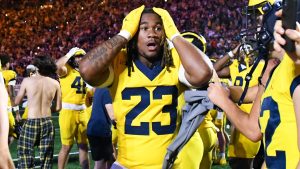



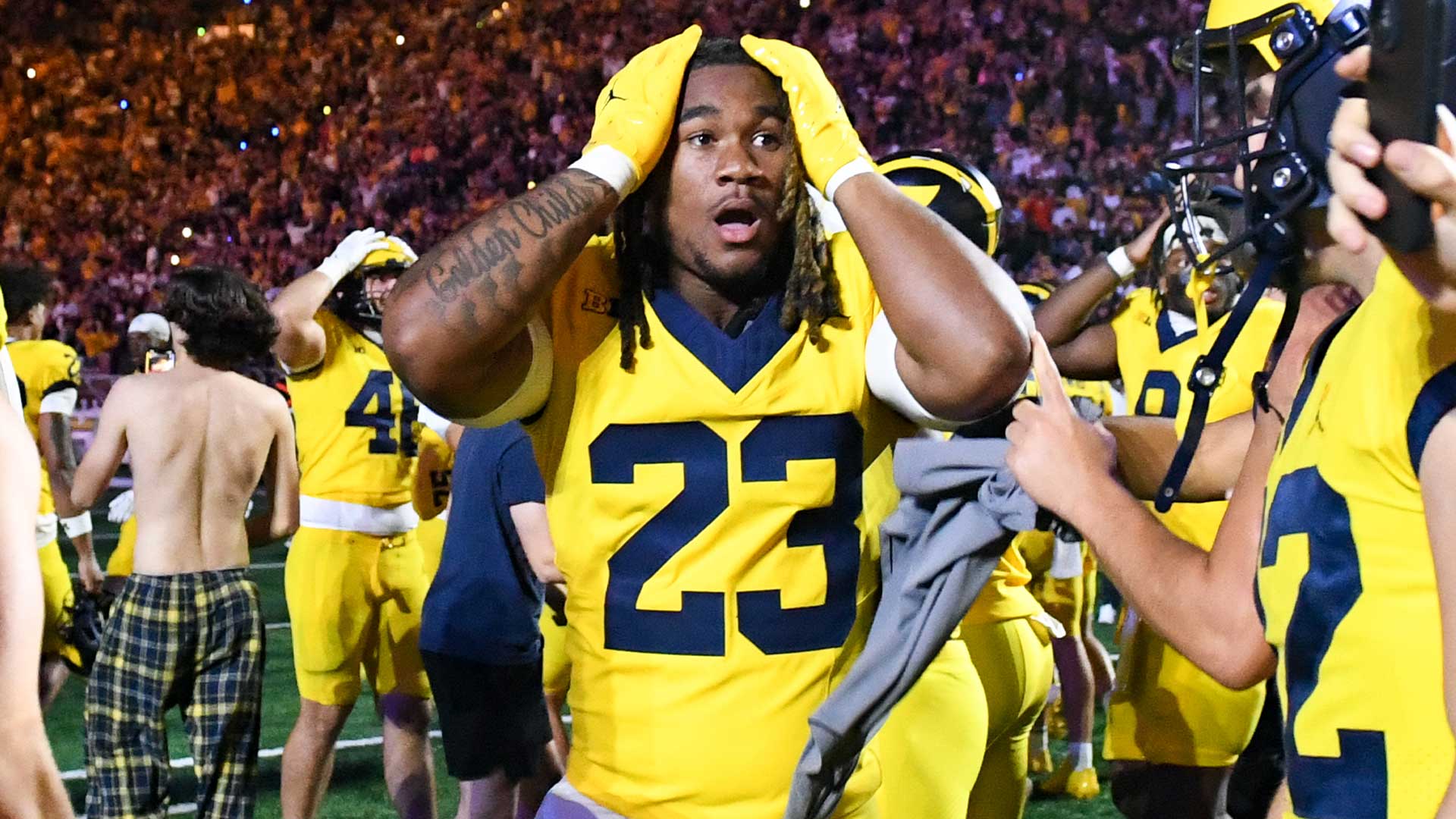
College football has a way of turning ordinary Saturday nights into something you can’t stop talking about, and the ending of the Western Michigan–Michigan game is proof. Heading into Week 2, the controversy hasn’t slowed down at all. Despite formal appeals, official statements, and lingering questions, the debate over how much time was actually left on the clock is still raging. The call stands. The league isn’t going to step in. But that hasn’t stopped anyone from wondering what really happened in Ann Arbor. The scene was set for a blowout: Michigan came in as a nearly four-touchdown favorite, and most people expected the Wolverines to roll. Instead, Western Michigan refused to go away. The Broncos stayed competitive all night, even taking a 12-6 lead at one point and standing on the edge of the biggest upset in program history. Then came the final sequence that no one will forget. As the clock hit zero, Michigan quarterback Bryce Underwood, who has a cannon for an arm, launched a desperation Hail Mary into the end zone. The ball bounced off multiple defenders in the back of the end zone, and for a moment it looked like the game was over. But the TV broadcast clock showed zero, and the replay officials huddled up. They came back with a stunning decision: one second still remained when the previous pass hit the turf out of bounds. That one second gave Michigan one more chance. Underwood took advantage, firing a game-winning Hail Mary touchdown to JJ Buchanan as time expired. The wild final play was only the beginning of a controversy that would become the talk of college football.
Later Saturday night, as the shock settled in, the debate moved from living rooms to locker rooms. Both coaches found themselves in front of microphones, trying to make sense of a finish that felt impossible to process. Michigan’s coach, despite coming out on the winning side, offered an honest and somewhat measured take. He said he knew it was close when the ball sailed back toward the end zone. He glanced up at the clock and saw it ticking to zero just as somebody touched the ball. He didn’t know who had touched it, but apparently it was a defender who had already established an out-of-bounds position. He said he assumed the officials got it right, noting that they looked at it and that the technology they have is very advanced. It was a surprisingly gracious response from a coach who could have simply celebrated the win. Western Michigan coach Lance Taylor took a different approach. He refused to make excuses. He said that when he looked up at the clock, it was past zeros before the ball was touched. He knew the play would be reviewed because it was the last play of the game. He also admitted that because his defense had defended the first Hail Mary so well, he wasn’t worried or concerned about sending his guys back out to defend it a second time. Unfortunately for the Broncos, they didn’t defend it as well the second time. That honesty made the loss even more painful. Meanwhile, both the Mid-American Conference and the Big Ten issued statements after the game. At that point, everyone seemed ready to accept the outcome, even if it didn’t feel right. The controversy, though, was far from over.
Sunday brought a new layer to the story, as NBC Sports felt the need to address the growing controversy on air during the Washington vs. Washington State game. Host John Fanta delivered a statement on behalf of the network regarding the clock dispute. He made sure to remind viewers that the TV graphics they see at home don’t dictate the official game time. The official time of the game is kept by the Big Ten, he explained. The cameras are not the official arbiter of timekeeping within the game. That responsibility belongs to the Big Ten and the game officials. He also pointed out that after the game, the Big Ten released a statement and raw video from its replay process that showed how and why the decision was made. It was a necessary clarification, because so many fans had watched the broadcast and seen zeros on the clock. If you were watching at home, you probably felt certain the game was over. The network’s message was simple: don’t trust what you saw on the screen. But that message didn’t sit well with everyone. It raised more questions than it answered. If the TV broadcast isn’t the official clock, then what is? And why did the replay officials need so much time to decide something that looked so clear? The statement from NBC Sports was an attempt to put the controversy to rest, but it only fueled the fire. Fans on social media were already sharing clips, breaking down every frame, and arguing about whether the ball was actually touched before the clock expired. The human instinct to want a fair and understandable ending had been violated, and no network statement was going to fix that.
By Monday, the conversation had shifted from what happened to how it happened, and that’s where FOX Sports rules analyst Mike Pereira entered the picture. Pereira joined “The Joel Klatt Show” to break down the latest controversy, and he didn’t hold back. As someone who knows the rulebook better than almost anyone, his explanation carried weight. He focused on the discrepancy between what the replay officials saw and what television viewers saw. According to Pereira, the official replay officials have been told that if there is a discrepancy, they should use the television footage. They should not use their own footage in the command center. They should use the footage that ten million people are watching, not the one that’s three. That was a critical point. The officials apparently relied on a different feed, and that made all the difference. Pereira defended the officials themselves, saying they made the best possible decision in real time with the information they had. But he was highly critical of the review result. He said that when it’s all said and done, that’s what should have happened, and there shouldn’t have been another play. He also said they did not look at the television copy of what was being shown to all of us. In other words, the process was flawed, even if the people involved were trying their best. That distinction mattered. It meant the controversy wasn’t about incompetence or bias. It was about a breakdown in procedure. And that made the whole thing even more frustrating for Western Michigan fans, who now had to accept that a technical mistake might have cost them a historic victory.
Then came Tuesday’s twist. After initially accepting the ruling, the MAC reversed course and decided to appeal. MAC Commissioner Jon Steinbrecher released a statement indicating that proper replay protocol was not followed. It was a bold move, and it gave Western Michigan fans a glimmer of hope that maybe, just maybe, the outcome could be changed. But that hope didn’t last long. Following a careful review, the NCAA denied the MAC’s appeal. The Football Bowl Subdivision Oversight Committee stated that it does not have the power to alter the outcome or final score of a game. It was a straightforward decision, but it still felt like a gut punch. The appeal was always a long shot, and everyone knew it. College football has a long history of controversial calls, and almost never does the final score get changed after the fact. There are too many moving parts, too many variables, and too much precedent to ignore. The committee’s ruling made it official: Michigan remains the winner of the game. The controversy, however, remains part of the story. The MAC’s decision to appeal was significant because it showed that the conference believed something was genuinely wrong. It wasn’t just sour grapes. It was a formal objection to a process that failed. But in the end, the process didn’t care. The scoreboard still read Michigan, and Western Michigan had to move on.
So where does that leave everyone? Both Michigan and Western Michigan will head into Week 2 with an outcome that will always be known as the “what-if” game. What if the officials had looked at the television footage? What if the clock had been handled differently? What if Western Michigan had held on for one more second? Those questions will linger for years. The controversy has already become part of college football lore, the kind of ending that gets replayed during slow news days and debated by fans who weren’t even alive when it happened. For Michigan, the win is real, but it’s also tainted. The Wolverines didn’t get the kind of clean, decisive victory that builds confidence. Instead, they got a chaotic finish that left everyone arguing. For Western Michigan, the loss is devastating, but there’s also a strange kind of pride in knowing they pushed a powerhouse to the absolute limit and only lost because of a controversial replay decision. The players on both sides will remember this game for the rest of their lives. The coaches will be asked about it for weeks. The fans will never let it go. And while the official record will show Michigan as the winner, the human memory of the game will always be about the controversy. In the end, the call will stand, there will be no league involvement, and the season will move forward. But the debate over how much time was actually left on the clock won’t disappear anytime soon. It’s the kind of story that college football was made for, for better or worse. It’s messy, emotional, and impossible to ignore. And no matter which side you were on, you have to admit it made for one unforgettable Saturday night.