


The internet has always been a place where ideas, both noble and dangerous, can find shelter. In recent days, a corner of that digital world—one used by violent far-left extremists—began to crumble. Websites connected to Portland’s Rose City Antifa and Jane’s Revenge, a militant abortion-rights group, started going dark almost immediately after the U.S. State Department placed a target on the technology provider that kept them online. That provider, an Italian collective known as Autistici/Inventati, or A/I, was officially designated a Specially Designated Global Terrorist. For years, the collective had operated as a kind of digital lifeline for activists and radicals, offering encrypted communication tools, web hosting, and anonymity services. But the State Department says A/I was doing far more than defending privacy: it was providing the backbone for a transnational network of violent left-wing extremism. “Today’s news demonstrates the extent to which the A/I Collective was the digital infrastructure of the global Antifa terror network,” a State Department official said. The designation marked a rare and dramatic move—one that triggered an immediate unraveling of sites, servers, and services used by extremists to organize, plot, and hide from law enforcement. It also sent a clear message: the digital shadows that once sheltered these groups would no longer be safe.
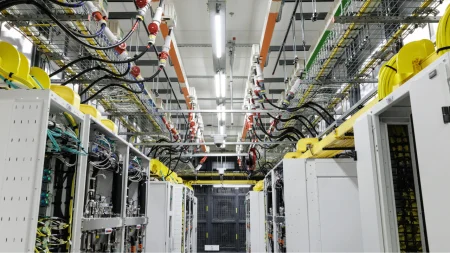
To understand the significance, it helps to look at what A/I actually did. The collective described itself as a small, volunteer-run technology group from Italy, dedicated to “digital self-defense” and providing tools for activists in repressive environments. In that sense, its mission sounded almost noble. But the State Department’s designation tells a darker story. According to U.S. officials, A/I operated an encrypted ecosystem where violent left-wing groups in the United States and Europe could communicate without fear of surveillance. The collective reportedly offered encrypted chat and email services, web hosting, secure video tools, and anonymity services to groups the U.S. government has linked to attacks and plots. One of its most notable platforms, NoBlogs, hosted thousands of websites, many of which became gathering spots for extremists. The sanctions package that followed the designation was aggressive: Americans and U.S. financial institutions were barred from doing business with A/I, and any assets the collective held under U.S. jurisdiction were frozen. For groups relying on A/I’s infrastructure, the effect was immediate and disorienting. It was as if the wall socket they had plugged into for years suddenly stopped delivering power. The State Department went further, claiming that a media organization using A/I services had disseminated material from Hamas, Iran’s Islamic Revolutionary Guard Corps, Hezbollah, and other designated terrorist groups. That claim, if true, would place the collective at the center of a web of violence that extended far beyond street clashes and firebombings.
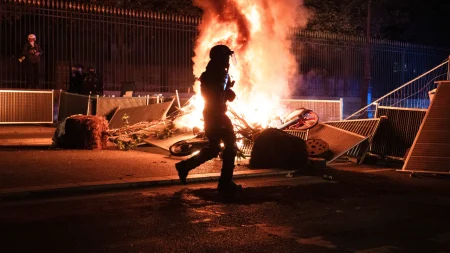
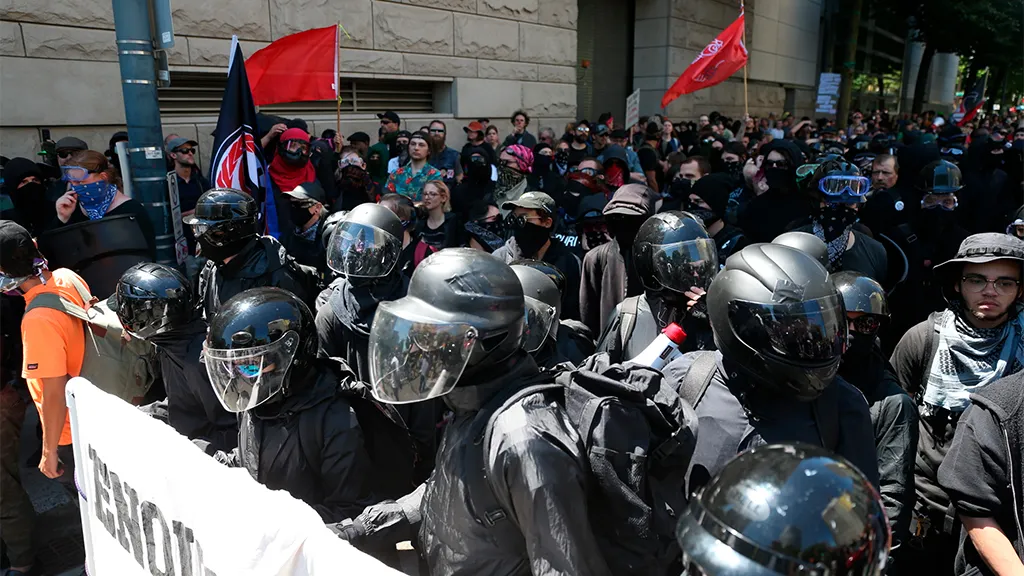
The most concrete example of A/I’s alleged role in American violence involves Rose City Antifa, a group that has long operated in Portland, Oregon. The State Department specifically named a website hosted by A/I—Rose City Counter-Info—as a tool used by the group to publish personal information about U.S. Immigration and Customs Enforcement personnel. That kind of doxxing is not just harassment; it is often a prelude to physical danger, creating a target list for those willing to act. The site also served as a hub for organizing violent activity against federal agents. In one alarming instance, the State Department said Rose City Antifa used the site to distribute an online flyer urging supporters to aim laser pointers at Customs and Border Protection helicopters. That might sound like a childish prank, but federal records show it had real consequences. One man later pleaded guilty to aiming a laser at a CBP helicopter, forcing the aircraft to abort a planned landing. The incident illustrates how digital encouragement on obscure websites can translate directly into criminal acts in the physical world. The shutdown of Rose City Counter-Info, along with other A/I-hosted sites, therefore represents a significant blow to a group that has spent years using the internet as a shield while targeting law enforcement with impunity. In the aftermath of the designation, these sites became inaccessible or went dark, leaving group members without a familiar platform and, presumably, with a growing sense of vulnerability.
Jane’s Revenge is another group whose online presence took a hit. The militant abortion-rights organization has been linked to a series of attacks on pregnancy centers across the country, particularly after the Supreme Court’s Dobbs decision overturned Roe v. Wade. The State Department says Jane’s Revenge used A/I services to publish communiqués claiming responsibility for those attacks and to incite copycat violence. One of the most prominent incidents came in May 2022, when a crisis pregnancy center in Madison, Wisconsin, was firebombed. Jane’s Revenge claimed responsibility. For months, the group’s name appeared in threatening graffiti and letters tied to attacks on pro-life organizations, prompting federal investigations and heightened security at women’s health clinics. While the group may have seen itself as fighting for reproductive rights, federal authorities viewed its tactics as terrorism. The use of encrypted, anonymous platforms allowed members to broadcast their actions without consequence—until now. With A/I’s infrastructure compromised, the group has lost a key channel for claiming responsibility and mobilizing supporters. The Department of Justice and FBI have made clear in recent years that they are paying close attention to these networks. In one sweeping federal probe, 15 Antifa radicals were indicted and 12 arrested in connection with efforts to interfere with immigration enforcement operations in Minneapolis. The crackdown suggests that the era of anonymous far-left violence is coming to an end, or at least becoming far more difficult to sustain.
In the days following the State Department’s action, the impact was visible in real time. The NoBlogs platform, which is hosted by A/I and contains thousands of sites, was intermittently unavailable. Some individual pages remained accessible; others returned errors or timed out, creating a chaotic and confusing situation for users who had come to rely on the platform as a permanent home. The outages raised obvious questions: Did U.S. agencies directly disable A/I infrastructure, or was the chaos caused by the collective itself, its vendors, or its users scrambling in the wake of the designation? The State Department has not said. What is clear is that the designation sent shockwaves through the far-left ecosystem. A State Department official described the effect in stark terms: “Just one day after the extremist collective was designated as a Specially Designated Global Terrorist, an untold number of servers and websites—used by far-left extremists to plot violent attacks, target federal agents, and conceal their crimes from law enforcement—have been shut down.” For the groups affected, the loss is not just logistical but psychological. Anonymity was their shield, and the sudden collapse of a trusted provider undermines the illusion of safety. A/I itself responded defiantly, posting a statement on a NoBlogs-hosted page denying the allegations and vowing to continue. “We will not back down,” the group said. “Antifascism and anticapitalism are not terrorism. Protesting is not terrorism.” That defiant message, however, was delivered from a platform that was itself crumbling, a fitting symbol of the pressure now bearing down on these networks.
The designation of the A/I Collective represents a turning point in how the U.S. government confronts far-left extremism. For years, law enforcement focused heavily on the threat from the far right, while far-left groups operated with a degree of impunity, often cloaking themselves in the language of social justice and resistance. But the State Department’s action signals a broader shift. By targeting the digital infrastructure that far-left networks depend on, the government has found a way to dismantle them without necessarily kicking down doors or making mass arrests. The official described the move as “a devastating blow to the transnational far-left networks that have plagued America and our allies for years.” Whether that will prove true remains to be seen. The internet is resilient, and groups like A/I may seek refuge in other jurisdictions or technologies. But the sanctions have created a chilling effect, making it harder for extremist groups to find reliable service providers, move money, or communicate securely. At the same time, the designation raises uncomfortable questions about the line between activism and terrorism. A/I’s members insist they are antifascists, not terrorists; their supporters see them as digital Robin Hoods protecting the vulnerable. But the U.S. government sees a pattern of violence—doxxed agents, attacked helicopters, firebombed clinics—that cannot be dismissed as protest. In the end, the story of A/I is not just about a technology collective in Italy. It is about how the internet has become the battlefield for ideological conflict, and how the struggle to control what happens online can have very real consequences offline. As websites go dark and servers fall silent, one thing is certain: the fight over who gets to use digital tools for “self-defense” and who gets labeled a terrorist is just beginning.