



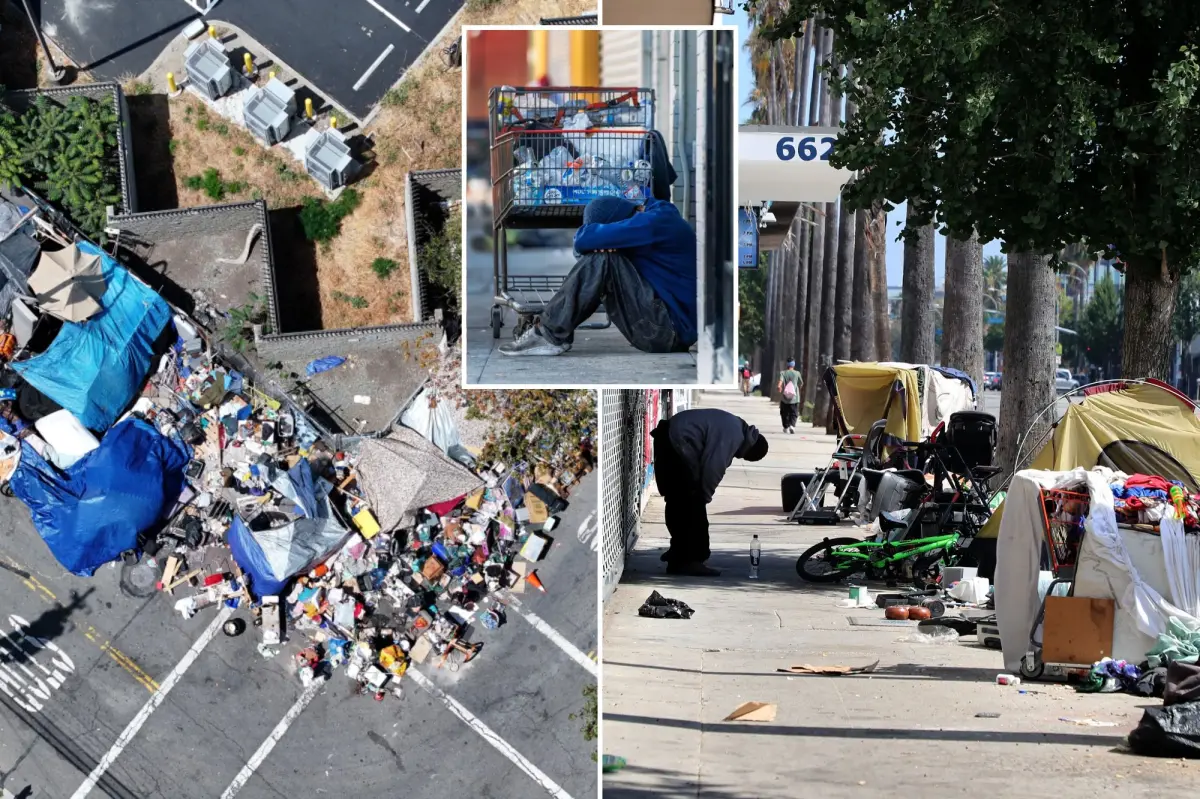
For nearly a decade, California has been living through one of the most closely watched criminal-justice experiments in modern American history. In 2014, voters passed Proposition 47, a landmark measure designed to reduce mass incarceration by reclassifying certain drug and property crimes from felonies to misdemeanors. The idea was simple and, to many, compassionate: stop sending low-level offenders to prison and instead reserve the most serious consequences for serious crimes. But a new study from the Public Policy Institute of California suggests that well-intentioned policy came with painful and largely unanticipated costs. Between 2015 and 2019, the law appears to have contributed to roughly 7,000 more people living on the streets, accounting for about 10 percent of the state’s unsheltered homeless population during those years. In human terms, that means thousands of real people—people who might have had a roof over their heads, even if it was a jail cell—wound up sleeping in doorways, under freeways, or in tent encampments. The researchers emphasize that Proposition 47 didn’t create California’s homelessness crisis all by itself, but it clearly made a bad situation worse, and for the first time, the study draws a direct line between the law and the growing number of Californians without a place to call home.
The researchers arrived at these conclusions by comparing California with other states that had similar patterns of homelessness before the law took effect, then watching how the numbers diverged afterward. What they found was a troubling pattern. In the four years following Proposition 47’s passage, unsheltered homelessness in California rose at a noticeably faster rate than in those comparison states, and the gap was large enough that the policy itself seemed to be the driving force. The same pattern appeared inside California’s own counties. Counties where drug arrests and jail populations dropped the most were the same places where unsheltered homelessness and overdose deaths increased the most. This kind of evidence doesn’t prove every individual story, but it creates a powerful statistical picture. It suggests that when the criminal justice system steps back, it doesn’t necessarily mean communities step in. People who once would have been swept up into jails or prisons—places that, however imperfectly, provided food, shelter, and sometimes treatment—were now left to fend for themselves on the streets. For many, the sidewalk became their only option. The study’s lead author, Magnus Lofstrom, put it bluntly: jails and prisons do serve as a source of shelter for people who are experiencing homelessness or are teetering on the edge of it. Removing that safety net, even a punitive one, had real and measurable consequences.
But housing was only part of the story. The same study found that Proposition 47 likely contributed to a 7 to 8 percent increase in drug use, measured through overdose deaths and hospitalizations. That may not sound like an enormous number, but translated into human lives, it represents hundreds of tragedies—people who overdosed because they couldn’t access the help they needed, or because the threat of arrest no longer pushed them into treatment. At the same time, the number of Californians receiving drug treatment fell by a staggering 20 percent. The reason is deeply tied to the criminal justice system. In the past, many people entered treatment programs because courts ordered them to do so as part of a sentence or diversion program. When Proposition 47 downgraded drug possession from a felony to a misdemeanor, that leverage largely disappeared. Courts referred far fewer people to rehabilitation services, and without that push—or, in many cases, without any support at all—people struggling with addiction slipped through the cracks. The law was meant to be more humane, but for many addicts it effectively meant being left alone with their disease. No arrest, no court date, no treatment, no recovery. Just a longer, harder road to overdose or serious illness. It’s a cruel irony that a reform aimed at reducing the harms of the criminal justice system may have inadvertently increased the harms of addiction.
None of this happened in a vacuum, and supporters of Proposition 47 have always argued that the law was never intended to be a complete solution. It was passed, in large part, to address tragic prison overcrowding in California, which a federal court had ruled violated the Eighth Amendment’s ban on cruel and unusual punishment. On that front, the law did what it was supposed to do: it reduced incarceration, prevented countless people from spending years behind bars for nonviolent offenses, and saved the state billions of dollars. Those are not insignificant achievements, especially in a country that locks up more people per capita than almost any other. The problem, as the study makes clear, is that reducing the prison population without investing in housing, treatment, and mental health services left many vulnerable people with nowhere to go. The former inmate, the addict, the mentally ill person sleeping on a park bench—they didn’t disappear when the handcuffs came off. They simply became more visible, more vulnerable, and more likely to die from an overdose or exposure. This is the uncomfortable tradeoff that the report forces Californians to confront. Compassion and cost savings are not enough on their own. If you open the gates of the prison or the jail, you also have to open the doors of the clinic, the shelter, and the supportive housing program. Otherwise, you are not truly solving a problem; you are just moving it from one part of society to another.
California voters seemed to sense this failure, and in November 2024 they took dramatic action to partially undo Proposition 47. By a wide margin, they passed Proposition 36, a new measure that increases penalties for certain drug and theft crimes, particularly for repeat offenders. Supporters argued that stiffer penalties would push people into treatment and reduce the chaos on the streets. But Proposition 36 contains no dedicated funding for drug treatment or housing, and that has left many experts skeptical that it will achieve its goals. It is hard to force someone into treatment if no treatment beds are available, and it is nearly impossible to stop homelessness by cycling people through jails without a plan for what happens when they get out. The cycle of frustration is understandable. Californians see encampments growing, shoplifting increasing, and open drug use becoming more common, and they want something to change. But if the state simply swings back to a harsher approach, it risks repeating the exact same mistake in reverse: punishing people without providing the services that would actually address the root causes of addiction and housing instability. The passage of Proposition 36 may provide short-term relief for crime-weary residents, but without a serious investment in the social infrastructure that Proposition 47 lacked, it may simply recreate the old problem of mass incarceration without solving the new problem of mass homelessness.
What the study ultimately shows is that there are no easy answers in criminal justice reform, and no single policy is responsible for California’s sprawling homelessness crisis. The state’s affordability crisis, lack of housing supply, decades of underfunding in mental health care, and the lasting economic scars of the pandemic all play enormous roles. Proposition 47 alone did not put 7,000 people on the streets; it just added another layer of pressure to an already overloaded system. And yet the findings are hard to ignore. When you decriminalize drug possession and stop arresting people for petty theft, you have to do more than simply trust them to get better on their own. The study’s authors stress that they are not arguing against criminal justice reform; they are arguing for a more honest conversation about its side effects. The real lesson may be that for too long, California treated the criminal justice system as a makeshift form of social welfare. We used prisons and jails as shelters for the homeless, detox centers for the addicted, and mental health facilities for the mentally ill. When we stopped doing that, the people who relied on those institutions—even cruelly and involuntarily—were left without a second safety net. The answer isn’t to go back to the era of mass incarceration, and it isn’t to look away from the suffering on our streets. The answer is to build the supporting systems we never had: more affordable housing, more accessible drug treatment, more community-based mental health care. Until then, we will keep preaching the same painful lesson, one study at a time. For the 7,000 people in this report, and hundreds of thousands more across the country, the policy debate is not abstract. It’s about where they sleep tonight, whether they get help tomorrow, and whether they live to see the change we promise.