


Buc-ee’s is a peculiar American phenomenon. It’s a place where the sheer absurdity of its size meets an almost religious devotion to cleanliness, and it has captured the hearts (and stomachs) of road-trippers across the country. At the center of this empire sits a grinning, red-capped beaver named Buc-ee, whose image adorns everything from T-shirts to novelty coffee mugs. But as beloved as this roadside titan is to its customers, and as exciting as its recent expansion into new territories like Arizona might be, there is a stark, deeply human undercurrent to this story that often goes unnoticed. While the public sees a dizzying wonderland of snacks, souvenirs, and the world’s most pristine restrooms, the reality behind the beaver’s smile is one of strict discipline, rigorous physical demands, and an uncompromising corporate culture that has sparked intense debate among the men and women who keep the engine running. The company’s latest move— a massive new location in Goodyear, Arizona, as part of a fifteen-store expansion plan— has once again thrust these conflicting narratives into the spotlight, forcing us to ask a simple question: what is the real cost of that flawless experience?
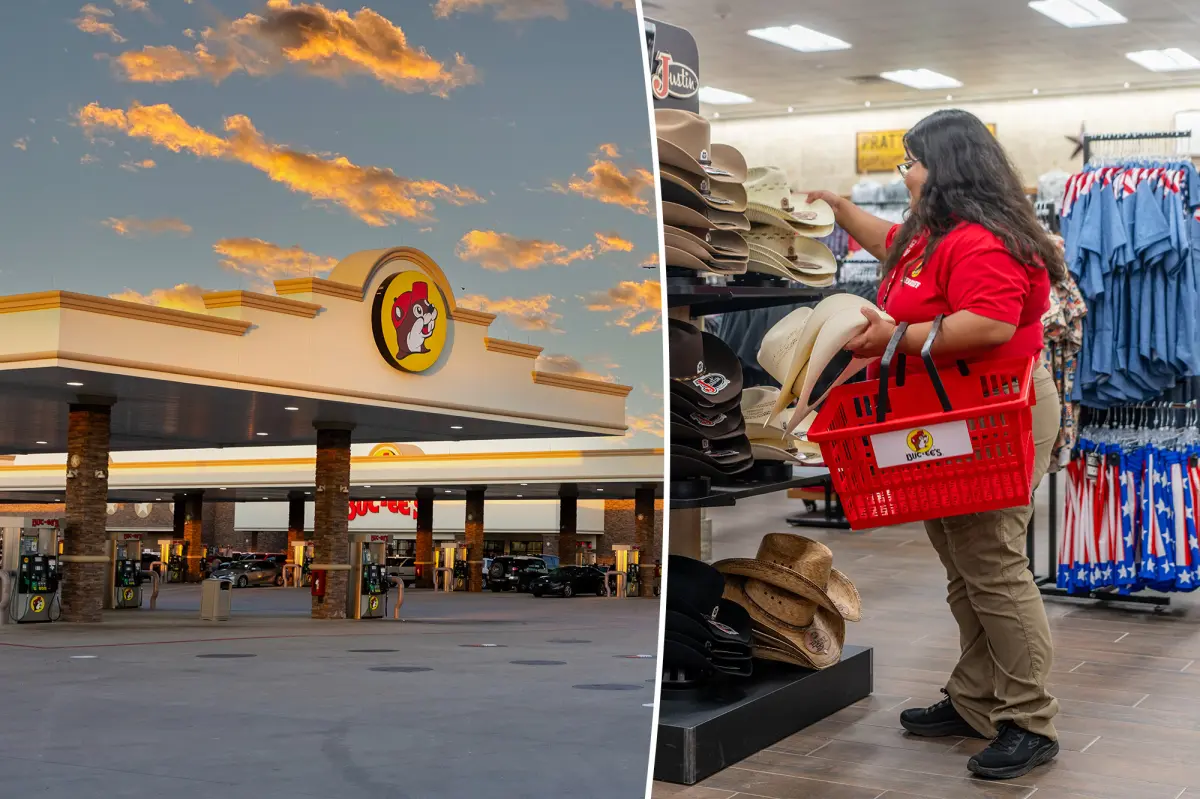
For the uninitiated, stepping into a Buc-ee’s is not merely a stop for gas; it is an event. The stores are staggering in their dimensions, typically spanning between 50,000 and 74,000 square feet—think of a small airplane hangar repurposed for corn dogs. The flagship store in Luling, Texas, encompasses a jaw-dropping 75,593 square feet, officially holding the title as the largest convenience store on the planet, while the Katy, Texas location boasts the world’s longest car wash, a conveyor belt of soap and brushes stretching an incredible 255 feet. Inside these cavernous halls, you will find an almost overwhelming abundance of Texas-sized delights. There are mountains of homemade fudge and brittle, shelves stacked with the famous Beaver Nuggets (a caramel-covered puffed corn treat), and a deli counter serving up mouth-watering Texas BBQ, fresh kolaches, and jerky that ranges from sweet to nuclear-hot. The sheer scale is a testament to founder Arch Aplin’s vision—a place where you don’t just fill your tank, you fill your entire universe with snacks. This sensory overload is why the brand has developed such a zealous cult following; it’s a destination in itself, a pilgrimage site for the perpetually hungry and the proudly kitsch.
However, beneath this cheerful surface culture of massive sips and Beaver fetishism, there lies a highly specific, almost militaristic, code of conduct for the thousands of employees who wear the red and khaki. The public might wax poetic about the restrooms, but the company’s strict beauty and grooming standards have become infamous. According to a recent company announcement and the official employee policy, Buc-ee’s maintains a zero-tolerance policy for visible tattoos. Any employee with body art must completely cover it—wearing long sleeves in the blistering Texas summer is not a suggestion, but a mandatory requirement, with band-aids sometimes used to cover smaller ink on hands or necks. Piercings are forbidden entirely, including standard ear piercings (and absolutely no tongue, nose, or other more visible body modifications). Hair must be its natural color; any wild hues like pink, blue, or purple are strictly forbidden, as are unkempt styles. The dress code is rigidly standardized: tan or khaki pants, a solid red polo shirt with a collar, and closed-toe shoes at all times. In colder months, a red sweater or coat is permitted, but even this is subject to strict approval. This aesthetic uniformity creates a visual homogeneity that is a hallmark of the brand—but it represents a profound sacrifice of personal expression for the employees.
But the physical appearance requirements are merely the tip of the iceberg when it comes to the daily reality of working the floor. A single warning posted in a Reddit thread dedicated to Buc-ee’s employees sums up the visceral experience perfectly: “You can’t even sit down on the one break you get per day.” This blunt statement echoes across multiple accounts from current and former staff members who describe a working environment characterized by relentless intensity. Unlike many retail or service jobs where there are moments of downtime, Buc-ee’s operates at a perpetual high velocity. Employees are expected to be in constant motion—cleaning, stocking, serving—with no leaning, no idle chatting, and absolutely no smartphones. Rest breaks are tightly scheduled, often limited to a brief window during a 10-to-12-hour shift. The floors, all of which famously gleam like glass, require relentless mopping, and even the massive parking lots require constant sweeping for debris. Because the stores are open 24 hours a day, 365 days a year, the schedule demands absolute flexibility; nights, weekends, and major holidays are all on the table, as the chain does not close. This intense operational cadence has led former employees to describe the atmosphere as controlled chaos, where managers have disproportionately strict oversight and where the pressure to maintain the illusion of perfection—both in the store’s appearance and the employee’s demeanor—becomes physically and mentally exhausting.
The stories shared by anonymous workers peel back the shiny promotional layers to reveal a more sobering reality. One employee, responding to the company’s dress code rules, added a brutally honest warning to potential job seekers: “The money is good, but not for the mental, physical, and emotional stress that you endure. If you value yourself, don’t do it.” Another chimed in that the environment is “very toxic and extremely rigid”, with “tons of restrictions” and noting that “most don’t last a week.” A fourth described it as “famously awful to work there.” These comments paint a picture of a workplace where the “good pay” – which Buc-ee’s proudly advertises, often offering significantly higher than minimum wage – is heavily subsidized by a high turnover rate and the erosion of personal autonomy. The rigorous drug and alcohol testing, which the company refers to as one of the most extensive background checks in the industry, adds yet another layer of intense screening. This strictness extends beyond the clock; smoking is prohibited even while off-duty if it interferes with the smell of the store, effectively dictating lifestyle choices outside of working hours. The juxtaposition is stark: the customers see a utopia of snack-fueled happiness, but for the workers, it often feels like a high-stakes endurance test against a stopwatch.
Perhaps the most revealing aspect of the Buc-ee’s corporate philosophy is the ideological mantra found on their official employment page. They lead their recruitment pitch with a question: “Do you believe what we believe?” followed by a corporate creed: “We believe our store should be clean. We believe our staff should be friendly. We believe our prices should be low. If you believe what we believe, come join the Buc-ee’s team.” On paper, this sounds like a heartfelt mission statement. Yet, when filtered through the experiences of the employees, it takes on a quasi-religious, almost cult-like undertone. It demands not just compliance with rules, but a total adherence to a specific way of thinking and being—a subsuming of the individual identity into the corporate “Buc-ee pride.” The passionate loyalty that the company generates from its customers is mirrored, albeit inversely, by the intense cynicism from the staff who feel the weight of that expectation. They aren’t just asked to work a shift; they are asked to evangelize a brand, to become living extensions of the cartoon beaver—always smiling, always moving, always spotless. The disconnect is palpable. While the public’s infatuation with the store grows—evidenced by the massive crowds at the new Arizona opening and the constant buzz on social media—the narrative from the backrooms is increasingly one of burnout and resentment.
In the end, Buc-ee’s is a mirror reflecting the broader complexities of the American service industry. It thrives on providing an unmatched experience, a clean, expansive, and giddy spectacle that brightens the long, monotonous stretches of Interstate highways. We, as consumers, adore the clean bathrooms and the ninety-nine varieties of jerky, and we happily contribute to the eccentricity of a beaver mascot with a Texas-sized ego. But the price of this placid, hyper-efficient consumer utopia is paid by the workers on the ground—the ones who cannot sit, who hide their tattoos under long sleeves in the summer heat, and who suppress their exhaustion to maintain a perpetual state of “friendly.” As Buc-ee’s continues to expand its footprint, spreading from the Lone Star State into new frontiers like Arizona, Georgia, and Colorado, the question remains: can such a rigid, uncompromising corporate structure sustain this growth? Or will the voices on forums like Reddit grow louder, forcing this giant of roadside commerce to re-evaluate its human resources policies? For now, the beaver smiles on, oblivious to the human strain behind its cartoon cheeks, while travelers continue to marvel at a store that asks if you believe—without ever stopping to ask if its own staff still do.