


Here is a humanized and expanded summary of the provided content, structured into six paragraphs to meet the requested length and narrative tone.
—
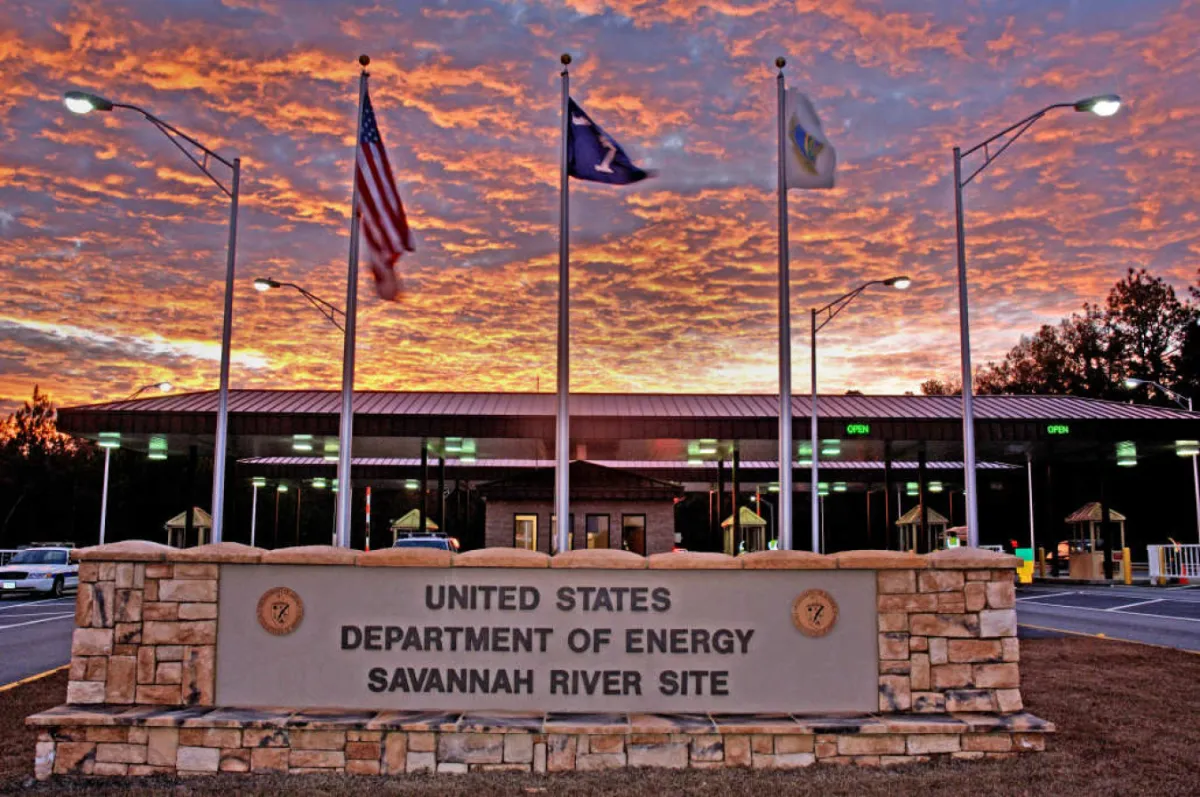
The sun was beginning its slow, golden descent over the longleaf pines and the slow-moving waters of the Savannah River when the rhythm of an ordinary Wednesday evening in Aiken, South Carolina, was abruptly shattered. For the thousands of residents living in the shadow of the sprawling federal complex, the sudden issuance of a “site emergency” at exactly 5 p.m. carried a weight that ordinary fire alarms never do. This was not a warehouse blaze in a distant industrial park; this was the Savannah River Site, a name that has been synonymous with nuclear materials, Cold War secrecy, and the quiet, ever-present hum of national security for nearly seven decades. As the news crackled through local radio stations and pushed notifications lit up smartphones, the initial sparse details were enough to ignite a familiar, primal anxiety. A fire had broken out at the Savannah River National Laboratory, the facility’s crown jewel of research and development. The immediate reassurance from officials—that the fire had been extinguished and that there were “no detectable levels of contamination”—was a lifeline thrown into a sea of uncertainty, but it did little to calm the immediate flutter of fear that gripped the community. The quiet evening had been interrupted by a reminder that the machinery of national defense, which they lived beside so casually on a daily basis, was capable of sudden and dramatic attention.
As the clock pushed past the early evening hours, the response escalated into a full-scale security mobilization that made the gravity of the situation impossible to ignore. At 7:30 p.m., SRS officials issued an update that transformed the landscape of the entire region. Barricades at the site entrances slammed shut, closing the facility to all incoming traffic, turning the sprawling campus into an isolated fortress. Beyond the physical gates, the disruption spread outward like ripples in a pond: rail lines were halted, the river traffic was tamped down, and airspace in the vicinity was strictly restricted. For the local residents who lived just beyond the perimeter, the practical effect was an eerie, sudden silence. The familiar sight of commuter traffic on Highway 125 was replaced by the flashing lights of emergency vehicles and the authoritative gestures of law enforcement redirecting confused drivers. The instruction to monitor local television and radio broadcasts for potential state actions hung in the air, a phrase that conjured images of evacuation checklists and emergency kits. It was a deep, visceral reminder of the delicate balance between the ordinary and the extraordinary. The community held its breath, glued to their screens, watching the minutes tick by as the massive federal bureaucracy, in coordination with state and local agencies, worked through the painstaking protocols designed to protect both the workforce inside and the citizens outside.
Then, just before the clock struck ten, the collective exhale finally came. At 9:45 p.m., the emergency was officially terminated, and the protective actions—the barricades, the restricted traffic lanes, the invisible cordon of caution—were lifted. The update delivered the single most profound sentence the community could have hoped for: “no detectable levels of contamination.” For the families who had spent the evening imagining worst-case scenarios, this was a release more profound than any physical shift change. The reopening of Highway 125 felt like a healing of a wound, a signal that the world was returning to its axis. Perhaps the most striking detail in the aftermath was the almost anti-climactic reassurance that employees should report to work “as usual” for the oncoming shift and for their scheduled shifts on Thursday. That mundane, bureaucratic instruction served as the ultimate comfort, a testament to the fact that the scare, while real, had not breached the safety net designed to catch it. The site had not only contained the physical fire but had also contained the public’s worst fears, allowing the town of Aiken to drift back to a sense of normalcy—albeit one that carried the faint, lingering scent of smoke and adrenaline.
To truly understand the psychological impact of those few hours, one must look at the history etched into the very soil of the Savannah River Site. Constructed in the early 1950s at the dawn of the atomic age, the site was a colossal engine of the Cold War, born from a desperate need to produce the materials that would keep the nation safe from its adversaries. It was here, in the quiet South Carolina countryside, that the United States built five massive nuclear reactors, two chemical separation plants, a heavy water extraction plant, a tritium extraction facility, and a fuel and target fabrication area. The sole purpose was the production of plutonium-239 and tritium—the very essence of thermonuclear weaponry. For decades, the site was a bustling, secretive city of its own, a place where the sacrifices of the workers were rarely celebrated but were essential to global geopolitics. Today, the mission has evolved. It is now a national nuclear security administration site, leaning heavily into environmental cleanup, waste management, and advanced scientific research at the Savannah River National Laboratory. Yet, the bricks and mortar of the past remain. Every siren that wails carries the echo of that formidable history, reminding the locals that they live next to a facility that once forged the arsenal of democracy and still guards its secrets fiercely.
In the court of public opinion and the corridors of political power, the incident demanded immediate attention. Republican Senator Darline Graham, representing the state, took to X (formerly Twitter) Wednesday night to reflect the sentiments of her constituents. Her message was a masterclass in political reassurance during a crisis, beginning with a palpable sense of relief that the emergency order had been lifted. “I’m grateful for the quick actions of first responders and pray for the safety of anyone who may have been affected by the fire,” she wrote, acknowledging the human toll and the bravery of the fire crews who rushed toward the danger. Her promise to continue monitoring the situation and her confirmation that her office remained in direct contact with both SRS officials and the Department of Energy served to bridge the gap between the federal installation and the citizens it often keeps at arm’s length. Simultaneously, the press machinery began to churn; Newsweek reached out to the Department of Energy for official comment, standard protocol for a story that touches on national security and public safety. This ballet of emergency communications—the press releases, the political statements, the social media updates—is a choreography perfected over decades of such incidents, designed to keep the public informed but calm, and to ensure that accountability is transparent.
In the end, Wednesday’s fire at the Savannah River National Laboratory was a drill that proved the system works, but it leaves behind a residue that is far more difficult to clean up than any chemical spill. The fire is out, the contamination monitors are clear, and Highway 125 is open, but the psychic dust of that evening lingers over Aiken and Augusta. It was a stark reminder of the invisible boundary that separates our daily lives from the potent technologies we rely on. For a few tense hours, the entire apparatus of national security—the barricades, the restricted airspace, the political oversight—held its breath, a synchronized machine responding to a potential catastrophe. As the residents prepare for Thursday, returning to their commutes and their routines, they carry with them the knowledge that they live next to a sleeping giant. The relief is genuine, and the gratitude for the first responders and officials is profound. But the memory of the 5 p.m. siren remains, a quiet, personal alarm that will ring a little louder in the back of their minds the next time they hear a fire engine pass by. They are safe, the site is secure, and the system held—yet the fragility of that safety is a truth no one in the Lowcountry will soon forget.