


Paragraph 1: The Shattered Dream
In the quiet, predawn hours of a Wednesday morning, the world of a young couple in southwestern Tucson was violently and irrevocably torn apart. Carlos Ramirez, a 23-year-old man on the cusp of his most cherished dream, was shot and killed in his own home, just weeks before he was set to don the uniform of a Tucson police officer. His fiancée, also just 23 years old and a dedicated corrections officer with the Pima County Sheriff’s Department, was wounded in the attack, left to grapple with both physical trauma and the unfathomable grief of losing her partner. Carlos was not just a statistic; he was a man of profound dedication, having already served his community as a corrections officer before taking the leap into law enforcement, a career path that requires immense courage and a deep-seated desire to serve. He was slated to graduate from the police academy on August 27, a date that now hangs like a bittersweet specter over the community that had come to admire his commitment. The tragedy is magnified by the cruel proximity to his goal; he was nearly there, having endured the rigorous physical and academic demands of the academy, only to be struck down in his sanctuary, a place where he should have felt safest. The attack has sent shockwaves through the Pima County Sheriff’s Department and the entire Tucson community, not merely because a life was lost, but because the victims are the very people who chose to stand between the public and danger, individuals who dedicated their young lives to upholding the law and protecting others from the exact brutality that ended Carlos’s life.
Paragraph 2: The Violent Invasion and the Immediate Aftermath
The incident unfolded around 6 a.m. on a Wednesday, a time when most people are either asleep or just beginning their morning routines. According to Pima County Sheriff Chris Nanos, the suspects, clad in all-black clothing and wearing ski masks to conceal their identities, forced their way into the couple’s home, shattering the fragile peace of the early morning. The scene was one of sheer terror and chaos, a domestic space transformed into a warzone. The exact motive for the home invasion remains unclear, but the targeting of a residence occupied by two law enforcement officers suggests a chilling level of brazenness or miscalculation. In an instant, the home became a critical incident scene, with deputies and emergency medical personnel rushing to the location to render aid. While the fiancée was transported to a local hospital, where she remains hospitalized, Carlos succumbed to his injuries at the scene. The emotional toll on the first responders who arrived to find one of their own colleagues’ homes violated and a brother in blue deceased cannot be overstated. For the Pima County Sheriff’s Department, this was deeply personal. They were not just investigating a homicide; they were investigating the murder of a fellow family member, a man who had recently walked their halls as a corrections officer and was preparing to join their ranks on the patrol side. The department now faced the herculean task of balancing their grief with the relentless pursuit of justice, knowing that every minute counted to bring the perpetrators to heel and prevent further tragedy.
Paragraph 3: The First Arrest and a Twisted Search for Motive
The manhunt for the suspects was intense and unrelenting, utilizing a variety of investigative tools including surveillance footage and public tips. The break in the case came on Saturday morning when deputies arrested Santiago Jorge Rogers, a 39-year-old man, at a hotel located on South Palo Verda Road in Tucson. Rogers was taken into custody without immediate incident and is currently being held without bond at the county jail, signaling the severity of the charges he faces. However, the background of Rogers adds a layer of complexity to the narrative. A search of Pima County court records yielded no prior cases against him locally, painting a picture of a man who may have been flying under the radar in this specific jurisdiction. Yet, digging deeper, a man of the same name and age possesses a criminal history in other parts of Arizona, including drug and shoplifting convictions in Yavapai County, possession of contraband in the Navajo and Graham County jails, and a litany of lesser charges in Prescott. This discrepancy between his local record and his previous run-ins with the law raises questions about his lifestyle and associations, hinting that he may have been a transient or had managed to avoid significant detection in Pima County until this heinous act. His arrest provides a glimmer of justice for the victims, but the investigation is far from over, as his alleged accomplice remains on the loose, and the full scope of their planning and coordination has yet to be unraveled in court.
Paragraph 4: The Dangerous Fugitive and the Threat to the Public
While Rogers sits in custody, the focus shifts to the second suspect, Alex James Barnett, a 33-year-old man whose criminal history marks him as a significantly dangerous individual. Barnett, who has also gone by the alias Alex Wilson, is far from a stranger to the justice system. Court records reveal a rap sheet that includes prior burglary and weapons convictions, demonstrating a disregard for the law and a propensity for violent, invasive crime. In December 2024, he added an unlawful imprisonment charge to his list of convictions, further solidifying his profile as a threat to public safety. The fact that he has been identified as an accomplice in a home invasion that resulted in a homicide suggests a escalation in his criminal behavior, moving from property crimes and unlawful restraint to the ultimate act of violence. Authorities are urging the public to exercise extreme caution and not approach him if spotted. He was last seen wearing a red shirt and a black leather vest, riding a distinctive Harley-Davidson FLHXS motorcycle with the Arizona license plate DA466. This description is crucial for the public’s awareness, as the search for Barnett has become a regional priority. The urgency is palpable; a man with his documented history and now facing murder charges represents a tangible threat, and law enforcement is relying heavily on citizen vigilance to track him down before he can inflict any further harm.
Paragraph 5: The Cold Trail Leads to a Third Man
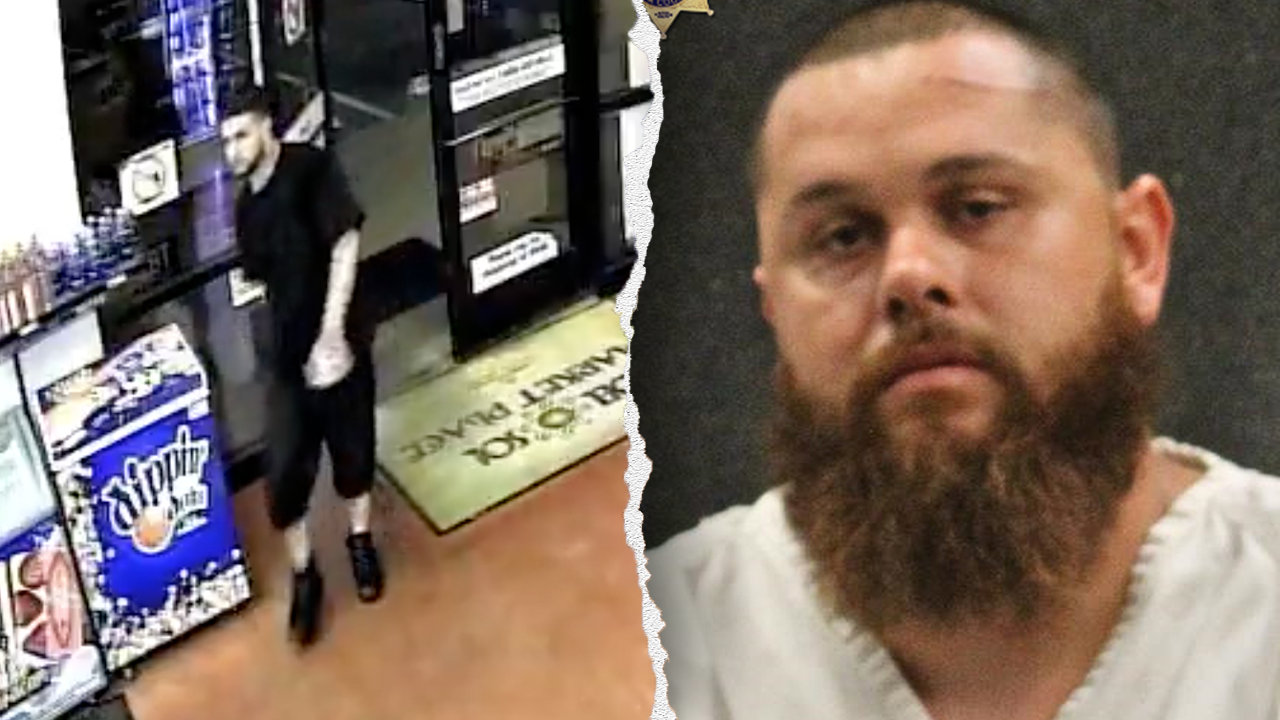
The meticulous piecing together of the suspects’ movements in the hours before the shooting has provided a chilling timeline of their actions. Surveillance video shows Rogers and Barnett, dressed in their recognizable black clothing, stopping at a gas station convenience store roughly twenty minutes prior to the fatal incident. The nonchalant act of picking up items at a store just before committing a capital crime highlights a cold, calculated demeanor that is both disturbing and telling. This is not a crime of passion; it was a premeditated operation executed with a chilling lack of urgency. The investigative trail does not end with the two identified men, however. Hours after the shooting, additional surveillance footage taken from a parking lot reveals a third man parking the suspect vehicle—a gray Acura MDX SUV—and calmly walking away from the scene. This third individual remains the subject of intense focus for investigators, representing a pivotal piece of the puzzle. The Pima County Sheriff’s Department confirmed on Sunday that this third man had been contacted by detectives, but he has not been publicly identified, and no arrest has been made. This deliberate ambiguity suggests that investigators are carefully determining his level of involvement, whether he was a principal conspirator, a getaway driver, or an unwitting pawn. The legal nuance is critical; they are building a case that can withstand scrutiny, ensuring that all those responsible for the death of Carlos Ramirez are brought to justice, not just the ones who pulled the trigger.
Paragraph 6: A Community’s Grief and a Plea for Justice
The loss of Carlos Ramirez is a stark reminder of the inherent dangers that lurk within society, even in the safe suburban quiet of a home in southwestern Tucson. It underscores the fact that the thin blue line does not exist solely on the streets, but extends into the driveways, living rooms, and bedrooms of those who have sworn to protect the public. As the community reels from this tragedy, the focus turns to the manhunt for Barnett and the call for any information that might lead to his capture. The Pima County Sheriff’s Department is urging anyone with information on his whereabouts or any details regarding the case to immediately contact 911 or the anonymous tip line at 520-88-CRIME. The impending graduation ceremony on August 27 will now be a somber occasion, marked by the glaring absence of a man who should have been standing proudly with his peers, ready to embrace his future. Instead, his family, his fiancée, and his colleagues are left to navigate a world without his presence. The justice system now carries the heavy burden of righting this terrible wrong. While the arrest of Rogers is a step forward, the freedom of Barnett remains a raw nerve of anxiety for both the authorities and the public. The manhunt is not just about retribution; it is about preventing further tragedy and sending a clear message that the murder of a protector will be met with the full, unyielding force of the law. As the city grieves, it also stands vigilant, hoping that the next piece of information will bring closure to a devastating chapter and deliver a measure of peace to the grieving fiancée and the family of a young man whose life was cut tragically short.