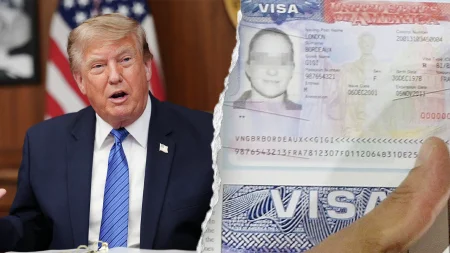



The unsettling case of Abdulloi Doniyor Toshpulodzoda has left residents and lawmakers across Northern Virginia grappling with a profound question: how does a man committed to a state psychiatric facility for a brutal killing manage to walk free, obtain a passport, and flee the country? The incident, which unfolded over a series of escorted outings from the Northern Virginia Mental Health Institute in Falls Church, has exposed potential cracks in the systems designed to confine and treat individuals deemed a danger to society. Toshpulodzoda, a Tajik national, was initially held at the facility after being found not guilty by reason of insanity for the killing of his landlord. This legal outcome meant that, while he was not held criminally responsible in a traditional sense, he was deemed too mentally ill to be released into the community, and the state was tasked with providing him treatment in a secure environment. The subsequent revelation that he was granted supervised leaves—first to the Tajik embassy in Washington, D.C., to secure travel documents, and later to an apartment in Alexandria where he allegedly collected an airline ticket—has shattered public trust in the oversight of such high-stakes cases, prompting calls for a thorough investigation into how these privileges were approved and why adequate safeguards were not in place.
The details of Toshpulodzoda’s escape paint a picture of a methodical plan executed with a chilling awareness of the system’s limitations. During his initial escorted visit to the embassy, a trip that was approved by mental health officials and not opposed by the Commonwealth’s Attorney’s office, he was able to procure a passport. This should have raised immediate red flags, as the acquisition of travel documents by an individual under a psychiatric commitment order is a strong indicator of an intent to leave the country. However, the facility reportedly permitted him a second outing, this time to an apartment in Alexandria. It was during this visit that he is believed to have obtained an airline ticket for a flight to Dushanbe, the capital of Tajikistan. At some point during this excursion, Toshpulodzoda seized his opportunity, evading supervision and making his way to the airport. The fact that a man with a violent history, who was supposed to be under the constant watch of mental health professionals, could orchestrate such a complex escape suggests a series of lapses in judgment and protocol. It raises critical questions about the level of risk assessment conducted before approving these outings and whether the facility’s staff were adequately equipped to manage a patient with his specific background and motivations.
For Representative Donald Beyer, whose district encompasses the very facility from which Toshpulodzoda escaped, the situation is a “bad thing” that should not have occurred. In a conversation with Fox News Digital, Beyer acknowledged a “failure in the system somewhere along the way,” while also wondering if the initial failure was in the decision to place Toshpulodzoda in a mental hospital or in the hospital’s inability to secure him properly. His comments reflect the frustration and uncertainty felt by elected officials who are being held accountable for a crisis that emerged from a complex intersection of mental health policy, immigration law, and public safety. Beyer was careful not to point fingers at local leadership, defending Fairfax County against accusations that it functions as a “sanctuary” jurisdiction that shields illegal immigrants from the consequences of their actions. He also defended Commonwealth’s Attorney Steve Descano, stating he presumed the decision to pursue a psychiatric commitment was justified under the law. However, the congressman’s discomfort is palpable; he is caught between the need to uphold the legal precedent of the insanity defense and the overwhelming public demand for security and strict accountability for violent criminals. His assertion that “we don’t want bad guys on the loose” underscores the political and social tightrope that officials must walk when dealing with individuals who have committed heinous acts but are deemed not legally responsible due to their mental state.
The debate over whether Toshpulodzoda should have been deported rather than committed adds another layer of complexity to the political reaction. Beyer dismissed the idea that deportation would have been a sufficient consequence for a “major felony,” arguing that the individual must face the justice system in the United States first. This perspective highlights a fundamental tension in how the nation treats undocumented immigrants who commit serious crimes. While some advocate for immediate removal to prevent such individuals from remaining on American soil, others argue that deportation alone would allow them to escape the full weight of criminal accountability. Representative Suhas Subramanyam, who represents neighboring districts, echoed this sentiment, stating emphatically that violent criminals “should be held accountable” for their actions. However, Subramanyam also introduced a more nuanced view, suggesting that cases should be evaluated individually. He noted that not every person who commits a crime—particularly minor offenses like moving violations—should be automatically deported. This stance reveals the difficulty in creating blanket policies that are both just and practical. It acknowledges that while the system must be tough on violent offenders, it also needs the flexibility to distinguish between a dangerous individual and someone who has committed a relatively minor infraction. The challenge, as this case demonstrates, lies in ensuring that such flexibility does not result in dangerous individuals slipping through the cracks.
Subramanyam’s comments also extended to the accountability of federal agents, specifically referencing the case of Renee Good, an anti-ICE activist killed by an agent in Minnesota. He argued that instances where ICE officers overstep their bounds must also be investigated and prosecuted to ensure no cover-up occurs. This broadens the conversation from a single case of a psychiatric patient’s escape to a wider critique of the immigration enforcement system and the power dynamics at play. The congressman’s desire for “accountability on both sides” frames the issue not just as a matter of catching a fugitive, but as a question of procedural justice. Should ICE agents who use excessive force be held to the same standard of scrutiny as the criminals they pursue? For Subramanyam, the answer is an unequivocal yes. This perspective suggests that the reaction to the Toshpulodzoda case is not merely a partisan attack on “sanctuary” policies or a call for stricter immigration enforcement, but a broader demand for integrity and oversight across the entire justice system. It posits that public safety and civil liberties are not mutually exclusive, and that a system which fails to hold its own agents accountable will inevitably lose the trust of the communities it is meant to protect. This narrative seeks to humanize the complexities of enforcement, reminding the public that the people tasked with upholding the law are also capable of error and must be subject to the same rules.
Ultimately, the escape of Abdulloi Doniyor Toshpulodzoda stands as a stark reminder of the fragility of the systems meant to protect the public. The case has laid bare the difficulty of balancing the civil rights of individuals with severe mental illness against the absolute necessity of ensuring public safety. The decision to grant supervised leaves to a man who had killed his landlord was likely made to facilitate his eventual reintegration into society, a cornerstone of psychiatric rehabilitation. Yet, this goal was tragically mismanaged, resulting in a catastrophic breach of security. The fact that he was able to obtain a passport from his home country’s embassy while under state custody indicates a level of coordination that either outsmarted the facility’s security measures or exploited a loophole in its protocols. State and local officials are now left to answer for a decision-making process that, in hindsight, appears dangerously naive. While Democrats like Beyer and Subramanyam attempt to navigate the political fallout with carefully worded statements about due process and case-by-case evaluations, the families of the victims of violent crime, and the public at large, are left wondering if the system is equipped to handle such high-risk individuals. The story of Toshpulodzoda’s journey from a psychiatric ward to an international flight will inevitably serve as a cautionary tale, prompting a re-evaluation of how mental health commitments, immigration status, and criminal accountability intersect. The search for answers is just beginning, but the questions raised by this incident will likely linger for a long time, challenging lawmakers to find a path forward that respects the complexities of the law while never losing sight of the paramount duty to protect the innocent. The investigation into this failure is not just about one man’s escape; it is about ensuring that the social contract between the state and its citizens is never so easily broken again.