



Portal Space Systems: Charting a New Course in Orbital Maneuverability
In the bustling aerospace hub of Bothell, Washington, a quiet revolution is taking shape. Portal Space Systems, a company that emerged from stealth mode less than two years ago, is preparing to send its first spacecraft into orbit—a milestone that could fundamentally change how satellites navigate the increasingly crowded space above our heads. The company’s co-founder and CEO, Jeff Thornburg, recently opened the doors of his 8,000-square-foot development lab to showcase the progress his team has made since I last visited seventeen months ago. What I found was a company on the cusp of something significant, with hardware ready for launch and ambitious plans that extend far beyond their current footprint.
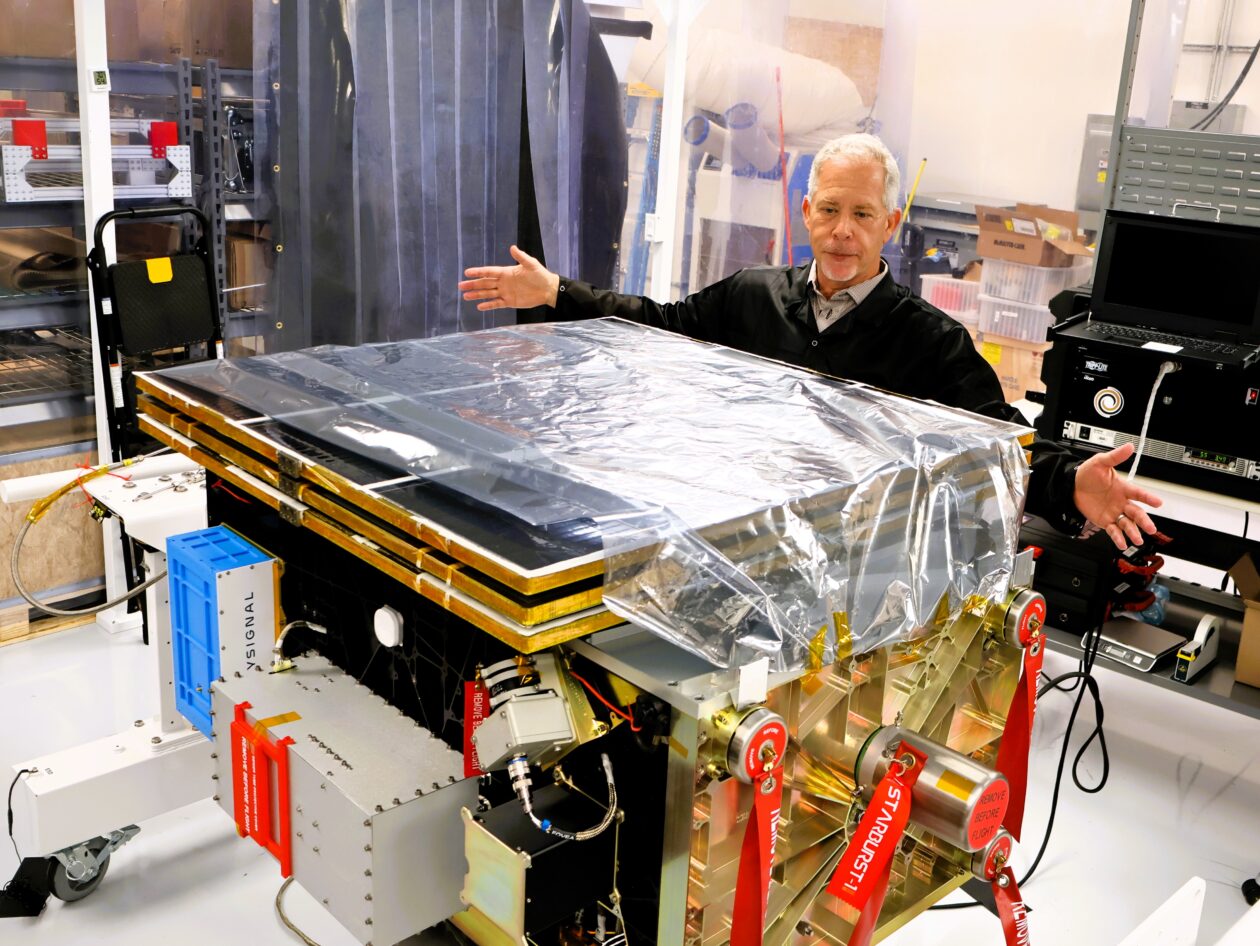
The centerpiece of this moment is Starburst-1, a desk-sized satellite that represents Portal’s first foray into space. This compact spacecraft has already survived the rigorous vibration testing that simulates the brutal conditions of a rocket launch, and it’s now back in the lab for final adjustments before its scheduled October departure. The plan calls for Starburst-1 to hitch a ride on SpaceX’s Bandwagon-5 mission, launching from Cape Canaveral Space Force Station in Florida. In the coming weeks, engineers will be meticulously fine-tuning the software and monitoring the spacecraft’s health, making any necessary tweaks to ensure the best possible chance of success on this maiden voyage. As Thornburg puts it, they’ll be constantly testing and evaluating, implementing any changes that could reduce risk right up until the moment of launch.
This launch is the culmination of years of careful preparation, but it’s also just the beginning of Portal’s ambitious vision. The company’s strategy is elegantly simple: prove the technology with Starburst, then leverage those lessons to build something even more capable. Before Starburst-1 ever reaches the launch pad, Portal has already sent a smaller test payload into space. This instrument package, about the size of a tissue box, has been testing the electronics and control systems that will guide both Starburst and its larger sibling, Supernova, since March. Called “Mini-Nova,” this test unit remains attached to an orbiting vehicle, though a replica sits in Portal’s conference room as a reminder of the progress already made.
What makes Starburst-1 particularly interesting is not just what it is, but what it carries. Tucked among its various components are experiments that could have far-reaching implications for space operations. One notable payload is a superconducting magnet system developed by Zenno, a New Zealand startup establishing its presence in Los Angeles. While this technology is currently experimental, its potential applications are straight out of science fiction. The magnet could theoretically maneuver spacecraft by interacting with Earth’s magnetic field, and perhaps more intriguingly, it could serve as a radiation shield protecting sensitive electronics from the harsh space environment. Thornburg’s excitement about this capability is palpable—he describes it as “Star Trek shields coming to life.”
The spacecraft also carries a full-motion video system from TRL11 that will provide unprecedented views of both the satellite itself and its orbital surroundings. This capability isn’t just for spectacle; it’s essential for future missions involving rendezvous and proximity operations. While these secondary payloads are exciting, Thornburg is clear about the primary mission objective: validating the engineering design over the next year or more. Once that validation is complete, Starburst-1’s residual capabilities could be used for more advanced operations, including practicing the rendezvous maneuvers that will be essential for future satellite servicing missions.
The future, however, belongs to Supernova. This spacecraft represents the true flagship of Portal’s fleet, designed to be the heavy lifter for the company’s most ambitious missions. Where Starburst weighs in at around 600 pounds, Supernova will tip the scales at a more substantial 1,100 pounds. But the real difference lies in its propulsion system. Supernova will feature an innovative solar thermal propulsion system called Flare, which concentrates sunlight to heat ammonia propellant in a heat exchanger, creating efficient thrust without chemical combustion. This system includes a clever thermal battery that stores heat while the spacecraft is in sunlight, allowing Supernova to execute maneuvers even when it’s in Earth’s shadow. This capability gives the spacecraft extraordinary flexibility to change orbits in ways that traditional satellites cannot match.
The applications for this technology are diverse and potentially game-changing. Portal envisions Supernova serving as an orbital platform for payloads that need to move between different orbits in hours or days rather than weeks or months. The company sees potential uses in satellite inspection and protection, as well as the growing problem of orbital debris removal. This agility is particularly valuable in an era where space is becoming increasingly congested, and the ability to maneuver quickly and efficiently could mean the difference between a functioning satellite and a piece of space junk. The Pentagon’s interest in this capability is evident in the development grants Portal has received, as the military increasingly views space as a contested domain where rapid maneuverability is essential.
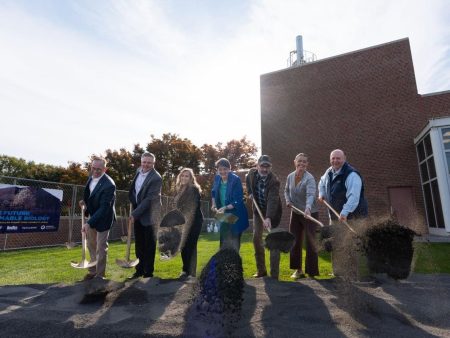
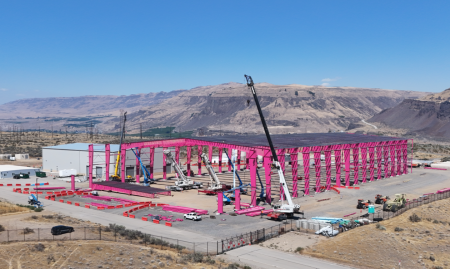
Portal’s business model is equally forward-thinking. The company has already attracted substantial investment and government support, and it’s now developing a manufacturing facility that will be far larger than its current lab. The planned 65,000-square-foot facility, just three miles from the current location, will have the capacity to produce twelve Supernova and sixteen Starburst spacecraft annually, a scale that signals Portal’s ambitions to be a significant player in the satellite manufacturing industry. The company has also announced that the first Supernova will launch in 2028 aboard a SpaceX Falcon 9 rocket, with Maverick Space Systems handling payload integration and manifest optimization. This collaborative approach extends beyond simple launch services, offering additional rideshare capacity to other customers and sharing costs among mission partners.
What’s particularly notable about Portal’s journey is the pace of progress. The company opened its Bothell facility just seventeen months ago, and already it’s preparing for launch and planning a move to a larger space. Thornburg reflects on this transition with a mix of pride and forward-looking vision, acknowledging that this small facility has served its purpose admirably. The move to the new 65,000-square-foot space will allow Portal to scale up production significantly, with the capacity to produce twelve Supernova and sixteen Starburst spacecraft each year. This is a scale that would put Portal firmly among the more significant players in the satellite manufacturing industry.
As Starburst-1 prepares for its journey to Florida and ultimately to orbit, there’s a sense that Portal Space Systems is at an inflection point. The company has moved from stealth mode to having real hardware ready for flight in remarkably short order. The October launch will be a critical test, not just of the spacecraft itself, but of the entire team’s ability to execute on their vision. Success would validate their engineering approach and open the door to a future where satellites can move through orbit with unprecedented agility, changing their positions to meet evolving mission requirements rather than being locked into fixed trajectories. The journey from idea to execution is never smooth, but Portal’s progress suggests they’re navigating the challenges well-adjusted, with one eye on near-term goals and one hand on the future’s possibilitiesiste.
As Thornburg looks ahead, he sees the transition from this initial facility to the larger one as a natural progression, a sign of success rather than a loss. There’s a poignancy in watching a company outgrow its first home, moving from the space where so much foundational work was done to something bigger and more capable. The company will not rush this transition—Thornburg is clear about that—but the path forward is clear. In the next six to twelve months, they’ll likely consolidate their operations in the new building, leaving this lab behind as a testament to what a small, determined team can accomplish. For now, the focus remains on the immediate task at hand: getting Starburst-1 safely to orbit and proving that Portal’s vision for highly maneuverable spacecraft is not just theoretical, but practical and achievable.