



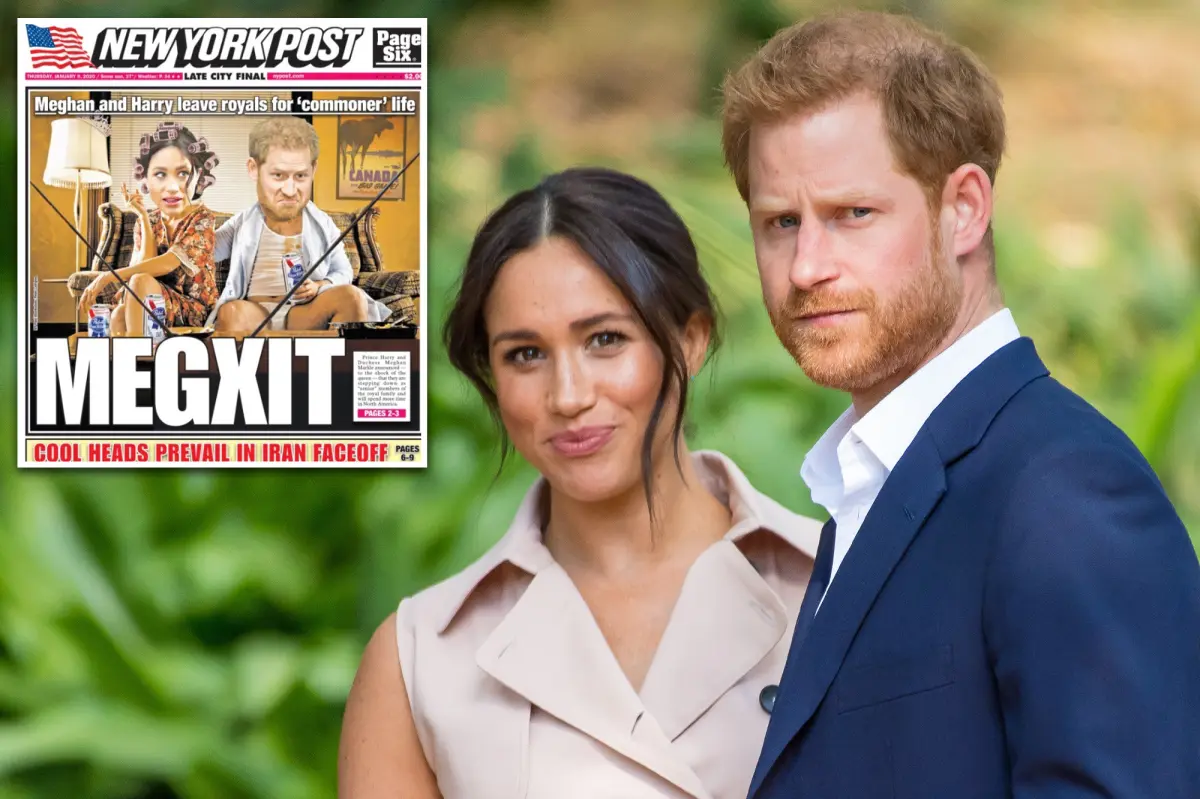
In a move that has sent ripples of both hope and skepticism through the corridors of monarchy watchers and casual observers alike, the sands of Montecito are giving way to the grey skies of the British Isles. Prince Harry and Meghan Markle are reportedly preparing to uproot their lives from the sun-drenched California coast and return to the United Kingdom. This is not a whirlwind visit for a jubilee or a brief appearance at a memorial service, but a genuine, full-scale relocation—a homecoming of sorts—alongside their two young children, Archie, aged seven, and Lilibet, aged five. The announcement, confirmed by multiple sources, shatters the quiet illusion that the Sussexes had permanently scuttled their roots in favor of a life of tropical ease and Hollywood glamour. There is a profound, almost poetic irony in this decision. They left the suffocating walls of the palace in 2020, a departure famously dubbed “Megxit,” to seek freedom and privacy. Now, they are voluntarily traversing the Atlantic in the opposite direction, trading the infinity pools and citrus groves of the Pacific coastline for the unpredictable drizzle and historical weight of their ancestral homeland, yet still carrying the heavy mantle of their independent, non-royal status.
The human heart of this narrative lies entirely in the children. For Archie and Lilibet, this move represents far more than a change of longitude; it is a foundational shift in the geography of their identity. They have only ever truly known the warm, expansive life of their sprawling nine-bedroom mansion in Montecito—a world of playgrounds, beach trips, and the relative obscurity of a wealthy American suburb. Enrolling them in a primary and prep school in Britain is a monumental, deliberate choice made by their parents. It signals a yearning for a specific kind of childhood that California could not provide—one steeped in the British curriculum, featuring the rigid charm of school uniforms, the pastoral cadence of house systems, and the crucial ability to walk down a lane without the constant drone of paparazzi helicopters overhead. This is Harry reaching across the generational divide, attempting to give his children the very anchor he himself lost after the tragic death of his mother. He knows the feeling of being rootless, of being a prince without a defined role. By placing them in a British institution, he is quietly whispering to them: This is where you come from. This is the soil your father walked on. For Meghan, this move is a testament to her own adaptability and a deep, maternal understanding that a child’s foundation is not built on soil, but on the security of proximity to community and family history—even if that family history is intensely complicated. The children are not just being moved; they are being planted in the complex, fertile, and often thorny garden of their paternal lineage.
Navigating the icy terrain of royal protocol, this decision required a delicate, almost bureaucratic ballet with Buckingham Palace. The report confirms that King Charles was the first to be informed, meeting with his son and daughter-in-law last month before being formally advised of the imminent move. The fact that they sat down with the monarch at all signifies a thawing of the frosty, albeit public, relations that have defined the last few years. Yet, the palace’s official stance, reinforced by the phrase “not expected to return to royal life,” makes the boundaries of this reunion painfully clear. The Sussexes are coming home, but not home in the sense that Charles is their sovereign and they are his dutiful officers. They are coming back as private members of the family, albeit exceptionally famous ones. This is the ultimate paradox of their lives: they wish to be close enough to the heart of the institution to feel its warmth, but they refuse to be bound by its rigid, unforgiving corset. It is a human negotiation occurring on a global stage—a son trying to reconcile his love for his father with his rejection of his father’s life’s work. The “non-royal” label is not just a bureaucratic designation; it is a psychological shield they have built, but moving into the shadow of the crown while holding that shield may prove to be the greatest test of their resolve yet.
But homecoming is fraught with practical nightmares, the most glaring of which is security. A “non-royal residence” in the United Kingdom is not just a house; it is a bastion against a torrent of public scrutiny and, more concerningly, genuine physical threats. The Sussexes’ security arrangements were famously stripped upon their departure, leading to a series of contentious legal battles. Returning to Britain means confronting this dilemma head-on. Living in a non-royal residence—likely a sprawling country estate or a heavily fortified townhouse—will necessitate a private security detail funded by their own substantial wealth, a cost that runs into the millions annually. The human cost, however, is far greater. They are moving their babies into a media ecosystem that has historically torn their family apart. The logistical challenge of ensuring the children have a normal, unpursued existence in the buzzing hubbub of the UK—where the press are not only aggressive but legally more invasive than in the US—requires a level of vigilance that is exhausting. Yet, perhaps this move signifies a shift in their personal priorities. They have realized that freedom is not merely the absence of security but the presence of support. The “non-royal” residence becomes their fortress, but it is also their sanctuary—a place where they can invite Charles for tea, where Archie can ride a bike on the same lanes his father once did, and where the ever-present threat of a tabloid flash is mitigated by the comfort of shared history.
Commercially and professionally, this transatlantic pivot is a masterstroke, albeit a risky one. Their independent business empire—the privately-held Archewell foundation, their exclusive multi-million dollar Netflix deal, and a suite of podcast ventures—has been overwhelmingly geared towards a North American audience. However, by physically operating from the UK, they are entering the lion’s den of global media. The proximity to British culture, the raw material of Harry’s bestselling memoir “Spare,” and the intense, visceral connection to the Commonwealth provide a fertile ground for new projects. It is a human recalibration of their professional lives; they are pivoting from being absentee celebrities viewing Britain from a distance to becoming embedded cultural commentators living amidst the very structures they critique. This move humanizes their brand—they are no longer exiles unfairly frozen out; they are producers, storytellers, and parents choosing to live in the messy center of their narrative. The daily commute to a studio in London or a countryside office offers a sense of purpose that the detached, cushioned emptiness of a LA mansion can never replicate. It is the difference between passively observing your own legacy from a deck chair and actively engaging in shaping it, one British curriculum school run at a time.
In the end, this return to the United Kingdom is less about the changing of geography and more about the evolution of a family. The story of “Megxit” has always been framed as a fairytale escape, but fairytales rarely account for the deep, gnawing ache of displacement. As they pack their boxes in California and bid farewell to the perpetual sunshine, Harry and Meghan are undertaking the most human of journeys—the journey back to the beginning. They are not returning to the Crown; they are returning to a forest of old oaks, ancient grudges, and the undeniable tug of home. They are carving out a middle path that no one has truly walked before: Royal by birth but independent by choice. For Archie and Lilibet, this is the acquisition of a passport to a rich, conflicting history. For King Charles, it is the quiet, hopeful possibility of seeing his grandchildren grow up in the shadow of his own home. For Harry, it is the final, bravest step out of the shadow of his exodus—a declaration that one can break away from an institution without having to break away from their own heritage. They are stepping into a new chapter, one where the mist over the Scottish highlands is just as clear a horizon as the Pacific ocean, and where the quiet, stubborn pursuit of a “normal” life continues, but now on ground that remembers their name. They have found, at last, that you can leave the royal family, but the family—and the island that shaped it—never truly leaves you.