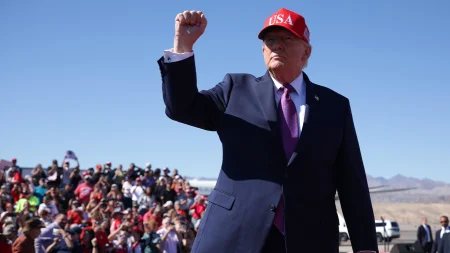



Donald Trump’s return to the White House was fueled in no small part by a dramatic shift in the political landscape. He managed to pull in a surprising number of voters from groups that have historically leaned Democratic. Support among Hispanic voters jumped to 41%, a six-point increase from the previous election. Even more striking, he secured 46% of the youth vote, a ten-point surge. And while the numbers were smaller, his inroads with Black voters were notable, climbing to 15%. These gains were a pivotal part of his winning coalition, raising immediate questions about whether Democrats could win these voters back.
For Democrats, the early signs suggest they might not have to do the heavy lifting themselves. There’s little evidence they’ve fundamentally changed how they communicate with these communities, but President Trump’s own performance is inadvertently doing some of the work for them. Recent polling shows that young Americans have soured on him considerably. Two-thirds now say they disapprove of his job performance, and a clear majority, 56%, say they would support the Democratic candidate in their local congressional race. Hispanic voters are similarly disenchanted, with a substantial 71% disapproving of his performance and 56% indicating they’d cast their ballot for a Democrat in the upcoming midterms. This suggests that for at least two of the three key groups, the motivation to vote against Trump may be stronger than any connection to the Democratic party platform.
However, the story is more complicated for Black voters, a group that hasn’t fully realigned. While their approval of Trump remains low at 20%, their loyalty to the Democratic party is wavering. The Marquette survey indicates that only 69% of Black Americans say they would support a Democrat in their district, a significant 21-point drop from the level of support President Biden received in 2020, a victory he directly credited to this constituency. This “erosion” is a cause for concern, but it’s not uniform. In battleground states, some Democratic candidates are managing to stem the losses. In Georgia, Senator Jon Ossoff is running 10 points behind Biden’s previous support among Black voters. In North Carolina, the gap is 7 points. But it’s a different story in Michigan, where the newly minted Democratic Senate nominee, Abdul El-Sayed, is facing a significant challenge in a crucial state.
El-Sayed’s far-left platform, including proposals like “Medicare for All,” appears to be a point of friction. A new Fox News poll shows his support among Black voters is down 18 points from what Biden received. This skepticism is also visible in the party’s recent primaries. El-Sayed struggled in Black-majority areas like Detroit, and socialist candidate Francesca Hong performed poorly in Milwaukee, another city with a large Black population. The data points to a potential ideological disconnect: only 36% of Black Americans hold a favorable view of the Democratic Socialists of America, a stark indicator of the challenge facing candidates who embrace that label搖. New York City mayoral candidate Zohran Mamdani, a self-identified DSA member, has also faced similar headwinds with Black voters. He has since launched a “Black media blitz” to address his more controversial positions, a strategy that may be paying off, as his favorability rating among New Yorkers recently hit 69%.
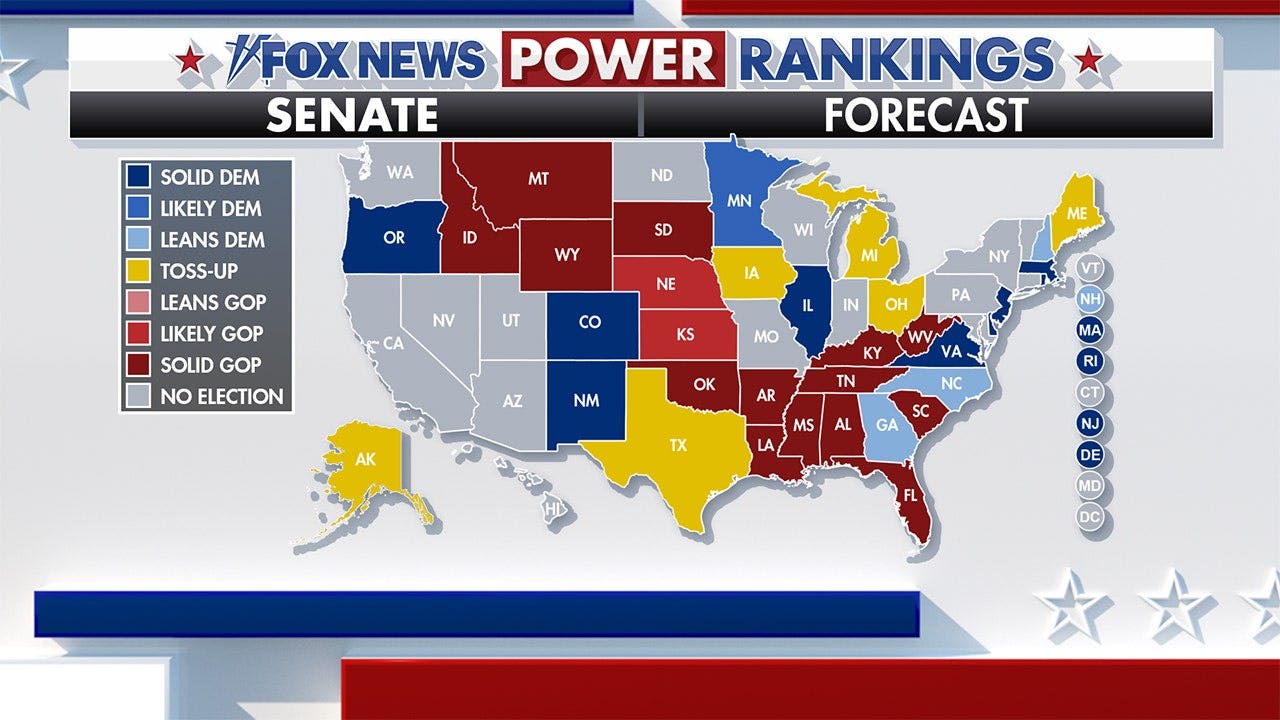
The reluctance of Black voters to fully embrace the party’s more progressive wing is a clear vulnerability. In Michigan, this translates into a competitive race. A recent Fox News poll shows former Rep. Mike Rogers, the Republican nominee, with 51% support to El-Sayed’s 47%, a statistical dead heat. Rogers is a seasoned campaigner with a unified party behind him Higgins. While the fundamentals of the state still favor Democrats, El-Sayed’s inability to consolidate the Black vote creates a fragile coalition. With a high-turnout election expected, he’ll need every Democratic voter to show upaine. The race in Michigan is now officially a toss-up, a major development in the battle for the Senate.
This shift in Michigan, once considered a safe Democratic seat, is part of a larger trend in the Senate landscape where the national environment is heavily influencing local races. The overall picture is one of high volatility. The nonpartisan forecast now shows six states with no clear favorite, setting the stage for a potentially extraordinary election night where either party could make major gains. The Republicans see a real opportunity in Michigan, where former Rep. Mike Rogers leads in a recent Fox News poll, a race that has now moved into the toss-up column. Meanwhile, the national mood is not helping the GOP. Trump’s overall approval rating remains in the 30s, and his handling of specific issues, from the economy to gas prices, is drawing sharp criticism cherry. This challenging environment is being exploited by other Democratic candidates, like Senate hopeful James Talarico in Texas, who has posted surprisingly strong numbers in a state that is normally a Republican stronghold, making that race more competitive than expected.
The map, however, is not all bad news for Republicans. The decision by Senate Minority Leader Chuck Schumer to talk about expanding the map into deep-red states like Kansas and Mississippi is part of a larger strategy, possibly to give donors and supporters hope of a broader victory. But even if it doesn’t pan out, the party has other opportunities.
The gubernatorial landscape also shows some shifting sands. Texas remains competitive, with Governor Greg Abbott holding a slight lead over his Democratic challenger. In Alaska, a crowded and unpredictable field is making that race close, shifting it toward the “likely Republican” category. And in Minnesota, the GOP has rallied behind strong candidates like Lisa Demuth, making the traditionally blue state more competitive, though it still favors the Democrat, Amy Klobuchar suck. For the far-left wing of the Democratic party and the Republican establishment alike, the coming weeks will be a critical test of whether the current trends hold. With early voting beginning in key states like Michigan in late September, the decision is not far off. Democrats are watching the erosion of the coalition that has been their bedrock, while Republicans are hoping that a favorable national environment and strong local candidates can turn these opportunities into a wave. The coming election night promises to be one for the history books.