



Every tourist knows the quiet thrill of looking up at a towering city skyline, mesmerized by the glass, steel, and concrete giants that stand as physical monuments to human ingenuity and artistic ambition. We have long been conditioned to view our iconic buildings as sacred, untouchable works of art, capturing the public imagination and serving as the visual placeholders for entire cities’ identities. Yet, beneath this glossy veneer of public adulation lies a much quieter, far more critical conversation championed by the very minds that design these spaces. Architects across the globe are beginning to pull back the curtain on these beloved landmarks, raising vital questions about design choices, geographic context, and daily functionality that escape the casual observer’s eye. Increasingly, the contemporary architectural dialogue is shifting away from the obsession with creating flashy, new, individual “icons.” Instead, pioneers of the industry, such as Gordon Gill—the visionary architect behind some of the world’s tallest structures—are urging a radical pivot toward “refreshing” and maintaining our existing historic buildings to ensure their long-term survival and reduce our cultural carbon footprint. The United States is currently experiencing a historic groundswell in this exact direction, with nearly half of the country’s 125 million buildings now crossing the golden threshold of 50 years of age, prompting a massive wave of adaptive reuse. According to the American Institute of Architects, this movement is transforming the way we live; in 2024 alone, nearly 25,000 apartments were birthed out of converted commercial and industrial buildings, representing an astonishing 50 percent increase in repurposing over just one year. This profound cultural transition from the era of flashy monument-building to thoughtful, sustainable conservation frames a deeper, highly necessary probe into what actually constitutes successful architecture: is it the fleeting thrill of an eccentric silhouette on a postcard, or is it how a space honors its setting, its history, and the flesh-and-blood humans who occupy it?
To understand this profound tension between poetic vision and physical reality, one must look no further than Frank Lloyd Wright’s legendary Fallingwater in rural Pennsylvania, a UNESCO-listed masterpiece celebrated globally as the ultimate pinnacle of organic architecture, yet deeply criticized by those who must study its practical execution. To the average visitor, the sight of a modern home seemingly hovering over a roaring mountain waterfall is a breathtaking triumph of humanity and nature merged into one harmonious whole. However, seasoned architects like Dan D’Agostino, the founder of Plan Architecture, argue that this beloved project is marred by a fundamental, frustrating irony: while the homeowners had explicitly requested a dwelling that would afford them stunning, tranquil views of the nearby waterfall, Wright headstrongly built the house directly on top of the cascade, completely obscuring it from sight and replacing the visual marvel with a relentless, deafening roar of water inside the living spaces. Furthermore, the structural engineering of Fallingwater was so fraught with peril that it nearly led to a catastrophic collapse; Wright notoriously ignored his contractors’ and engineers’ urgent warnings, refusing to add the vital steel reinforcements to the dramatic, cantilevered concrete terraces. This stubborn disregard for basic physics eventually caused the massive terraces to sag and crack almost immediately, demanding millions of subsequent dollars in complex, modern engineering interventions to keep the entire structure from plunging into the creek below. As Miles Smith, a senior manager at Graphisoft, points out, while the physical form of Fallingwater remains undeniably compelling and a thrill to experience in person, the underlying structural reality of its design borders on a physical travesty. This disconnect forces us to ask whether an architectural work can truly be called a historic masterpiece when its artistic grandeur is achieved through structural defiance, leaving behind a legacy that is as fragile and problematic as it is visually iconic.
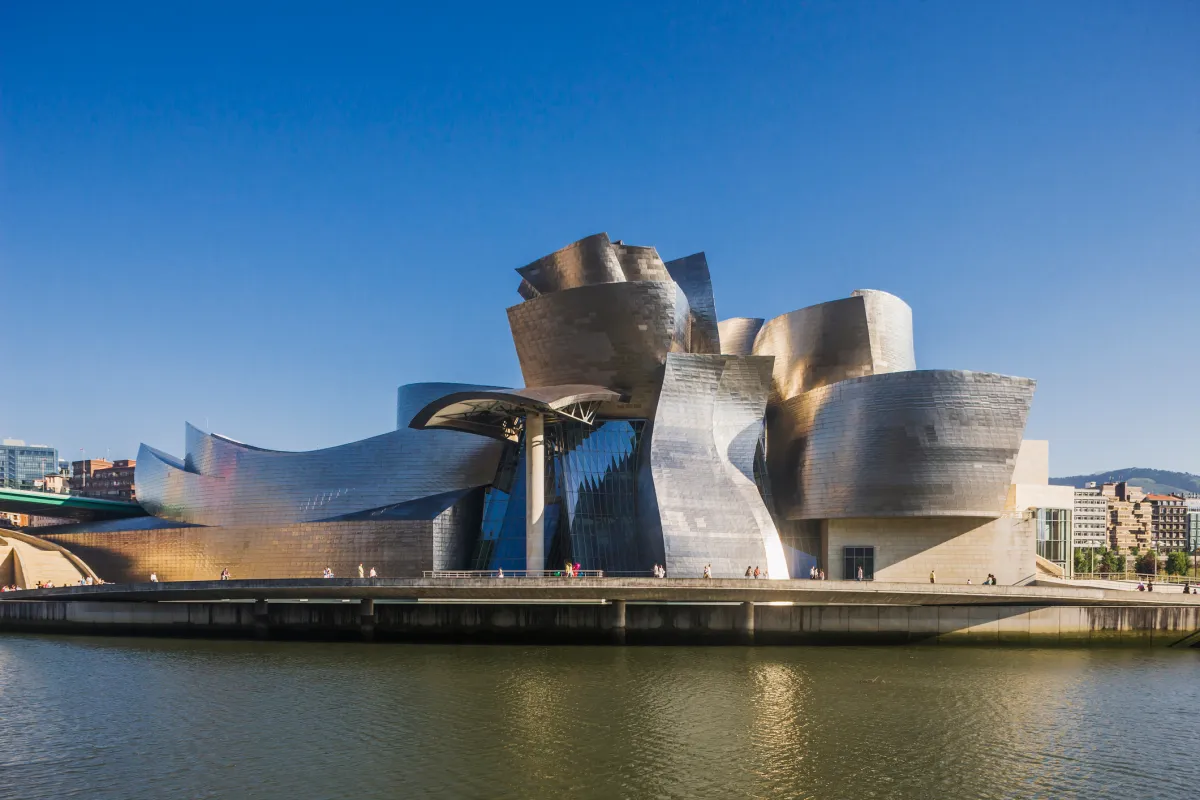
This conflict between visual drama and structural or conceptual purity is not unique to the mid-century modern era; it continues to define our evaluation of contemporary masterworks like Frank Gehry’s Guggenheim Museum in Bilbao, Spain, and Philip Johnson’s Glass House in Connecticut. Gehry’s Guggenheim is widely credited with revitalizing an entire Spanish industrial city—sparking the famous “Bilbao Effect”—yet its chaotic, shimmering titanium curves draw sharp division among designers who crave a sense of grounded permanence. For critics like Miles Smith, Gehry’s trademark fluid, curvilinear massing can often feel untethered to the earth, appearing as though it lacks a solid structural foundation, even though many within the industry softened their critical gaze following Gehry’s passing to appreciate his revolutionary impact on the boundaries of sculptural form. In a similar vein of conceptual ambition, Philip Johnson’s Glass House in New Canaan sought to achieve the ultimate minimalist dream of total transparency, blurring the boundary between the natural outdoors and the human hearth. Yet, when placed side-by-side with similar modernist works, the design reveals subtle design compromises that undermine its lofty philosophical goals. Smith argues that the Glass House is ultimately upstaged by Mies van der Rohe’s majestic Farnsworth House, pointing out a major design flaw: in his quest for transparency, Johnson placed heavy, visible structural columns directly at the corners of the building, creating a highly visible, heavy “box” that traps the occupant’s gaze. In contrast, Mies van der Rohe brilliantly pushed his columns back from the corners of the Farnsworth House, allowing the glass corners to float freely and deliver the true, uncluttered communion with nature that Johnson’s design only promised. Both of these celebrated projects demonstrate that when architects prioritize grand aesthetic statements over meticulous structural logic, the resulting spaces often feel more like sculptures to be admired from afar than environments meant to be lived in.
When we shift our focus from residential and cultural pavilions to the massive, sprawling infrastructure of our modern metropolises, the stakes of architectural design become even higher, shifting from mere aesthetic debates to profound questions of human scale, environmental responsibility, and civic connection. Chicago’s mammoth McCormick Place, the largest convention center in North America and a celebrated marvel of structural engineering, serves as a poignant example of this urban disconnect. To Brian Turcza, an architectural design director at DyeLot and a lifelong Chicagoan, this colossal structure represents a massive missed opportunity to enrich the community it dominates. While acknowledging its status as an extraordinary feat of engineering, Turcza argues that the complex completely fails to serve its city, engage its natural Great Lakes environment, or foster any genuine, human-centered connection within or around its imposing walls. The main exhibition hall, though genuinely awe-inspiring in its sheer physical magnitude, lacks any intuitive sense of movement or directional orientation, leaving visitors feeling lost, alienated, and swallowed up by an indifferent concrete and steel labyrinth. Even more alarming is the building’s devastating ecological footprint; its massive, reflecting glass façade has historically acted as a lethal hazard for local wildlife, resulting in at least 40,000 recorded bird deaths due to collisions during migratory seasons over the years. Although recent, much-needed retrofits to the glass have successfully reduced these avian strikes by a massive 95 percent, the painful truth remains that McCormick Place was initially conceived and erected with a profound lack of awareness for the living world around it. This stark reality serves as a sobering reminder that when architects build without a deep, empathetic understanding of local ecosystems and human-scale psychology, their creations risk becoming cold, hostile monuments that isolate communities rather than bringing them together.
This theme of imposing, disconnected architecture is echoed across the Atlantic in London, where the soaring silhouette of The Shard—the tallest building in Western Europe—dominates the historic skyline of the United Kingdom’s capital city. Designed by legendary Italian architect Renzo Piano, this glistening spire of glass is often lauded as a triumph of modern engineering, yet it draws sharp, passionate criticism from urbanists and architectural technologists like Zaeem Chaudhary of AC Design Solutions. Chaudhary notes that while the tower is undoubtedly structurally impressive, it represents a colossal missed opportunity to integrate with the delicate, historic fabric of London’s urban landscape. A truly great city skyline is not a static display of wealth, but a continuous, multi-century dialogue between different historical eras, where old and new structures converse and compliment one another; The Shard, however, does not join this delicate conversation, but rather brutally shouts over it, demanding attention through sheer, unyielding scale. Despite its grand marketing campaign as a vibrant “vertical city” designed to bring diverse urban functions together under one roof, the reality on the ground is that the tower is remarkably, tragically disconnected from the bustling public streets and historic neighborhoods that sit directly beneath its shadow. The building’s relationship with the surrounding public realm is notoriously weak and uninviting, conveying a cold message of exclusivity and corporate isolation to the average Londoner passing by its base. This disconnect underscores a vital lesson for the future of our global cities: true architectural greatness cannot be achieved in a vacuum, and when a building merely “tolerates” its surrounding context rather than actively enhancing, inviting, and cherishing it, it fails to fulfill its ultimate duty as a piece of shared civic art.
As the global critique of these physical icons intensifies, a vital truth emerges: the true measure of any building’s success lies not in its ability to shock our senses or dominate our skylines, but in how beautifully it serves our daily lives and honors the planet we share. The transition away from building grand, resource-intensive monuments toward the thoughtful preservation, retrofitting, and adaptive reuse of our existing historic structures represents a profound, necessary evolution in how we conceive our built environment. When we convert a historic factory into thriving, community-centric apartments, or when we carefully update the glass facade of an old convention center to protect migrating wildlife, we are moving away from the ego of the individual creator and embracing a collective responsibility to our history, our environment, and our fellow citizens. This shift does not mean we must abandon artistic ambition or cease to dream of bold, revolutionary designs; rather, it challenges us to channel that creativity into spaces that are deeply contextual, structurally honest, and profoundly human-centered. We must demand that our future buildings be built not as cold, untouchable sculptures meant to be admired from afar, but as warm, living ecosystems that actively listen to our needs, protect our local wildlife, and tell the authentic, multi-layered story of the communities they house. Ultimately, the future of architecture is not about carving out towering new monuments to shout over our existing achievements; it is about learning the humble, poetic art of conversation, weaving our structures seamlessly into the pre-existing tapestry of nature, history, and human life to create spaces where we can all truly belong.