


As the thick, humid air of a Southern summer settles over Georgia, the state’s political landscape is heating up to a fever pitch ahead of Tuesday’s highly anticipated Republican gubernatorial runoff. For months, the airwaves have been saturated with campaign advertisements, yard signs have cluttered manicured suburban lawns, and candidates have crossed the state from the Blue Ridge Mountains to the coastal plains, pleading for every single vote. This intense effort has culminated in a newly released InsiderAdvantage survey of 800 likely voters, conducted between June 13 and 14, which reveals a strikingly tight contest that has sent shockwaves through the political establishment. According to the data, local businessman Rick Jackson has surged ahead to capture 49 percent of the support, while his rival, Lieutenant Governor Burt Jones, trails closely behind at 46 percent, leaving a thin margin of just 5 percent of voters undecided. With the poll’s margin of error sitting at 3.31 percentage points, the race is effectively a dead heat, transforming what once seemed like a predictable path to victory for the frontrunner into a nail-biting, down-to-the-wire sprint that has captivated political observers across the nation.
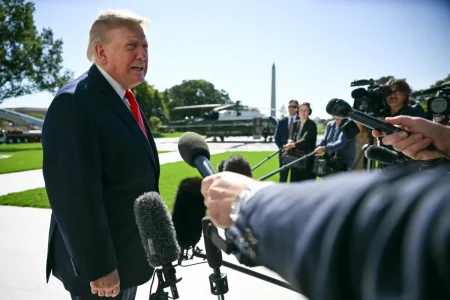
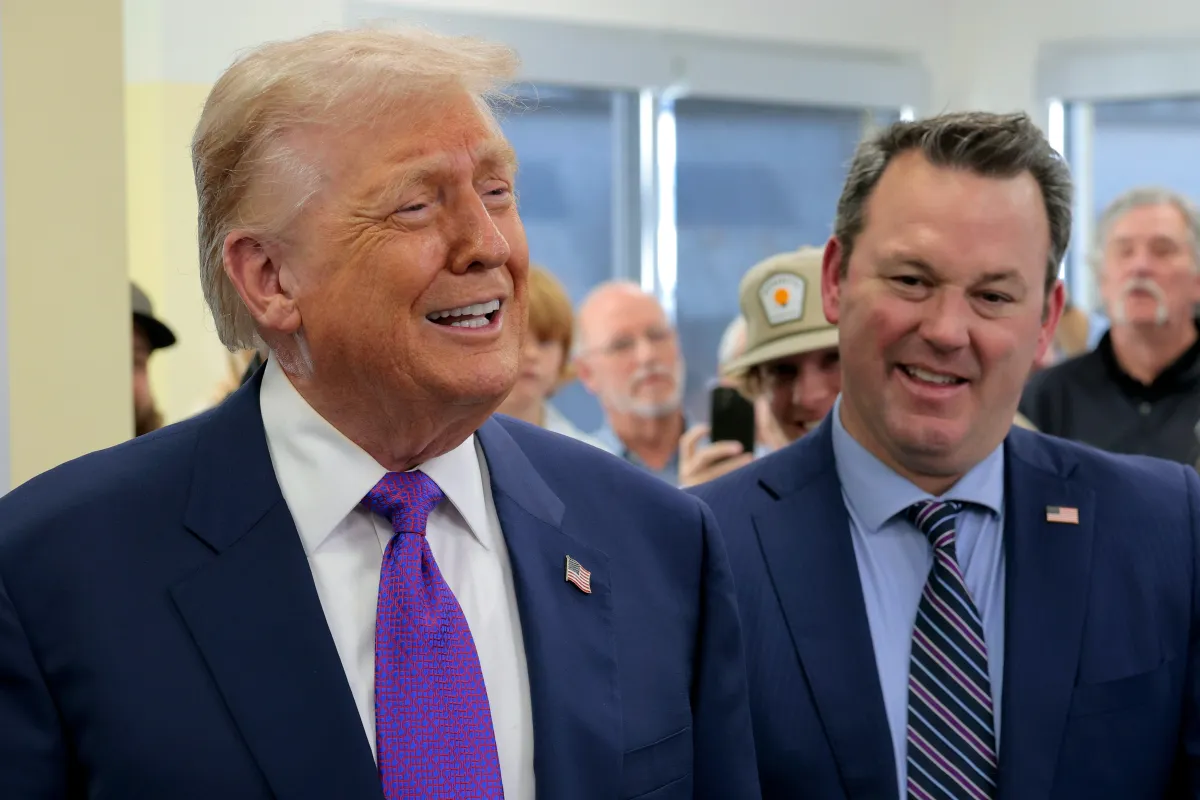
For Lieutenant Governor Burt Jones, this sudden shift in momentum represents a sobering reality check on the campaign trail. Jones entered the race with what many considered to be the ultimate golden ticket in modern conservative politics: a full-throated, highly visible endorsement from former President Donald Trump. In the early stages of the contest, that endorsement appeared to be an insurmountable advantage, helping Jones secure a first-place finish in last month’s primary with roughly 38 percent of the vote compared to Jackson’s 33 percent. However, because neither candidate managed to clear the 50 percent threshold required to win the nomination outright, they were forced into this exhausting runoff. Since then, the political winds have shifted dramatically; while an InsiderAdvantage poll from late May showed Jones holding a comfortable lead of 48 percent to Jackson’s 42 percent, that advantage has completely evaporated. The psychological toll on the Jones campaign is palpable as they grapple with the reality that a Trump endorsement, while still incredibly powerful and deeply respected by the grassroots base, may no longer be a magical shield capable of guaranteeing victory in highly competitive statewide contests.
On the other side of this fierce Republican civil war stands Rick Jackson, a self-made businessman who has run a relentless, unconventional campaign that seeks to rewrite the playbook on modern political operations. Rather than relying on national figures or traditional party structures to validate his candidacy, Jackson has leaned heavily into his profile as a political outsider and has backed up that narrative with an jaw-dropping financial commitment. Reports indicate that Jackson has poured roughly $100 million of his personal fortune into the race, effectively turning this contest into one of the most expensive and exhausting gubernatorial primaries in American history. This immense level of self-funding has allowed Jackson to bypass traditional gatekeepers, maintaining a constant presence on television screens, social media feeds, and radio stations across the state. By presenting himself as an independent-minded alternative to both the Washington elite and the local establishment, Jackson has successfully tapped into a growing sense of voter fatigue, convincing a significant portion of the electorate that his business acumen and financial independence make him uniquely qualified to lead Georgia without being beholden to any political kingmaker.
This high-stakes runoff has also exposed deep, fascinating fractures within the Georgia Republican Party, turning the race into a proxy battle between competing centers of power. Adding a late-stage twist to this political drama is the state’s highly popular sitting governor, Brian Kemp, who recently extended his endorsement to Burt Jones. Kemp, who is term-limited and cannot run for re-election, remains an incredibly influential figure among Georgia conservatives, and his support could provide Jones with the crucial boost needed to reclaim the lead in these final, frantic days. However, the dynamics are incredibly complex; while Kemp and Trump find themselves aligned in their support for Jones, they are simultaneously locked in bitter proxy battles elsewhere in the state, such as in a competitive Senate race where Kemp has backed Derek Dooley and Trump has endorsed Mike Collins. This intricate web of alliances and rivalries demonstrates that Georgia’s conservative landscape is far from a monolith, but rather a dynamic arena where local leaders, national icons, and self-funded outsiders must constantly negotiate, align, and clash in order to secure their own survival and influence.
Beyond the immediate theater of the campaign trail, the outcome of Tuesday’s vote carries profound national implications, serving as a critical diagnostic test of Donald Trump’s ongoing influence over the Republican brand. For a long time, Trump’s endorsement record was viewed by many as virtually flawless, with a recent tally showing that his backed candidates had won all 118 Republican congressional and gubernatorial primaries held through the end of May. However, that unbroken streak of dominance came to an abrupt halt earlier this month in Iowa, where his preferred candidate, Randy Feenstra, suffered a surprising defeat in the gubernatorial primary. A loss for Burt Jones in Georgia would mark another rare, highly visible setback for a Trump-backed candidate, sending a clear message to political strategists that voters are becoming more discerning, weighing local issues, personal candidate quality, and alternative conservative visions alongside presidential approval. As Georgia prepares for what is expected to be an incredibly close and competitive landscape in 2026 and beyond, this primary serves as an essential barometer for which messages and messengers truly resonate with the modern electorate.
As the final hours of the runoff tick away, volunteers from both campaigns are working frantically to mobilize voters, knowing that in a mid-summer runoff, turnout is absolutely everything. The winner of this grueling Republican primary will not have long to celebrate, as they will immediately pivot to face a formidable opponent in November: Democrat Keisha Lance Bottoms, the former Mayor of Atlanta. The general election promises to be a high-stakes, nationally watched battleground that will test the ultimate strength of the state’s Republican message against a energized Democratic base. For now, however, the focus remains entirely on Tuesday, as Georgia voters prepare to make a choice that is about much more than just two personalities. It is a choice about the future direction of their party, the power of money versus the power of endorsements, and the evolving identity of a state that continues to sit at the very center of the American political universe.