


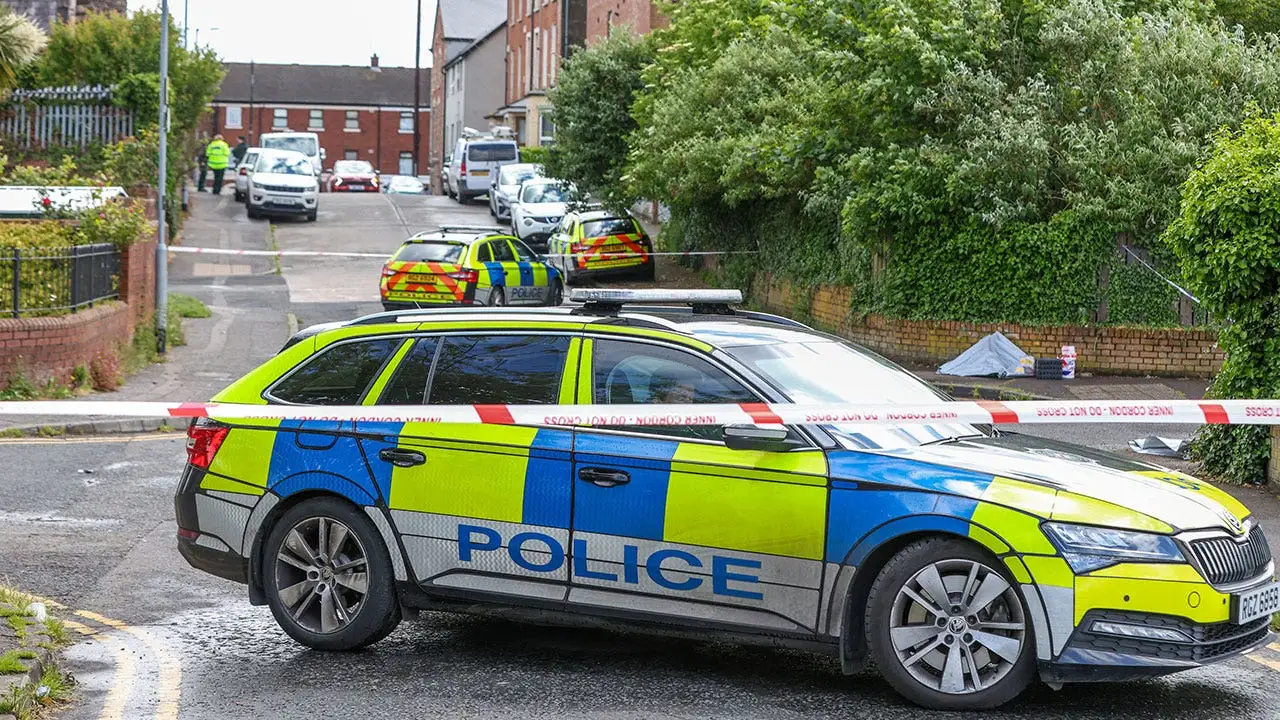
The tranquil peace of a Monday evening in north Belfast was suddenly shattered shortly after 10:30 p.m., leaving a local community in deep shock and a family praying for a miracle. A man in his 40s, walking through his own neighborhood, became the target of a brutal and seemingly unprovoked knife attack that transformed an ordinary night into a frantic struggle for survival. The physical toll of the assault was devastating; police reported that the victim sustained severe, life-altering injuries to his face, neck, back, and eyes, while investigators at the scene recovered what they believe to be a common kitchen knife used in the assault. This was not merely a statistic or an abstract police blotter entry, but a deeply traumatic event for a man whose life was altered in an instant, leaving him hospitalized with catastrophic wounds and reminding local residents of the fragile boundary between daily safety and sudden, terrifying violence.
In the midst of this terrifying ordeal, however, a profound display of human courage emerged as ordinary citizens refused to stand by and watch a tragedy unfold. Hearing the cries for help, several bystanders rushed toward the danger, confronting the armed attacker in a desperate bid to save a stranger’s life. Among them was an individual who quick-wittedly used a traditional Irish hurling stick to ward off the assailant, a striking image of a local cultural symbol being utilized in a split-second decision to defend a fellow human being. This chaotic, heart-stopping intervention, which was partially captured on mobile phone footage and widely circulated online, likely prevented a fatal outcome. Police Service of Northern Ireland Assistant Chief Constable Ryan Henderson praised these bystanders as nothing short of “heroic,” explicitly stating that their swift and selfless willingness to put themselves in harm’s way was the decisive factor that ultimately saved the victim’s life.
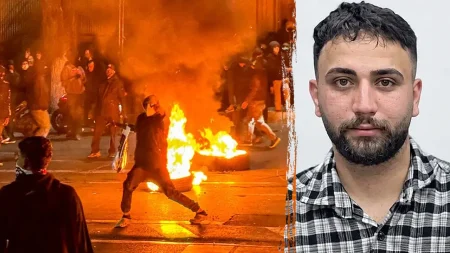
As the initial shock of the assault reverberated across the region, the official investigation quickly thrust the incident into the center of a highly contentious national debate regarding border security and immigration policy. While early police statements mistakenly identified the arrested suspect as a Somali national, authorities later corrected their assessment, clarifying that he is believed to be a Sudanese migrant who had entered Northern Ireland after traveling from Dublin, Republic of Ireland. According to police reports, the suspect had already been granted “leave to remain” by immigration authorities, a detail that immediately drew sharp condemnation from policy experts and advocacy groups. Alan Mendoza, the executive director of the Henry Jackson Society, remarked that the tragic incident exposed the severe vulnerabilities in Britain’s border management, characterizing the open Irish border as a “soft underbelly” through which unvetted individuals can pass, thereby undermining the public’s confidence in the nation’s political leadership.
This escalating public anxiety quickly reached the highest levels of British government, igniting a flurry of political reactions and demands for absolute transparency. Prime Minister Keir Starmer took to social media to swiftly condemn the attack as “sickening,” emphasizing that his administration has zero tolerance for such horrific violence on British streets and extending his deepest gratitude to both the emergency responders and the brave citizens who intervened. Starmer’s rapid public response stood in contrast to previous controversies where his administration faced criticism over perceived delays in addressing violent crimes. Meanwhile, prominent political figures such as Reform UK leader Nigel Farage, Conservative leader Kemi Badenoch, and former minister Robert Jenrick strongly urged authorities to immediately disclose the suspect’s full identity and legal status, arguing that the British public is fully entitled to the sober, unvarnished facts when such barbaric acts occur in their communities.
On a local level in Northern Ireland, a region with a complex history of social and political sensitivity, political leaders demonstrated a remarkably unified front in the face of the tragedy. Casting aside partisan differences, the main political parties issued a joint statement expressing their profound condemnation of the brutality and urging the public to refrain from sharing the graphic social media footage of the assault, out of respect for the victim’s dignity and family privacy. To maintain order and address growing public anger, the Police Service of Northern Ireland declared the assault a “critical incident” and announced an increased police presence across the region ahead of planned public protests. Authorities made a heartfelt plea for peace, asking local residents to remain calm and allow detectives the necessary space and time to conduct a thorough, professional investigation without the distraction of civil unrest.
Ultimately, as the political debates over border controls, immigration statuses, and governance continue to dominate national headlines, the heart of this story remains intensely personal. It resides in the quiet hospital room where a man in his 40s is enduring the long, painful process of physical and psychological healing, supported by a community that refused to look away in his moment of greatest need. While policy analysts and politicians dissect the systemic failures that may have allowed this tragedy to happen, the people of north Belfast are left to rely on the enduring strength of their communal bonds and the inspiring memory of the ordinary neighbors who ran toward danger to protect one of their own. This harrowing event serves as a stark reminder that behind every political talking point is a human life, and that even in the face of senseless violence, the collective resolve of a compassionate community can stand as a powerful shield against fear.