

Few things can deflate the joy of a live music festival faster than walking back to the parking lot and finding empty asphalt where your car should be. For concertgoers at Sacramento’s Aftershock rock festival, that moment of disbelief quickly curdled into something darker. They had spent hours lost in pounding guitars, soaring vocals, and the electric energy of a crowd, only to be yanked back to reality by a notice that their vehicles had been towed. But this was no ordinary tow. The operation that took their cars identified itself as J&B Towing, yet it seemed to exist in the shadows, with no visible office, no clear authorization, and a payment system that demanded $562 before anyone could be reunited with their vehicle. What followed was a bizarre and unsettling journey involving temporary signs, phone numbers, a ride in a white Honda Civic, and a remote dirt lot in a residential neighborhood. For the people caught in this net, the experience felt less like a regulated business transaction and more like a trap. They were not dealing with a company that could point to a legitimate license or a straightforward contract. Instead, they were handed preprinted receipts and told to pay up, with no clear explanation of why their cars were taken in the first place. Bruce Capagli, one of the victims, said he knew something was wrong when he saw a Lincoln Navigator towing another car off the lot. That moment of suspicion turned into a full-blown nightmare when he finally got his vehicle back and discovered it was so damaged that he could no longer drive it. His insurance company, significantly, did not treat the incident as a towing dispute. It treated it as a stolen vehicle. That distinction says everything about how strange and predatory this operation appears to have been.
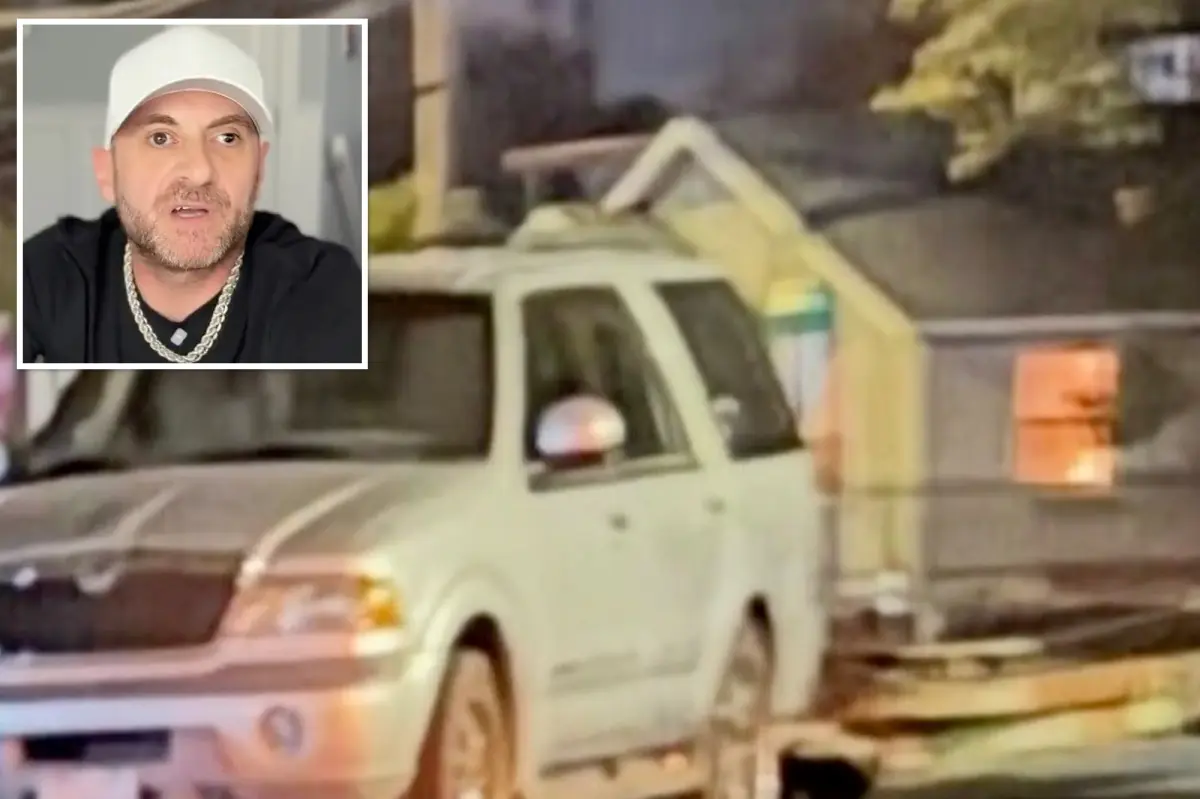
Bruce Capagli’s ordeal began innocently enough. He parked his car on Bercut Drive, the kind of place where festival parking should be routine, and headed into Aftershock with the expectation that his vehicle would be waiting for him when the music ended. It was not. When he returned, the spot was empty, and in place of any official explanation he found a temporary sign with a phone number. The person who answered was not a helpful dispatcher. Rather than offering an explanation, the voice on the line simply gave him an address on Del Paso Boulevard. That address turned out to be a shared office connected to an auto body shop, not a towing yard. Confusion mounted as he was then transported in a white Honda Civic to a dirt field in a residential neighborhood. This was not the kind of place where legitimate towing companies typically conduct business. There was no signage, no office, no uniformed employees, nothing to indicate that the operation had any official standing. Capagli said he knew something was up when he saw a rig, a Lincoln Navigator with a trailer, pulling another car off the lot. It was an image that suggested movement, secrecy, and improvisation. When he was finally presented with the paperwork, it was a preprinted receipt demanding $562. The amount felt arbitrary and excessive, especially given the lack of information about why the tow had occurred or who had authorized it. The entire process felt designed to confuse and pressure people into paying quickly, without asking questions. Capagli paid because he wanted his car back, but the questions stayed with him. He later realized that the ride to the lot, the unmarked location, and the hurried, cash-like transaction were all warning signs that a legitimate business would never have allowed.
The paperwork Capagli received only deepened his suspicion. The affidavit that supposedly authorized the tow named Allied Universal as the party requesting it. That seemed odd, because Allied Universal is a security company, not a property owner or a parking operator. Even stranger, the phone number listed on the document did not connect to Allied Universal. It connected directly to the towing operation itself. That circular arrangement made no sense, and Capagli came to believe the document had been forged, crafted to give the tow a thin veneer of legitimacy. When asked about the matter, Allied Universal was unequivocal. The company said it had no such towing arrangement and was not responsible for the parking facilities. In a statement, Allied Universal explained that its services at the location only included guarding services in the lobby inside the building of one tenant. It did not provide guarding services over the weekend, and it was not responsible for the building’s parking facilities. The company also stated that it did not contract with towing services at all. That denial effectively pulled the rug out from under the entire operation. If Allied Universal did not request the tow, then who did? The receipts themselves raised further red flags. They omitted the vehicle identification number, and they did not include the times the car was towed or released. For a supposedly official transaction, the paperwork was astonishingly bare. It was as if the operation had stripped away every detail that could be verified, leaving only a name and a price. Capagli’s belief that the affidavit was forged became more credible with every missing piece of information. The more he looked, the less legitimate the entire enterprise appeared. For a consumer, there is nothing more disorienting than being handed a document that looks official but falls apart the moment you examine it.
After paying the $562, Capagli finally recovered his vehicle, but the ordeal was far from over. The car that was returned to him was not the car he had parked. It had sustained damage so severe that it was undriveable. He did not elaborate on the exact nature of the damage, but the implication was clear: something had happened to the vehicle while it was in the custody of the tow operation, and no one was taking responsibility. When Capagli turned to his insurance company, he expected a normal claims process for damage incurred during a tow. Instead, the company classified the incident as a stolen vehicle claim. That classification is significant. It means that the insurance company, which deals with these situations all the time, did not view the removal of the car as an authorized tow. It viewed it as theft. That is a powerful validation of Capagli’s suspicions. He had been separated from his property, forced to pay a ransom-like fee, and then handed back a vehicle that was worse off than when he lost it. The financial impact went far beyond the $562. There was the cost of repairs, the inconvenience of being without a car, the time spent chasing answers, and the emotional toll of feeling violated. A car is more than a machine. It is freedom, livelihood, a way to get to work, pick up children, visit family. Losing it, even temporarily, disrupts the entire rhythm of life. Capagli’s story is a reminder that predatory towing is not just a consumer annoyance. It can upend a person’s daily existence and leave lasting scars. The fact that he was expected to pay for the privilege of having his car damaged only adds insult to injury.
Capagli was not alone. Other motorists who attended Aftershock described remarkably similar experiences. They, too, were directed to call the same phone number. They, too, were sent to the address on Del Paso Boulevard. They, too, were transported to an unmarked dirt lot and charged the same $562 to get their cars back. This consistency is telling. It suggests a coordinated operation, not a series of one-off mistakes. The same phone-number detour and the same flat fee point to a system designed to process vehicles quickly and profitably, with little regard for the legality of the tows or the rights of the owners. Drivers also provided receipts bearing the J&B Towing name for incidents that occurred in other Sacramento locations and on different days. That detail broadens the scope of the concern. This was not a single bad day at one festival. It was a pattern that extended across the city, potentially preying on unsuspecting drivers in multiple settings. When CBS Sacramento contacted the owner of J&B Towing, the response did nothing to ease concerns. The owner insisted that the business was legitimate but declined to provide a license number. He declined to be interviewed and failed to supply requested licensing documents. For a company that was charging people hundreds of dollars, this refusal to provide basic verification was damning. Legitimate towing companies are typically licensed, insured, and able to document their authority to tow. J&B Towing, at least in this instance, appeared to operate in the spaces between oversight and accountability. The victims were left with little recourse, and the company’s silence only deepened the impression that something was very wrong. It is one thing to make a mistake; it is another to refuse to answer for it.
This story is ultimately about more than one man’s bad experience or even a group of concertgoers who were overcharged. It is about the vulnerability of everyday people in moments when they least expect to be taken advantage of. Parking for a festival should be a simple transaction: you pay a fee, you leave your car, you come back and drive home. The idea that a tow operation could swoop in, remove vehicles, and hold them hostage for hundreds of dollars while hiding behind an unverifiable name is deeply unsettling. It undermines trust in the systems that are supposed to protect consumers. It also raises urgent questions about regulation and oversight. Who granted this operation permission to tow from that lot? What agreement, if any, existed with the property owner? Why were vehicles taken to an unmarked dirt field instead of a licensed impound yard? These are not rhetorical questions. They are the details that would determine whether the tows were legal or simply theft with paperwork. For now, the victims are left with receipts, unanswered calls, and, in Capagli’s case, a broken car and an insurance claim that treats the incident as a crime. The human cost is not measured only in dollars. It is measured in the anxiety of not knowing where your car is, the frustration of being shuttled around by strangers, and the helplessness of paying a large sum just to reclaim what was already yours. It is measured in the long drive home in a towed car’s absence, the missed work, the explanations to family, and the lingering fear that it could happen again. As Sacramento officials and affected drivers search for answers, one hopes that this story will serve as a cautionary tale and a catalyst for change. No one should have to navigate a maze of shady phone numbers and hidden lots to get their own property back. And no company should be allowed to hide behind a name, collect cash, and leave destruction in its wake. The music at Aftershock was loud, but the silence from the towing company is louder still. In the end, what these concertgoers lost was not just their cars or their money. They lost a little of their faith in the world, and that may be the hardest thing to tow away.