



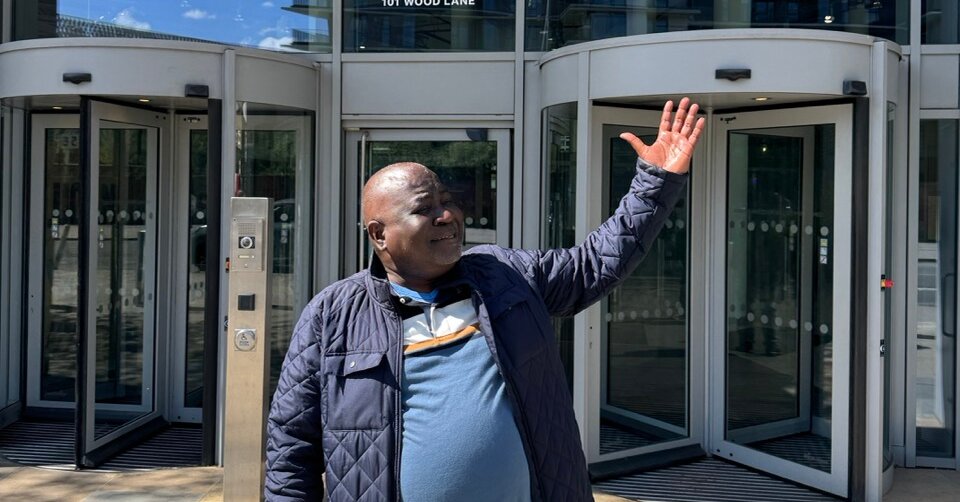
The Unexpected Spotlight: When a Job Interview Turned into a Live TV Debacle
Imagine waking up one ordinary morning in 2006, heading into the bustling BBC headquarters in London for what you think is a straightforward interview for an IT data specialist position. That’s how Guy Goma’s day started—a man in his 50s, born in the Republic of Congo, who had immigrated to the UK seeking better opportunities. He was sitting in the lobby, minding his own business, when a producer named Elliott Gotkine approached him. Gotkine was frantic, looking for another Guy—Guy Kewney, the tech journalist scheduled to appear on the BBC News 24 channel to discuss a major ruling in the Apple vs. Apple Corps lawsuit, a landmark legal battle over music rights between Apple’s tech empire and The Beatles’ record company. Gotkine recalled later that with airtime approaching fast, he asked if Goma was the guy they needed, but details are hazy; Gome insists it was just “are you Guy?” Either way, without a moment to clarify, Gome was whisked away amidst the producer’s urgency. This wasn’t just a case of mistaken identity—it highlighted the chaotic behind-the-scenes rush in live broadcasting, where mistakes stem from high stakes and time constraints. As he walked into the room, Gome noticed the fussiness: staff offering makeup, setting up screens that lit up with his confused face. Then, the anchor walked in—Karen Bowerman, a familiar face from his TV-watching days—and the realization hit like a ton of bricks. “Oh dear, I’m in the wrong place,” he thought, his heart racing. But adhering to the life lessons from his mother back in Congo, who taught him to handle mistakes graciously and respect others, he decided to roll with it. In that split second, vulnerability turned into composure, a testament to human resilience amid unexpected challenges. Twenty years on, this moment endures not as a blooper reel, but as a story of quiet heroism, where a man unprepared yet unflinching navigated a media storm, turning potential embarrassment into endearing folklore.
The Chaotic Mix-Up: From Lobby to Live Broadcast
Diving deeper into Gome’s background adds layers to this tale, humanizing him beyond a viral clip. Guy Goma, now 58, arrived in the UK years earlier, driven by dreams of stability and work with technology—fields he had some familiarity with from his Congolese roots, where access to modern IT was limited. His decision to apply to the BBC was pragmatic; it represented hope for a stable life, perhaps even a fresh start for his family ties. Yet, on that May morning, fate intervened through the producer’s haste. Gotkine, then in his 20s, was new to the job’s intensity, and viewers across the UK were tuned in for breaking news. The Apple case verdict had just dropped, deciding that Apple Corps could no longer challenge the tech giant’s use of the “apple” trademark, a decision that could reshape digital music consumption. Kewney, the intended expert, was a seasoned commentator on such topics, but in the fog of production deadlines, Gome slipped through. Gotkine later admitted he didn’t double-check identities, a symptom of the 24-hour news grind where seconds count more than scrutiny. For Gome, red flags piled up quickly: the hurried escort, the cosmetic touch-up he wasn’t expecting, and Bowerman’s professional demeanor as she prepared to go live. Recalling the confusion, Gome shared how his mind flashed to childhood memories in the Congo, where improvising was survival—mending a broken machine or navigating language barriers with peers. Yet, something in him clicked; perhaps it was that innate Congolese respect his mother instilled, urging him not to cause a fuss over others’ errors. He sat down, composed himself, and when Bowerman introduced him—incorrectly—as Kewney, Gome’s face betrayed sheer shock, but he held his ground. This wasn’t mere luck; it was a display of quiet strength, born from a life of adapting to the unexpected, reminding us all that behind the headlines, real people face colossal pitfalls with dignity.
The Live Interview: Improvisation Under Pressure
As the cameras rolled live in 2006, the interview unfolded like a surreal dream, with Gome channeling unexpected poise. Bowerman, unaware of the error, dove in with her first question: Was Gome surprised by the Apple verdict? His response, delivered in slightly accented English—”I’m very surprised to see this verdict to come on me, because I was not expecting that”—hung in the air, blending genuine bewilderment with unintended humor. It was a malapropism that spoke to his IT background yet utterly missed the tech expert mark, but Bowerman, ever the pro, pressed on, asking about consumer habits and online music downloads. Gome, thinking on his feet, replied insightfully yet imperfectly: “Exactly… you can go everywhere on the cybercafe and you can check—you can easy—it’s going to be very easy way for everyone to get something to the internet.” His words, though not polished, captured a universal truth— the democratizing power of the web in an era before streaming giants like Spotify. Bowerman, sensing something off, wrapped up the nearly 80-second segment swiftly, the episode becoming one of TV’s most awkward yet endearing blunders. Reflecting back, Gome credited his mother’s voice echoing in his head: relax, respect, don’t embarrass. This segment wasn’t about expertise; it was about humanity. In a world obsessed with perfection, Gome’s calm demeanor—face contorting briefly before steadying—made him relatable. He wasn’t faking knowledge; he was sharing from the heart, drawing on his own tech-induced amazement in coffee shops back home. Professor Rafal Zaborowski, a digital culture expert at King’s College London, later praised Gome’s composure, likening it to a pop quiz where vulnerability sparks empathy. Viewers laughed not at incompetence, but with warmth, seeing echoes of their own imposter syndrome in high-stakes moments.
Immediate Aftermath: From Blunder to Media Frenzy
Right after the interview aired, the confusion erupted behind the scenes. Gome gently informed the BBC staff he wasn’t Kewney, and they apologized profusely, but the damage was done—in the best way possible. The clip spread like wildfire, first through newspapers in the UK, then globally as early internet virality. Headlines like “Man Gives Tech Opinion Despite No Expertise” highlighted the hilarity, but underneath was sympathy. For Gome, it spiraled into chaos; paparazzi followed him for weeks, forcing him to retreat to his brother’s home for respite. Meanwhile, Gotkine, the young producer, quit the BBC shortly after, grappling with the fallout, though he now looks back with amusement. Gome, resigned, proceeded with his actual job interview but didn’t land the position—fate’s irony. Yet, this wasn’t ruin; it was revelation. People resonated with Gome’s grace, the way he didn’t panic or blame. In Congolese culture, deference and resilience are virtues, instilled by elders like his mother, who navigated post-colonial hardships with quiet resolve. Gome embodied that, turning a mistake into a mirror for societal quirks—how TV news often prioritizes the facade over substance. Early online forums buzzed with stories of relatable flubs, and Gome became a symbol for ordinary folk thrust into extraordinary roles. This period also marked the dawn of social media memes, with clips edited into comedic gold, humanizing news pundits in a pre-TikTok world. Gome’s story, far from a footnote, showed how one man’s humility could critique the machine of broadcast journalism, reminding us that behind glossy screens lie real humans with real stories.
Long-Term Legacy: A Folk Hero Emerges
Two decades later, the 2006 incident still captivates, proving time doesn’t dull its charm. Guy Gome’s composure has made him a folk hero, especially for those who’ve winged it in life—think job interviews gone awry or impromptus public speeches. In 2024, Gome and Gotkine reconnected after years apart, co-authoring “The Wrong Guy,” a book chronicling their perspectives. It’s equal parts memoir and commentary, diving into the human elements: Gome’s Congolese upbringing, where improvisation was key in a war-torn youth, shaping his unflappable nature; Gotkine’s youthful impulsiveness, humbled by the event. The book’s release coincided with the May 8 anniversary, spurring reposts and reflections. BBC even revisited it via a cheeky online clip, and it’s cited in media training as a “fake it till you make it” case study. But more profoundly, it critiques televised expertise—how experts often bank on performance over deep knowledge. Gome’s calm responses, recalled Zaborowski, are digestible because they’re authentic: not jargon-laden, but genuine insights from someone genuinely confused yet trying. This resonates in an age of deepfakes and frantic news cycles, where viewers crave realness. Gome’s life now involves working with people with learning disabilities, a fitting extension of his empathetic approach. The incident’s virality spawned parallels, like a 2007 BBC professor’s interview interrupted by kids—a meta nod to chaos in control. For many, Gome represents the underdog rising through grace, inspiring millennials and Gen Z grappling with workplace anxieties. In his Congo-adjacent spirit, the story humanizes global migration tales, turning a blunder into a bridge between cultures and professions. It’s not just about the laugh; it’s a celebration of composure under fire, where a simple man’s dignity conquered the spotlight.
Enduring Appeal: Why We Still Identify with Guy
What makes Guy Gome’s story timeless is its mirror to our collective fears: the dread of being exposed as unprepared. As Zaborowski notes, Gome’s initial shock— that contorted face—makes him instantly relatable; we’re all there, fending off imposter syndrome in careers, relationships, or spotlight moments. Unlike polished experts, Gome’s imperfect English and earnest replies tug at heartstrings, evoking the human condition—adapting amid adversity, as he did from Congo’s challenges to UK’s newness. The humor arises from unity, not mockery: his “cybercafe” quips highlight a relatable digital awakening. In training seminars, he’s hailed for “staying cool under pressure,” teaching that composure trumps expertise sometimes. Yet, the story transcends comedy; it’s about forgiveness and second chances. Gome didn’t sue or blame—he moved on, now a voice for vulnerability. Gotkine, too, emerged wiser, moderating conferences and sharing lessons on haste. In our hyper-connected world, where AI might soon “fake it” seamlessly, Gome’s authenticity shines, urging us to embrace flaws. His mother’s wisdom echoes: respect mistakes, steady yourself. As viewers, we laugh with him, identifying with the pop quiz of life. The incident’s legacy? A testament to resilience, proving that accidents can birth heroes, and one man’s grace can critique a flawed system, leaving us all a little more human.