

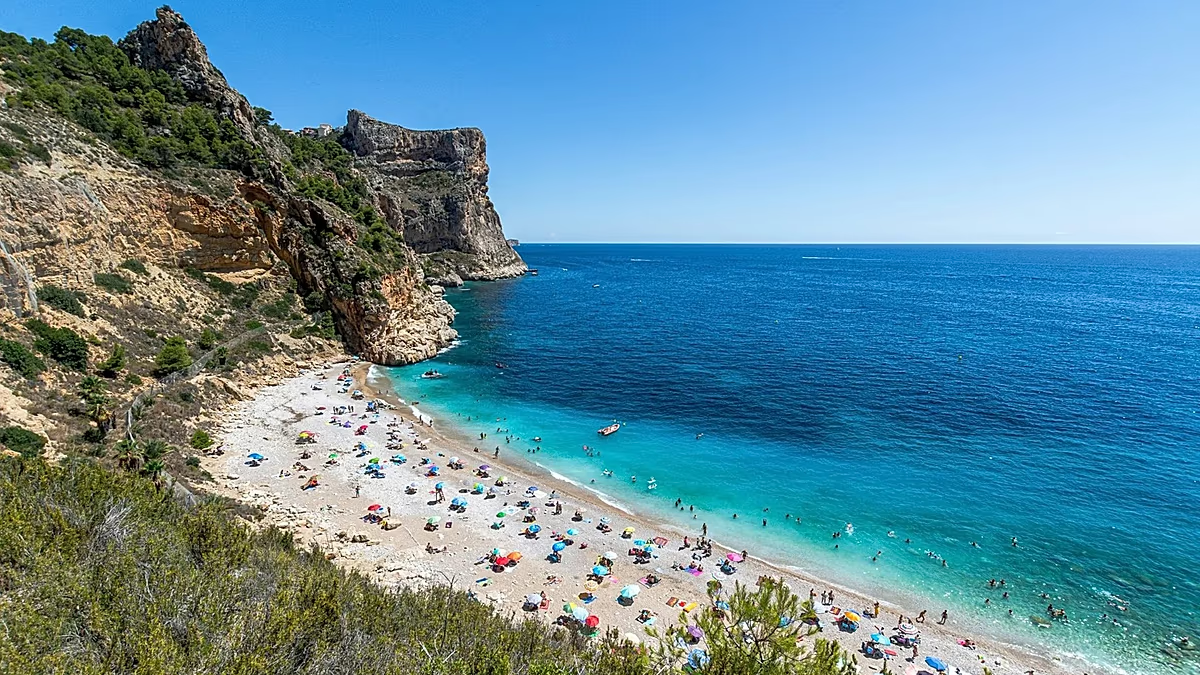
Spain’s coastline stretches over almost 8,000 kilometers of stunning beauty, but this year, it’s the eco-friendly credentials and top-notch safety that are truly making waves. Imagine strolling along golden sands where the water is crystal clear, cleanliness is paramount, and every detail—from accessibility for all to robust environmental practices—feels thoughtfully designed for both visitors and the planet. Spain isn’t just lucky with its beaches; it’s leading the charge in sustainable tourism, and the latest Blue Flag awards are proof. This international recognition, handed out by experts from organizations like the UN Environment Programme and UNESCO, celebrates spots that excel in water quality, eco-management, and safety. It’s not just a label; it’s a badge of honor for places that prioritize our shared natural world while welcoming tourists with open arms. If you’ve ever dreamed of a beach vacation that feels responsible and serene, Spain’s got you covered, with more Blue Flag spots than ever shining brightly.
Diving into the numbers, Spain smashed its own records this year, earning a jaw-dropping 677 Blue Flags for its beaches alone—plus 111 for marinas and six for tourism boats—totaling 794 in all, a solid 44 more than last year’s impressive 750. That’s not small potatoes; it represents 15% of all Blue Flags worldwide, putting Spain firmly in the lead. For context, while Greece nabbed 657 and Türkiye scored 625, Spain’s haul edges them out, making it the Mediterranean’s environmental champion. Out of 713 entries submitted from municipalities across the country, this success story is built on collaboration—local governments, businesses, universities, and even everyday citizens pitching in to meet rigorous standards. It’s heartening to see how communities from Valencia to the Canary Islands have rallied together, proving that collective effort can transform ordinary stretches of coast into paradises that feel welcoming and protected. Whether it’s the fresh sea air or the pride in local stewardship, this isn’t just about awards; it’s about a nation’s commitment to keeping its shores pristine for generations to come.
Breaking it down by regions, the Valencian Community stole the show with 151 Blue Flags across 48 municipalities, followed closely by Andalusia’s 143, Galicia’s 118, Catalonia’s 101, and the Canary Islands’ 52. For marinas, Catalonia, Andalusia, and Valencia took the top spots, while Andalusia and Valencia shared the six tourism boat awards. It’s fascinating how diverse landscapes—from the rugged Atlantic shores of Galicia to the sunny islands of the Canaries—each contribute uniquely to this tapestry of excellence. Picture the bustling urban vibes of Valencia’s Malvarrosa beach or the tranquil reservoir in Andalusia’s Jaén province; these aren’t just numbers, they’re stories of transformation. Rosario Sánchez, Spain’s Secretary of State for Tourism, captured the excitement perfectly: “Spain has never achieved such outstanding results in the Blue Flag programme. This success is the result of collaboration between municipal, regional and national entities, marinas, businesses, universities, foundations, associations and citizens, all of whom demonstrate responsible work in meeting the programme’s demanding criteria in environmental education, management and information, compliance with current legislation, excellent water quality, accessibility and safety.” Her words remind us it’s not about competition, but connection—people working hand-in-hand to honor the oceans and lands we cherish.
As the Spanish State Secretariat for Tourism tweeted enthusiastically, they’re celebrating Spain’s leadership in sustainable tourism and showering congratulations on every recognized municipality. It’s a call to action for travelers like you: grab your swimsuit, pack some sunscreen, and head to these award-winning gems. The beaches aren’t just beautiful; they’re beacons of hope, showing how tourism can coexist with conservation. Think of it as a personal invitation to explore spots where the blue flag flaps proudly in the breeze, signaling “welcome” and “we care.” After all, when you visit a Blue Flag beach, you’re not just relaxing—you’re supporting a movement. From surf-friendly waves to family-friendly promenades, these places offer adventures that feel earned, like a reward for the hard work behind the scenes. It’s empowering to know your vacation dollars are fueling eco-friendly efforts, turning each trip into a small act of goodwill for the planet.
Let’s zoom in on some standout spots to inspire your travels. Start with La Malvarrosa in Valencia, a beach that’s undergone an incredible metamorphosis. Once a swampy marshland in the mid-19th century, it’s now a vibrant hub where golden sands meet bustling energy. Surfers ride the waves, divers explore the depths, and volleyball enthusiasts spike on-court—sometimes over snacks from the beachfront eateries lining the promenade. It’s the kind of place where urban sophistication blends with natural allure, making it easy to spend a whole day soaking up the sun and seaside vibes. Then there’s El Encinarejo in Andalusia, a rising star that’s redefined “beach” altogether. Nestled inland at the El Encinarejo reservoir—far from traditional coasts—this quiet oasis won Jaén province’s first Blue Flag in 2024. Surrounded by rugged, rural scenery, its calm waters are perfect for a gentle swim, while the surrounding hills invite picnics and peaceful contemplation. It’s a hidden gem for those seeking serenity away from crowded seas, proving that eco-excellence can bloom anywhere. And don’t forget Playa de la Virgen de la Nueva in Madrid, where beige sands and turquoise waters frame mountainous backdrops. With natural shade from the terrain, it’s an adventurer’s paradise—try kayaking or wakeboarding on the reservoir, then trade water for trails with mountain biking and hiking. These beaches aren’t just destinations; they’re personalized experiences, tailored for dreamers, families, and thrill-seekers alike, each one a testament to Spain’s diverse, inclusive approach to coastal wonder.
At the heart of it all is the Blue Flag program itself—a truly inspiring initiative born from a desire to protect our precious waters and promote smarter tourism. Launched in 1985 by the French arm of the Foundation for Environmental Education, it started as a modest environmental education effort in France, Spain, Denmark, and Portugal. But over 40 editions, from 1987 to 2026, it has blossomed into a global movement, now active in 51 countries across five continents, certifying over 5,000 locations. Each year, an elite international jury—including reps from heavyweight organizations like the UNEP, UNESCO, and the European Environment Agency—scrutinize applicants on criteria spanning water quality, eco-management, accessibility, safety, and even educational outreach. It’s rigorous, yes, but that’s what makes it meaningful: no shortcuts, just genuine commitment. In Spain, the Association of Environmental and Consumer Education partners to ensure local participation, turning the program into a community-driven affair. Imagine the pride of a small municipality when their beach earns that coveted flag—not just for bragging rights, but for knowing they’ve contributed to cleaner oceans and safer shores. It’s a program that humanizes sustainability, showing how everyday choices, like maintaining top-tier hygiene or educating visitors on marine conservation, build a better world. Whether you’re a lifelong traveler or a first-time beachgoer, embracing Blue Flag destinations means joining a legacy of care that connects us all to the sea’s rhythm. So, as Spain’s flags keep waving, let’s remember: these aren’t mere labels; they’re invitations to a more harmonious way of exploring our world, one wave at a time. In the end, it’s about fostering connections—between people, places, and the planet—ensuring that the beauty we seek today endures for tomorrow. And with that, Spain’s coastal triumphs remind us that leadership in eco-tourism isn’t just achievable; it’s wonderfully within reach for all of us.