


There is an undeniable fatigue beginning to settle over the global traveler, a quiet realization that the glittering postcards of Europe’s mega-cities often come with the heavy price of endless queues, crowded plazas, and the diluted authenticity of tourist traps. In response, a beautiful shift is occurring in the way we choose to explore: a collective turning away from the predictable and a step toward the quiet, mist-shrouded, and sun-draped corners of the continent where time still moves to the gentle rhythm of the seasons. Tucked away within the folds of dramatic mountain ranges, nestled beside pristine, glassy lakes, and clinging to medieval hillsides are sanctuaries that have somehow managed to slip through the fingers of mass tourism. These are the places where ancient heritage is not merely preserved in a museum but lived daily in the warmth of a local baker’s smile, the scent of wild herbs on a mountain breeze, and the slow pour of a regional wine. To guide this yearning for authentic, slow-paced exploration, the travel experts at European Best Destinations have curated their highly anticipated list of under-the-radar treasure spots for 2026. This selection serves as a love letter to the curious wanderer, offering a roadmap to destinations that feel wonderfully undiscovered, where history remains tangible, landscapes retain their raw majesty, and the simple act of traveling becomes a deeply personal, restorative journey.
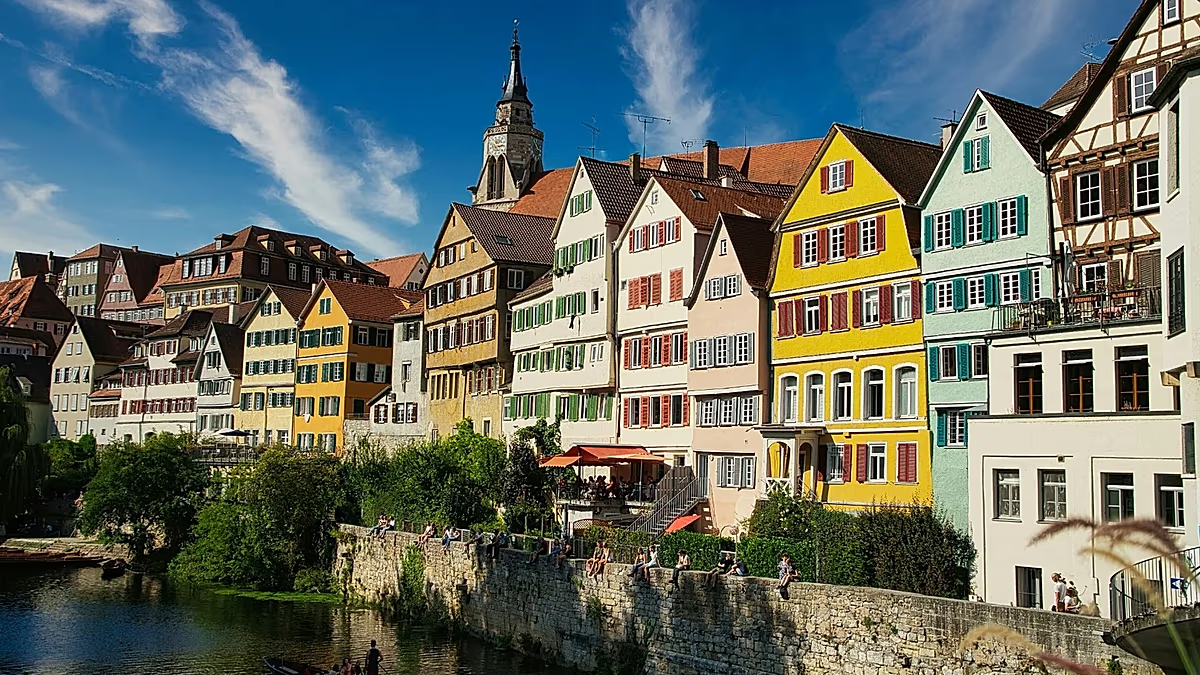
Our voyage into these quiet sanctuaries begins in the southwestern corner of Germany within the vibrant, intellectual embrace of Tübingen, a picturesque university town situated just a short escape from the bustle of Stuttgart. To wander through Tübingen is to step into a living historical canvas, where one of Europe’s oldest and most prestigious universities infuses the historic timber-framed streets with a youthful, artistic energy. Your days here unfold gently: you might find yourself gazing upward at the magnificent late-Gothic architecture of the Stiftskirche St. Georg, tracing the delicate hands of the 15th-century astronomical clock atop the City Hall, or marveling at the ancient Egyptian and classical treasures housed within the grand walls of Hohentübingen Castle. Down on the Neckar River, the iconic wooden Stocherkähne boats glide smoothly past rows of pastel-hued houses, their reflections dancing on the water as students and travelers alike picnic under the weeping willows. The local taverns beckon with the comforting aromas of Swabian culinary heritage, inviting you to warm up over steaming plates of hand-molded Maultaschen—savory filled pasta pockets—and rich, cheese-laden Käsespätzle, perfectly complemented by a glass of earthy, locally produced Trollinger or Lemberger wine. From the scholarly elegance of Germany, the journey meanders southeast to the dreamy, fertile landscapes of Istria, Croatia, where the hilltop village of Motovun rises like a stone crown above the shimmering Mirna River valley. This medieval fortress town, perched directly at the cultural crossroads of Croatian, Slovenian, and Italian traditions, exudes a timeless fairy-tale charm. Walking along the ancient stone battlements when the morning fog still blankets the vineyards below feels like standing at the edge of the world; here, the slow life reigns supreme. The dense, damp Motovun forest stretching beneath the town is a legendary haven for the world’s most coveted white truffles, and autumn visitors can join local hunters and their loyal hounds in search of these culinary treasures before returning to a cozy, candlelit stone tavern to indulge in handmade pasta generously shaved with fresh, aromatic truffles, washed down with a glass of robust, ruby-red Teran wine.
Crossing the Adriatic, we find ourselves immersed in the romantic, sun-baked landscape of Italy, which holds two of the most enchanting and contrasting secrets on the 2026 list. In the northern region of Piedmont, cradled away from the buzz of Lake Como, lies the ethereal Lake Orta, home to the mystical Isola San Giulio, affectionately known as the “Island of Silence.” This tiny, sacred jewel of an island, floating like a mirage on the calm waters, is a place of profound peace where the world’s noise simply dissolves. Stepping off the small wooden ferry, you are welcomed by the grand Romanesque facade of the 12th-century Basilica di San Giulio, its interior a sanctuary of whispering shadows, shimmering gold mosaics, and beautifully weathered Byzantine frescoes. The island is defined by the “Way of Silence,” a circular walking path that winds past elegant, aristocratic villas and a quiet Benedictine monastery, marked by thoughtful, hand-painted plaques encouraging meditation and mindfulness. Back on the mainland shore in the medieval town of Orta San Giulio, the silence gives way to the warm hospitality of family-run trattorias, where you can savor rich Piedmontese comfort foods like creamy risotto infused with Barolo wine, and bagna càuda, a pungent, comforting dip of garlic, anchovies, and olive oil served with crusty bread. Traveling south to the heel of Italy’s boot, the quiet contemplation of the north transforms into the whimsical, architectural playground of Alberobello in Puglia. To walk into Alberobello is to feel as though you have slipped through a portal into a fantasy novel; the town is globally renowned for its thousands of trulli—extraordinary, whitewashed dry-stone huts capped with conical gray roofs, many adorned with mysterious white symbols painted by hand generations ago. The districts of Rione Monti and Aia Piccola present a labyrinth of narrow, climbing lanes where these unique structures have been lovingly converted into artisan workshops, cozy wine bars, and intimate homes. Here, the warm southern sun illuminates the local culinary pride, tempting you to linger over outdoor tables laden with fresh, hand-shaped orecchiette pasta, creamy, oozing balls of local burrata cheese, and crisp, golden focaccia barese spiked with olives and sweet cherry tomatoes.
Moving eastward across the sparkling Ionian Sea, the landscape transitions from whimsical stone cottages to the staggering, awe-inspiring vistas of central Greece, where the UNESCO-listed sanctuary of Meteora redefines the relationship between nature and human devotion. Here, massive, monolithic pillars of dark sandstone rise vertically from the flat Thessalian plains like giant fingers reaching toward the heavens, sculpted by millions of years of wind, water, and seismic activity. Impossibly balanced atop these dizzying, vertical cliffs are the historic monasteries of Meteora, constructed by resourceful Orthodox monks between the 14th and 16th centuries who sought isolation and safety from political turmoil, hauling building materials up the sheer rock faces using primitive rope ladders and wooden nets. Today, six of these sacred sanctuaries remain active, including the imposing Great Meteoron and Varlaam, housing centuries of exquisite religious icons, priceless manuscripts, and wood-carved iconostases beneath their vaulted ceilings. Hikers can traverse the ancient, shadowed trails that snake through the base of these stone giants, walking beneath a canopy of dense green foliage before emerging at panoramic lookouts that offer views so vast they seem to touch the infinite. In the bustling valley town of Kalambaka, lying directly in the shadow of the monoliths, the sensory adventure concludes in rustic Greek tavernas filled with the acoustic warmth of Greek music and the rich, savory aromas of slow-baked moussaka, grilled souvlaki, and spetsofai—a hearty, spicy sausage and pepper stew. To finish a long day of hiking and spiritual exploration, locals and visitors alike indulge in galaktoboureko, a decadent, crispy phyllo pastry filled with warm, creamy custard and drenched in sweet, lemon-infused sugar syrup.
While these five destinations represent the crowning jewels of the 2026 selection, the broader list curated by European Best Destinations reveals an absolute wealth of diverse, untouched treasures waiting to be explored by those willing to stray from the familiar path. Among these is the tranquil, pastel-colored fishing village of Fiskardo on the northern tip of the Greek island of Kefalonia, which miraculously survived the devastating earthquake of 1953, preserving its elegant 18th-century Venetian-style waterfront architecture where private yachts and wooden fishing boats bob side-by-side in crystalline waters. Further west, deep within the lush, sun-drenched heart of Bosnia-Herzegovina, the breathtaking Kravice Waterfalls offer a dramatic natural paradise where a massive, semi-circular cascade of emerald-green water tumbles over tufa cliffs into a pristine, natural swimming pool fringed by weeping figs and wild poplars. In Portugal, the ancient, fortified village of Monsaraz stands as a sentinel of stone overlooking the vast, shimmering expanse of the Alqueva reservoir near the Spanish border; this white-walled hamlet, built entirely of local schist and granite, offers visitors a journey back to the Middle Ages, complete with a medieval castle, quiet cobblestone alleys, and some of the darkest, most spectacular star-filled night skies in Europe. Meanwhile, in the chilly heights of the Italian Alps, the hauntingly beautiful Lago di Resia captures the imagination of all who visit, famously known for the lonely, 14th-century church bell tower that rises directly out of the deep blue alpine waters—a poignant, silent monument to a submerged village that has become a surreal playground for ice sailors in winter and kayakers in summer. Finally, the list travels to the romantic heart of France with Pérouges, a remarkably preserved, double-walled medieval hilltop fortress town near Lyon, where visitors walk upon uneven, historic cobblestones polished by centuries of footsteps, admiring half-timbered houses and indulging in the local specialty, Galette de Pérouges, a sweet, buttery tarte baked in wood-fired ovens.
In a globalized world where our cities can sometimes feel increasingly carbon-copied and hurried, the discovery of these ten unique European sanctuaries offers far more than a simple vacation; it offers a profound opportunity to reconnect with the deeper, more soulful essence of travel. Visiting these under-the-radar destinations is an exercise in mindful exploration, a conscious choice to tread lightly upon the earth, to support small, family-owned hospitality businesses, and to actively participate in the preservation of fragile cultural heritages that cannot survive the crushing weight of mass commercialization. To sit on a sun-warmed stone wall in Monsaraz, to hear the soft lap of the lake against the shores of Isola San Giulio, or to breathe in the deep, pine-scented air of the Black Forest near Tübingen is to remember that the true magic of travel does not lie in crossing a famous landmark off a social media checklist. Rather, the magic lives in those quiet, unexpected moments of human connection—a shared laugh with an Istrian truffle hunter, the smell of fresh pastry wafting from an Alberobello kitchen, or the absolute stillness of a Greek monastery suspended between the earth and the sky. As we look ahead to 2026, let us choose to travel with curiosity, respect, and a willingness to get lost, finding our way back to the heart of Europe by seeking out the beautiful, resilient secrets she has so carefully kept hidden.