




Shadows of Drones on Europe’s Frontier: NATO’s Uneasy Vigil Along the Eastern Flank
On a crisp autumn morning last month, the banks of the Danube River near the Ukrainian border glowed under the sun, a scene of tranquility that belied the tensions simmering just across the water. For locals like Dumitru Cerneaga, a spry 74-year-old Romanian man out for a riverside stroll, the frequent air-raid alerts had become more of an irritant than a terror. “What’s there to worry about?” he quipped, pausing to watch the ripples dance on the surface. After all, NATO’s protective umbrella loomed large, a collective shield against external threats. “NATO countries must defend us,” he declared with unwavering confidence, echoing a sentiment shared by many in border towns where the echoes of war seemed distant—until they weren’t. The very next day shattered that illusion. During a routine air defense exercise off Romania’s Black Sea coast, NATO systems flickered ineffectively, failing to intercept targets in three of nine drills. Mere hours later, the reality of conflict intruded when shrapnel from a downed Russian drone rained down on a residential area not far from where Cerneaga had stood, a stark reminder that the alliance’s defenses are under siege. Fortunately, no one was injured, but the incident underscored the fragile line between peace and peril.
The proliferation of drones since Russia’s full-scale invasion of Ukraine in February 2022 has fundamentally reshaped the landscape of modern combat, transforming cheap, ubiquitous technology into a global disruptor. These unmanned aerial vehicles, once the domain of hobbyists and niche military applications, now pose a persistent threat to NATO’s airspace, challenging the alliance’s Eastern European members and testing the resolve of Western nations to counter aggression without escalating tensions. Countries like Romania find themselves on the frontline, grappling with incursions that blur the lines between peacetime vigilance and outright hostility. In response, NATO and the European Union are collaborating on ambitious plans for a “drone wall”—a coordinated network of air defenses along the continent’s borders from the Baltic to the Black Sea. Yet, the dizzying pace of technological evolution means defenses are perpetually playing catch-up, scrambled into a state of heightened readiness that strains resources and nerves alike. Brigadier General Chris Gent, the British deputy chief of staff for NATO’s Allied Land Command, puts it bluntly: “NATO has historically concentrated on conventional threats, but now this is unfolding in peacetime,” highlighting how these incursions morph routine exercises into existential tests.
As Romania grapples with this new reality, official data from the defense ministry paints a picture of escalating alerts, with airspace violations becoming alarmingly routine. The most recent flare-up came on May 2, when Romanian F-16 jets scrambled in the dead of night to head off a formation of 20 Russian drones bearing down on the Tulcea region. While one drone slipped briefly into Romanian territory, the group appeared aimed at targets in Ukraine, where subsequent explosions rattled the border. Such episodes are not isolated; they reflect a broader pattern where Russian drones, often deployed in swarms for overwhelming effect, probe NATO’s weaknesses. Colonel Martin O’Donnell, a NATO spokesman, reports over 300 intercepts since a special mission was launched in September to safeguard airspace from Finland to Turkey—following a brazen incursion of Russian drones into Poland that same month. Notably, none of these involved U.S. aircraft, a point O’Donnell emphasizes as “Europe securing Europe,” though it underscores the alliance’s reliance on localized responses. Individual member states, asserting sovereign authority, continue intercepting threats under their own command, yet the challenge remains: these drones are nimble, affordable, and rapidly advancing, forcing defenses to innovate or risk obsolescence.
In the resort city of Tulcea, population about 70,000, the human toll of these incursions is palpable, weaving a narrative of disruption far from the battlefield. Mayor Stefan Ilie, a pragmatic figure on the front lines, speaks of a community “neighbors with the war,” where smartphone push notifications blare warnings of incoming debris or aircraft, often jolting residents from midnight slumber. Children, eyes wide with confusion, struggle to drift back to sleep; panic-stricken calls flood the emergency command, with spokesman Daniel Nastase describing it as a “wake-up call” about becoming inadvertent targets. Tourism, a vital economic lifeline, has plummeted—down 40 percent from 2023 to 2025, Ilie attests, as visitors shy away from the specter of airborne threats. Yet, he reassures his constituents with tales of NATO’s swift response: “You hear the alarm, and within minutes, an F-16 roars overhead. That’s our protection.” This blend of assurance and anxiety captures the paradox of life in a NATO member state where security feels both omnipresent and elusive, the alliance’s presence a double-edged sword in an era of drone-driven uncertainty.
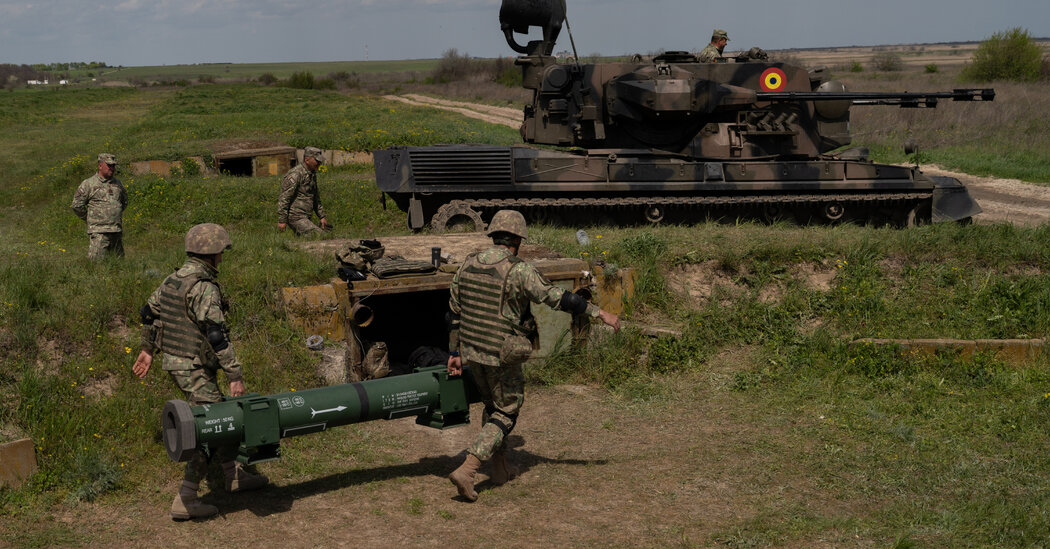
NATO’s scramble to fortify its defenses manifests in high-stakes exercises like the recent Capu Midia trial off Romania’s coastline, where emerging technologies were pitted against simulated intrusions. Out of nine counter-drone systems tested, only five delivered direct hits, with the American-made Merops drone system earning a “neutral” rating for detection without destruction—still, a promising tool that has repelled about 90 percent of Russian drones in Ukraine’s skies. But Defense Minister Radu Miruta cautions against overconfidence: “We won’t see an impenetrable drone wall.” Indeed, evolutionary leaps in drone design demand constant adaptation, from electronic jammers and shoulder-fired missiles to attack helicopters that “push the limits,” as Miruta put it. The U.S. Army has been training Romanian and Polish forces on Merops since last fall, with Poland and Lithuania acquiring units and Romania on the cusp of deployment. These measures, while proactive, reveal the harsh truth: no system guarantees immunity, especially as seen in places like Plauru, a quiet village across from Ukraine’s Izmail port. New bunkers, erected in 2023 to shelter against strikes or falling fragments, stand as monuments to precaution—yet, as resident Maria Nedelcu, 66, notes with a shrug, “If a drone hits the bunker, what’s the difference? I stay in bed and let fate decide.”
Amid this tapestry of vigilance, a quiet resignation pervades Tulcea’s aging shelters, relics of the Cold War etched in the city’s basements. The 10 public air-raid bunkers, tucked under apartment blocks, languish in disrepair—lacking ventilation, lighting, toilets, and plagued by cobwebs, mold, and lingering debris from long-departed squatters. Mayor Ilie awaits national funding to retrofit them, a bureaucratic hurdle echoed by Minister Miruta’s deflection that it’s beyond his remit. Residents like Tanase Dascalu, 66, have repurposed his shelter as a makeshift storage for fishing gear and preserves, never evacuating despite the alarms. “No need,” he says simply. Civil protection inspector Raluca Elena Doros, 47, laments this apathy, born of familiarity with danger just across the Danube. “We’ve grown accustomed,” she confesses, “and that’s the real danger.” This indifference, woven into Europe’s eastern fabric, juxtaposes NATO’s modern might against an ancient, human vulnerability—a reminder that even as alliances mobilize and bunkers stand ready, the true battle is one of collective resolve in the shadow of evolving threats.