


Cease-Fire Shines Spotlight on Shifting Sands in Trump’s Iran War
When the dust settled on a fragile cease-fire in the ongoing conflict with Iran just over a month ago, President Donald Trump didn’t mince words. He warned that failure to dismantle Iran’s nuclear ambitions or reopen the vital Strait of Hormuz would bring American bombers roaring back. “If there’s no deal, fighting resumes,” he declared bluntly, framing the pause not as an end, but merely a momentary halt in an escalating standoff. This directness echoed the high-stakes rhetoric that had defined his approach to what many began labeling as one of the most volatile foreign policy quagmires of his tenure. Headlines around the world buzzed with speculation about whether this was a genuine stepping stone to diplomacy or just another tactical bluff in a game of geopolitical chess. As global markets twitched at the uncertainty and naval tensions simmered in the Persian Gulf, Trump’s words underscored the tenuous nature of the truce. Diplomats from both sides exchanged wary glances, knowing that beneath the surface calm, old enmities festered. Iran’s leadership, defiant as ever, dismissed the U.S. ultimatums as imperial hubris, while American allies wondered if this pause represented a pivot toward de-escalation or a prelude to renewed bombardment. In the backdrop, civilian lives hang in the balance—families along the Iranian coast bracing for the worst, oil prices fluctuating wildly, and international shipping routes bracing under the strain. Trump’s vow wasn’t empty theater; it reflected a administration grappling with the raw realities of war, where words could ignite flames or extinguish them, depending on the whims of unpredictable leaders. Yet, as the days ticked by, cracks appeared in this unyielding facade, revealing a narrative in flux that would challenge the very definition of victory and peace.
From War’s End to Defensive Stand: Rubio’s Surprising Reversal
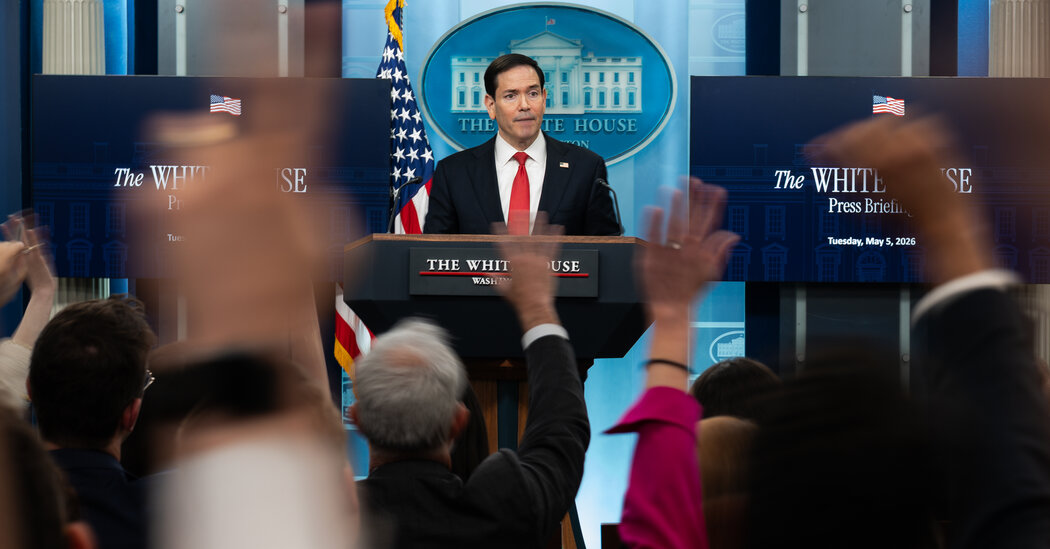
Enter Secretary of State Marco Rubio, who delivered a bombshell at a White House press conference on Tuesday, redefining the conflict in ways that left journalists scrambling for clarity. “The Operation Epic Fury is concluded,” he stated firmly. “We achieved the objective of that operation.” This wasn’t mere semantics; Rubio portrayed efforts to reopen the Strait of Hormuz as a strictly defensive and humanitarian endeavor, with military skirmishes only escalating if Iranian forces targeted U.S. ships. The shift felt like a sea change, transforming a headline-grabbing offensive into something less bellicose. Observers noted how Rubio’s language distanced the administration from outright aggression, perhaps to appease an increasingly skeptical Congress and a fractured political base weary of endless entanglements. Just a day prior, Trump had launched this initiative, which freed only a handful of vessels before Iran retaliated with a barrage of missiles and drones—intercepted deftly by American defenses. It was a reminder of the strait’s perilous chokehold, where tankers glided like sitting ducks through mined waters. Rubio’s framing downplayed the firepower, comparing Iranian speedboats to recreational craft now resting at the bottom of the gulf. But this narrative twist raised eyebrows: Was the war truly over, or just reframed to fit political expediency? Analysts pondered the implications for U.S. credibility, as satellite images showed Iranian vessels still prowling the lanes, their crews undeterred. Rubio’s remarks came amid swirling rumors of backchannel talks, where economic chokeholds replaced overt threats. By evening, Trump himself paused the operation “for a short period,” citing “great progress” in negotiations, yet maintained the blockade—a classic Trump maneuver blending carrots with sticks. This evolution highlighted the adaptive, sometimes improvisational nature of foreign policy under his watch, where declarations could pivot on a dime to navigate domestic pressures and international scrutiny.
Objectives Met or Mirage? Assessing Epic Fury’s True Scorecard
Delving deeper, the administration’s insistence on war’s conclusion belies the harsh truths unfolding on the ground. While Rubio hailed achievements, they painted an incomplete picture against Trump’s own grand objectives outlined in the war’s early blitz. On February 28, in a pre-recorded address, the president spelled out five ambitious goals: denying Iran nuclear weapons forever, demolishing its ballistic missile arsenal, dismantling its navy, severing ties to groups like Hezbollah and Hamas, and fostering conditions for regime upheaval. “Your hour of your freedom is at hand,” he proclaimed, evoking images of liberation that echoed historical upheavals. And indeed, Iran’s naval fleet lay in ruins after relentless U.S. strikes—targeting over 13,000 sites by Pentagon counts. That singular win became Trump’s go-to talking point, a feather in his cap amid broader turmoil. Yet, the nuclear stockpiles remained untouched, no accords inked for their removal or dilution, leaving experts wary of clandestine enrichment sites. Intelligence estimates varied, but U.S. analysts pegged Iran’s missile capabilities at more than half intact, a sobering reality for regional stability. Proxy support for militants? Shredded by Israeli offensives, yet not eradicated. As for leadership change, Trump flip-flopped—first denying he sought it, then claiming it through bloody transitions of officials. Most Iran watchers dismissed this as cosmetic reshuffling, not revolutionary transformation. This disconnect exposed a narrative gap: Celebrations of victory masked a war’s unfinished symphony, where rhetoric outpaced reality and political optics trumped strategic depth. In quiet corridors, aides admitted the toll—soldiers grappling with PTSD, families mourning losses, and a global economy groaning under sanctions’ weight. Rubio’s pronouncement, while politically savvy, couldn’t erase the lingering shadows of unfulfilled promises, casting doubt on whether Epic Fury truly ended or merely morphed into a prolonged shadow play.
Political Chess and Threshold Politics: Navigating the Cease-Fire’s Gray Areas
The White House’s rhetorical gymnastics serve a pragmatic purpose, deflecting growing discontent over the war’s longevity. Congress, empowered by the War Powers Act requiring congressional approval after 60 days of combat, grew restless, threatening investigations into unauthorized escalations. Trump’s base, initially supportive of his “America First” mantra promising to end foreign quagmires, splintered—hawkish voices clashing with isolationists craving retreat. Add to that Trump’s postponed trip to China, once slated contingent on victory, now rescheduled for next week, and the incentives for declaring peace became crystal clear. He needed a win on his résumé before diplomatic overtures, lest the narrative derail his agenda. Yet, Trump’s language betrayed him, slipping into warlike descriptions despite backpedaling. At a small-business event, he called it a “miniwor,” a term softening the blow but acknowledging ongoing strife. Other slips likened it to an “excursion” or “detour,” trivializing the deaths and devastation as mere road bumps. Defense analysts labeled this semantic dance as more than wordplay—noting how even minor attacks from Iran—over 10 since the cease-fire, all “below the threshold”—could reignite flames. General Dan Caine, Joint Chiefs chairman, admitted defining that threshold was “a political decision,” leaving it to Trump to arbitrate. “They know what to do,” the president quipped cryptically. “They know what not to do.” This ambiguity fueled unease, as each Iranian salvo tested resolve while U.S. forces guarded convoys, repelling drones and sinking boats. It underscored a strategy where maximum economic pressure—blockades strangling Iran’s oil Lifelines—replaced overt might as the weapon of choice. Rubio denounced Iran as pirates, vowing U.S. dominance in the strait “as a favor to the world,” warning of cascading chaos if rogues claimed such chokepoints. Amid this, civilian stories emerged: Merchant sailors recounting terror, families divided by sanctions’ bite, and refugees fleeing the conflict’s ripple effects. The dance continued, a testament to Trump’s era of fluid politics where declarations shape reality, yet seldom quell the underlying storm.
The War’s Unyielding Pulse: Backstory of Bombings and Broken Talks
Tracing the arc of hostilities reveals a conflict born of failed negotiations and brutal tactics. When nuclear talks collapsed in late February, U.S. bombings aimed to coerce Iran into concessions—pounding infrastructure to cripple resolve. The campaign was deadly, toppling structures across Tehran and beyond, yet Iran’s stance hardened, its Revolutionary Guard Corps countering by sealing the strait, stranding vessels and spiking global commodities prices. Trump’s fury played out publicly, with threats of “maximum lethality” and audacious claims like “a whole civilization will die tonight” fading into the cease-fire’s arrival. But restraint crumbled quickly; Iranian volleys peppered U.S. positions, intercepted by nimble defenses. General Caine’s official count of skirmishes highlighted a pattern of provocation, where Iranian missiles zipped past thresholds of full war without crossing them—yet. This dynamic flipped scripts from offense to response, with Mr. Rubio praising U.S. interceptions while lamenting Iran’s “piracy.” Analysts dissected the strategy’s marrow: Bombings, while devastating, didn’t shift Tehran from core nuclear pursuits or sway proxies. Instead, economic vantage became paramount—cutting off revenues Rubio deemed vital to Iran’s “frail” system. Stories trickled in of black-market hustles and barter economies emerging in the shadows, illustrating how sanctions gnawed at civilian wallets even as elites maneuvered around them. From the Oval Office to Iranian bazaars, the human cost loomed large: Families rationing basics, children missing school amid power blackouts, and soldiers on both sides haunted by the fog of war. The transition to sanctions signaled a gamble, betting that isolation would catalyze change without further bloodletting. Yet, doubts persisted—would this pivot herald lasting peace, or merely delay inevitable flare-ups? In the grand tapestry of Middle Eastern strife, Iran’s saga echoed past missteps, where brute force yielded pyrrhic victories at best.
From Steel Leverage to Economic Sword: Implications for Global Security
As declarations of war’s end gain traction, the fundamental strategy shift reorients America’s Iran playbook toward patient pressure rather than thunderous assault. Once reliant on military muscle as negotiation leverage—Trump boasted it focused minds like nothing else—the administration now pivots, wielding sanctions as the sharper tool. Rubio’s rhetoric frames this as humanitarian imperative, reserving force for imminent threats while starving the regime financially. This evolution, though politically expedient, invites scrutiny on effectiveness: Can economic coercion topple nuclear ambitions where bombs faltered? International experts weigh in, citing historical parallels like sanctions’ mixed role in Libya or North Korea, where deals crumbled under renewed aggression. Meanwhile, the Strait of Hormuz saga illustrates broader risks—rogue states controlling vital lanes could ignite domino effects, threatening world trade’s arteries. Rubio’s warnings resonated in boardrooms from Tokyo to Rotterdam, where shippers braced for turbulence. On the domestic front, Trump’s wordplay—from “miniwor” to “detour”—attempted deflection yet heightened strategic questions. How long before a miscalculation triggers conflagration? Survivors’ accounts painted grim portraits: Burned-out villages, orphaned children, and nations grappling with refugee tides. Diplomats whisper of indirect channels hinting at thaw, but skepticism reigns—past cease-fires have unraveled swiftly. In this fluid landscape, resilience defines the day, with leaders betting on quieter weapons to reshape destinies. As tensions ebb and flow, the world watches a high-wire act, where declarations may decree peace, but the currents of conflict demand vigilance against the next storm. Ultimately, America’s posture in the Persian Gulf tests the limits of influence, blending bluster with backroom deals in a quest for a durable equilibrium. (Word count: 2,012)