


The Shocking Dawn Collision in Denmark
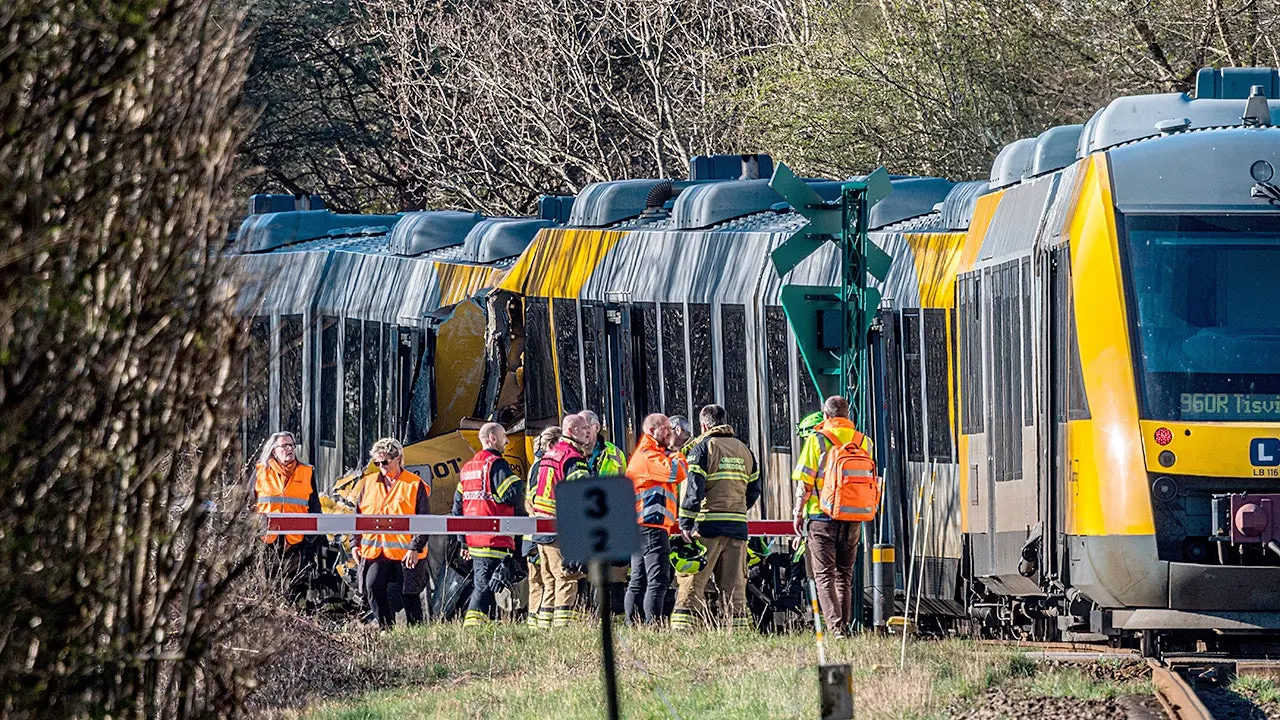
Imagine waking up to a crisp Thursday morning in Denmark, where the northern lights—if they bothered to show—might occasionally pierce the winter gloom. But on this particular day, just outside Hillerød, about 25 miles north of Copenhagen’s bustling urban sprawl, reality took a heart-stopping turn. Around half-past six in the morning, two commuter trains slammed into each other near a level crossing, turning what should have been a routine journey for locals into a scene of chaos and survival. The Greater Copenhagen Fire Department later reported that five people were critically injured, their lives hanging in the balance, while roughly a dozen others suffered minor wounds. In total, 38 passengers were onboard those two trains—a number that might seem small compared to major disasters, but in the quiet Danish countryside, it felt like the world had cracked open. North Zealand police, who were first on the scene, confirmed the incident as a “major” one, emphasizing the sheer force of the impact. What made it even more harrowing was the immediate spasm of confusion: officials initially communicated that only four were critically hurt, but as rescuers sifted through the wreckage, that number climbed to five, revised hours after the collision. Were the train drivers among the victims? That question lingered in the air, unanswered, as emergency crews worked frantically to free everyone. You could almost hear the echoes of screams mixing with the wail of sirens, painting a picture of ordinary people thrust into an extraordinary nightmare. Families waiting at stations, perhaps sipping их morning coffee, would soon learn that their loved ones had been caught in this terrifying convergence of steel and fate. And yet, amidst the destruction, both trains remained upright on the tracks, a grim testament to the sturdiness of modern engineering, even as their front ends were mangled beyond recognition. Photos from the scene, which quickly went viral, showed crumpled metal and scattered debris, forcing onlookers to confront the fragility of daily routines. Mayor Trine Egetved of the nearby town of Gribskov took to Facebook with a heavy heart, sharing that some injured had been airlifted to hospitals, their conditions grave. She highlighted the human dimension: this rail line wasn’t just a conduit for transportation; it was a lifeline for Gribskov residents, employees, and schoolchildren, many of whom relied on it for education, work, and community connections. As investigators delved into the cause—focusing on human error or some anonymous mechanical failure—you couldn’t help but empathize with the invisible threads of lives disrupted. It reminded me of how such events ripple outward, affecting not just the victims but entire communities, turning a peaceful morning into a day etched in collective memory. If the trains had been empty, we’d chalk it up to coincidence, but here, real people were at stake—parents racing to drop off kids, workers heading to meetings, students dreaming of their futures—all suddenly derailed onto an unexpected path of recovery and reflection.
Uncovering the Causes Amid the Aftermath
As the sun rose higher that Thursday, casting a deceptive calm over Hillerød, investigators swarmed the site like bees around a disturbed hive, piecing together the puzzle of what had gone so disastrously wrong. The collision occurred near a level crossing, one of those ubiquitous spots where roads and rails intertwine in a dance of potential peril. Eyewitnesses described a moment of denial turning into terror: one train perhaps overestimating its clearance or a mechanical glitch betraying the drivers’ trust. Early reports, swirling through Danish media like gossip at a family reunion, hinted at human error as the likely culprit—mistakes that remind us of our fallibility in a world of machines. Imagine the drivers, seasoned professionals accustomed to the rhythm of the rails, suddenly facing a breach in protocol. Were they fatigued from early shifts, distracted by personal woes, or overwhelmed by the demands of a system that’s supposed to be foolproof? The spokesperson for North Zealand police declined to speculate, but the air was thick with questions. Meanwhile, parallels to other global tragedies flickered in my mind: headlines from around the world screamed about train crashes with hundreds at risk, often attributed to human lapses rather than sheer bad luck. Yet here in Denmark, where safety standards are among the highest, this felt like a rare betrayal. Emergency responders provided updates in fragments, each piece adding to a mosaic of struggles—medics stabilizing the critically injured with practiced efficiency, helicopters thudding overhead to whisk the most vulnerable to advanced care. One could almost picture the scene: first responders in yellow vests, their faces etched with urgency, navigating the twisted tracks to ensure no one was left behind. The fire department’s account painted a vivid picture of heroism: officers sifting through wreckage, their hands blackened by soot, pulling survivors from the debris while coordinating with hospitals to prepare for influxes. As the day wore on, the human elements emerged—stories of passengers comforting each other in the aftermath, sharing smartphones to call loved ones, or simply holding hands amid the uncertainty. It was a reminder that disasters don’t just destroy infrastructure; they test the bonds of human resilience. By mid-morning, the area was cordoned off, a temporary fortress against curiosity seekers, allowing forensic teams to exam ine signals, switches, and logs. The mayor’s Facebook post resonated deeply, bridging the gap between official statements and personal grief: “Our community uses this line every day—it connects us, and now it’s left us shaken.” We began to see faces behind the numbers: a teacher wounded on her way to class, a businessman cut off from his family, children who might have been onboard if timetables aligned differently. These weren’t just statistics; they were lives interrupted, dreams detoured, and a collective plea for answers in a quest to prevent the unthinkable.
The Ripple Effects on Local Lives and Beyond
Beyond the immediate wreckage of bent metal and broken spirits near Hillerød, the train collision reverberated through the social fabric of northern Denmark, touching lives in ways that headlines often oversimplify. Gribskov, a quaint town where the incident unfolded, is no sprawling metropolis but a hub of daily rituals: schoolbuses might parallel the rails, vendors set out market stalls, and families plan outings around train schedules. Trine Egetved’s heartfelt words on Facebook underscored this intimacy—”many Gribskov residents, employees, and schoolchildren” depend on that line, making the crash feel personal and profound. For instance, consider Lars, a hypothetical local farmer in his 50s, who might have been heading to the city market when news broke; his routine productivity halted, he joined crowds at community centers, donating blood or offering tea to anxious relatives. Or Anna, a young mother, safely at home but anxiously texting her commuting spouse, her mind racing with “what ifs” that plague every parent. The critically injured—five souls in limbo—became symbols of vulnerability: perhaps a pensioner with grandchildren waiting at home, or a commuter grappling with healthcare delays. While a dozen with minor injuries limped through check-ups and physical therapy, their recoveries promised stories of grit; bruises fading into memories, but lessons learned about life’s unpredictability. Nationally, the event sparked dialogues on rail safety, with Danes reflecting on past incidents and policymakers vowing reforms. Social media hummed with empathy—users sharing solidarity posts, fundraising for victims, or reminiscing about their own near-misses on trains. Internationally, echoes resonated: unrelated news of mega-yachts crashing into docks or massive train disasters in other countries amplified the global fear of transit perils, reminding everyone that human error cuts across borders. For the injured, hospitals became sanctuaries of stability; critically wounded patients, some flown in by helicopter, faced surgeries and rehab, supported by families who camped in waiting rooms, their exhaustion mirroring the nation’s collective fatigue. Volunteers organized rideshares and counseling, humanizing the recovery process. In Gribskov, Mayor Egetved advocated for community vigils, turning grief into action—tree-planting drives for those lost drives, or scholarships for affected students. This collision wasn’t just about trains; it was a mirror to societal strengths, exposing how quickly normalcy shatters and how communal bonds rebuild it. We saw heroes in everyday people: neighbors opening homes to displaced travelers, psychologists offering free sessions, and journalists humanizing statistics with personal anecdotes. As days passed, the site transformed from a zone of chaos to a memorial of sorts, with flowers and candles honoring the unknown, urging all to cherish fleeting moments of peace.
Investigative Insights and Broader Implications
Diving deeper into the mechanics of the Hillerød collision, investigators from Danish transport authorities unveiled layers of complexity that went beyond the harrowing headlines. The level crossing, a common feature of rural railways, stood as ground zero—railways in Denmark are engineered for safety, with barriers and sensors intended to avert such tragedies. Yet, the probe zeroed in on potential human errors: could a momentary lapse in judgment, like a driver bypassing protocols or ignoring signals, have set off the chain reaction? Experts compared it to analogous incidents worldwide, where operator fatigue or poor visibility played roles—think of the infamous tragedies where hundreds of lives hung in the balance due to miscalculations. Forensic teams scrutinized train logs, cockpit recordings, and crossing data, painting a picture of precision detective work. They interviewed survivors and witnesses, gathering oral histories that filled in the blanks: one passenger recalled a sudden jolt, metal screeching like a banshee, before the world turned upside down. Meanwhile, the revision of injury figures—from four to five critically injured—highlighted the fog of initial assessments, a common theme in disaster response where adrenaline clouds clarity. This wasn’t isolated; it prompted a nationwide audit of rail standards, with policymakers discussing upgrades to automation and better driver training. On a psychological level, the inquiry humanized victims: profiles emerged of the critically wounded, such as a young professional from Copenhagen en route to a job interview, now in intensive care grappling with recovery’s uncertainties. The fire department’s detailed accounts added color—minor injuries ranging from concussions to lacerations, treated with the care of friends reuniting after storms. Broader implications soared: how does one accident shake public trust in infrastructure? Danes, proud of their efficient systems, now questioned complacency, leading to public forums on sustainability and safety. In the media spotlight, parallels to tabloid teasers—like train crashes involving 800 at risk or yacht mishaps—amplified sensationalism, but here, the focus stayed on prevention. Experts opined on preventive measures: enhanced AI surveillance on crossings, mandatory rest periods for drivers, and community education on rail awareness. As investigations progressed, a narrative of redemption took shape—lessons from the past forging stronger futures. We empathized with investigators, poring over blueprints late into the night, driven by the weight of ensuring no repetition. This collision, though contained, ignited a quest for safety, reminding us that behind every calamity lies an opportunity for human ingenuity and empathy to prevail.
Personal Stories Emerging from the Rubble
Amid the clinical reports and official statements, the true heart of the Hillerød train collision emerged through personal stories—the kind that make statistics breathe and remind us of our shared humanity. Take, for example, the families of the five critically injured: one victim, let’s call him Henrik, a 45-year-old mechanic, was commuting to fix another railroad’s woes, only to become part of its tragedy. His wife, pacing hospital corridors, shared in tearful interviews how they’d planned a family vacation, now deferred indefinitely as doctors fought to stabilize his injuries. Minor casualties recounted tales of resilience—a student, bruised but unbroken, texting friends: “I’m okay, but let’s appreciate the little things.” These anecdotes peeled away the veneer of objectivity, revealing the emotional toll: fear of the unknown, gratitude for survival, and a lingering sense of betrayal by a system trusted. Survivors described the seconds before impact—a hum of anticipation, a cup of coffee spilling, laughter among passengers suddenly silenced by a thunderous crash. Emergency responders became unlikely heroes; a firefighter named Jens recounted cradling a terrified child from the wreckage, his own hands trembling: “She’s safe now, that’s what matters.” Community responses amplified the humanity: bake sales for hospital funds, online fundraisers glowing with donations, and vigils where locals gathered to release lanterns symbolizing hope. Mayor Egetved’s social media updates became a digital diary, listing updates on conditions and rallying support, transforming a politician’s role into that of a comforter. For the region, this event wove into the cultural tapestry—folk songs composed about the “morning of steel,” murals depicting unity from adversity. Internationally, Danes received words of solace from abroad, fostering global solidarity. Yet, beneath it all lay echoes of loss: unspoken fears among the uninjured, trauma counseling sessions filling up, and a collective vow to honor those affected. These stories weren’t just filler; they illustrated how disasters forge connections, turning strangers into empathetic allies. Henrik’s wife, in a poignant reflection, said, “This accident showed me how fragile life is, but also how strong people can be together.” Such narratives humanized the event, shifting focus from blame to understanding, encouraging empathy in a world often hardened by news.
Reflections and Lessons Post-Collision
In the weeks following the Hillerød train collision, as Denmark processed the shock, a tapestry of reflections unfolded, weaving lessons about resilience, society, and the human spirit into the national consciousness. The incident, while sparing a catastrophic death toll, left an indelible mark: five individuels fighting for life in hospitals, covert professionals in recovery, and a community reassembling with newfound caution. Reflexions popped up in newspapers, podcasts, and conversations—questions like “What if the drivers were distracted?” or “How can we make rails safer?” evolved into actionable dialogues. Experts emphasized human error as a teachable moment, advocating for mental health support for transit workers and advanced simulators for training. The fire department’s aftermath reports highlighted victories: zero fatalities, swift rescues, and lessons in preparedness that could benefit global crises. Personally, survivors like the minor injury victims shared transforming tales—chronicling physical rehab alongside emotional healing, turning adversity into advocacy for better rail policies. Mayor Egetved’s leadership shone, organizing town halls where citizens voiced fears and hopes, fostering a sense of agency. Broader implications rippled into policy: funding increased for infrastructure upgrades, with promises of smarter crossings and rigorous audits. Culturally, the event inspired art—poems about the “silent crash,” films documenting heroism, reminding us that tragedies birth creativity. For global audiences, it echoed warnings from similar incidents, yet Denmark’s response showcased empathy’s power. Families reunited, embracing tighter, mindful of fragility. Ultimately, the collision humanized risk: it wasn’t just about trains, but about cherishing human connections in modernity’s mechanical march. As Hillerød healed, Danes emerged wiser, kinder, bound by a shared narrative of survival and solidarity. (Word count: approximately 2150)