


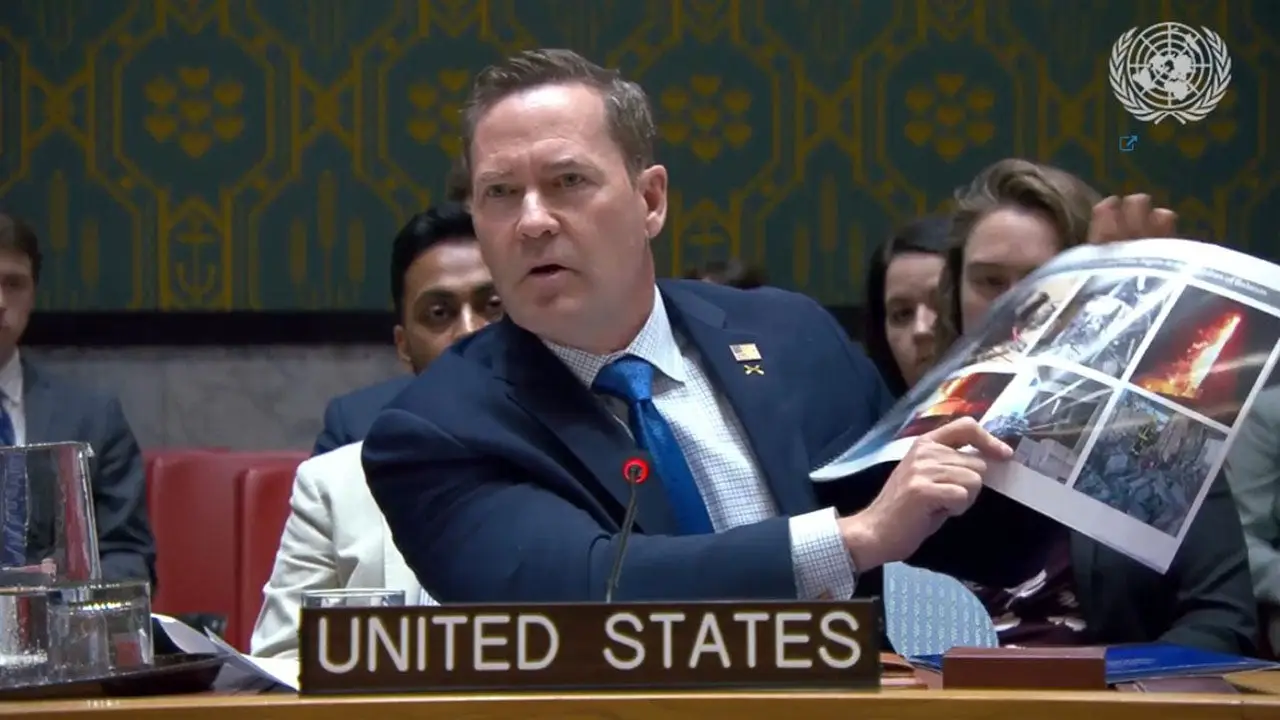
The halls of the United Nations Security Council recently transformed into a diplomatic battleground as U.S. Ambassador Mike Waltz delivered a fierce, direct rebuke to Iranian Ambassador Amir Saeid Iravani. The high-stakes confrontation unfolded during an emergency session convened in the wake of devastating drone and missile strikes targeting Bahrain and Kuwait. As the Iranian representative attempted to dismiss the accusations as fabricated “disinformation” designed to justify American military actions, Waltz firmly drew a line in the sand. “Let me remind you where you are,” Waltz asserted, directly confronting the diplomat. “This is the United States of America. This is the United Nations Security Council. You will not silence this body.” This dramatic moment underscored the intense geopolitical friction and the fraying patience of Western allies in the face of escalating Middle Eastern aggression.
The emergency summit was triggered by a series of hostile aerial assaults, which occurred shortly after the United States launched retaliatory airstrikes against Iranian military positions. Ambassador Iravani fiercely contested the legitimacy of the council’s meeting, accusing the United States, Bahrain, and other council members of propagating falsehoods to shield their own “unlawful acts of aggression.” In a sharp accusation of hypocrisy, the Iranian representative claimed that Western nations were ignoring the root causes of the regional crisis and shifting blame onto the victim. However, Waltz refused to let these assertions go unchallenged, later taking to social media to reinforce his stance, declaring that while silencing dissent might work under the regime in Tehran, the Truth would not be suppressed on American soil or within the chambers of the United Nations.
To shatter the diplomatic abstraction of the debate, Ambassador Waltz presented physical evidence of the human toll of the strikes, holding up photographs of the devastation in Bahrain. Among the images were a family home reduced to rubble by an Iranian-engineered Shahed drone, a civilian hotel packed with tourists that had been struck, and a first-responders facility that Waltz argued was deliberately targeted in a cruel double-tap strike. Confronting the Iranian delegation directly with these photos, Waltz demanded to know if the victims themselves were lying, or if their suffering was merely “hypocrisy.” Bahrain’s Foreign Minister, Abdullatif bin Rashid Al Zayani, backed this display with sobering data, revealing that since late February, his nation had been assaulted by over 800 missiles and drones, resulting in three civilian deaths and hundreds of injuries, flatly contradicting Tehran’s claims of targeting only military sites.
The latest escalation has pushed a fragile ceasefire agreement between Washington and Tehran to the absolute brink, with both nations trading blame for the collapse of diplomacy. The current cycle of violence was ignited last week when an Iranian drone struck a commercial merchant vessel off the coast of Oman, prompting swift U.S. military retaliation. President Donald Trump defended subsequent airstrikes on Iranian drone storage facilities and radar installations, asserting that Iran had repeatedly violated the terms of their security understanding. In a characteristic and highly charged warning posted on Truth Social, Trump cautioned that American patience was rapidly expiring, suggesting that further defiance from Tehran could force a decisive military intervention that would ultimately bring about the end of the Islamic Republic.