


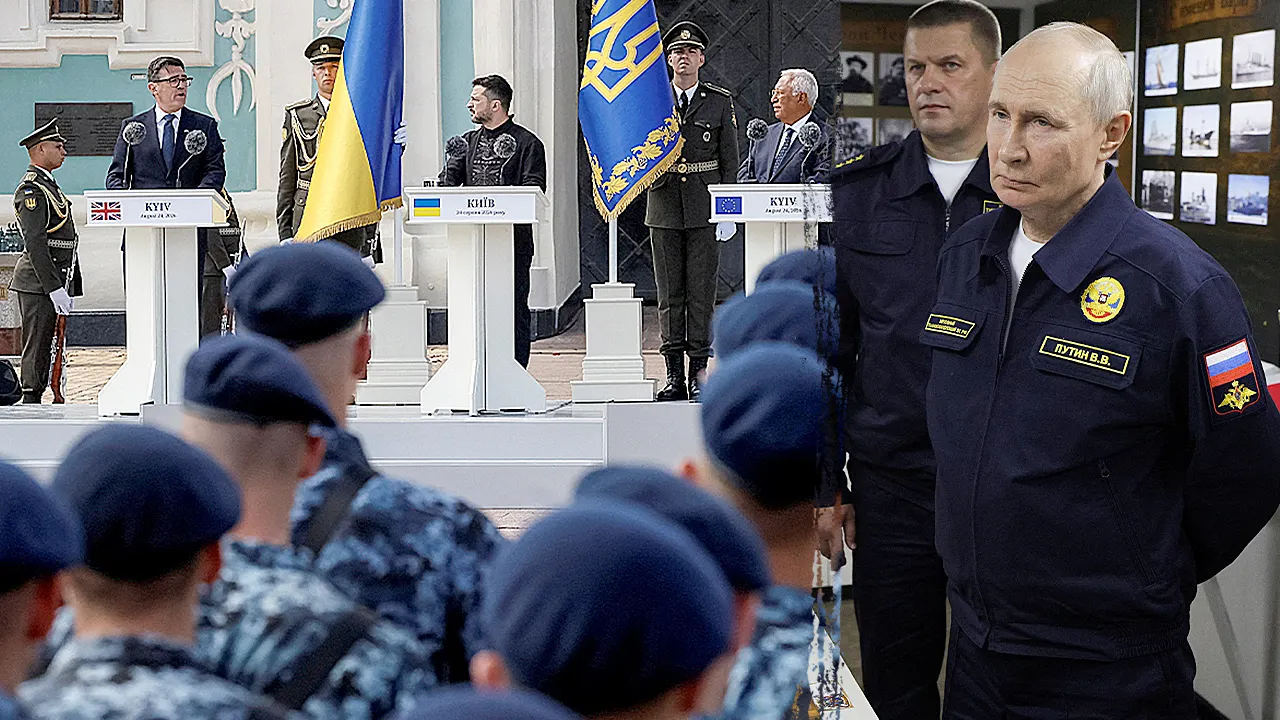
On Monday, August 24th, Ukraine marked its 35th Independence Day, a national holiday that has transformed from a day of jubilant celebration into a somber, defiant act of endurance. This specific date holds immense historical resonance; it was on this day in 1991, amid the chaotic collapse of the Soviet Union, that the Ukrainian parliament issued its formal declaration of independence, breaking away from Moscow’s orbit and setting the course for nationhood. That initial declaration was subsequently validated by a staggering majority in a nationwide referendum, cementing Ukraine’s place as a sovereign European state. Yet, the road since then has been rugged, punctuated by the informal war in the Donbas and the illegal annexation of Crimea in 2014, which served as a prelude to the full-scale, unprovoked invasion launched by Vladimir Putin in February 2022. Today, those triumphant 1991 images of blue and yellow flags fluttering over parliamentary buildings stand in stark contrast to the current reality—a landscape of missile craters, blackened apartment blocks, and constant air raid sirens. President Volodymyr Zelenskyy used the solemn occasion to reiterate that Ukraine wants peace, but a peace rooted in sovereignty, not surrender to Moscow’s maximalist demands for territorial concessions and disarmament. The atmosphere in Kyiv was one of empty streets and fortified checkpoints, especially after the Security Service (SBU) issued stark warnings about the high probability of terrorist attacks and sabotage during the holiday period. This is no longer a celebration of a historic anniversary; it is a tense, volatile marker of the collective will to survive a brutal and existential war.
The grim reality of that will was dramatically underscored just days prior to the holiday, with a tragic strike that sent shockwaves across the nation and the world. On Saturday, a Russian drone slammed into a bustling shopping mall in Kryvyi Rih—the very city where President Zelenskyy spent his formative years and launched his political career. The attack unfolded during peak shopping hours, converting a location of everyday commerce into a scene of catastrophic carnage. The Associated Press reported that at least sixteen civilians perished in the attack, while more than 130 others were rushed to local hospitals, many suffering from severe shrapnel wounds and burns. Rescue personnel persevered through the night, digging through piles of concrete, steel, and shattered glass, their flashlights cutting through the darkness as they desperately sought to pull survivors from the wreckage. The targeting of this shopping mall was not an accident or a case of collateral damage; it was a deliberate, calculated act of psychological warfare aimed directly at the President’s personal history and the morale of the broader civilian population. By striking a location synonymous with civilian life in Zelenskyy’s hometown, Moscow intended to signal that no place is safe, no sanctuary immune from their missiles and drones. This attack is emblematic of a broader tactical shift observed over recent months. Russia has increasingly de-prioritized purely military targets in favor of energy infrastructure, residential tenements, and public spaces, pursuing a strategy of collective punishment designed to grind down Ukrainian resilience, force mass displacement, and erode the population’s willingness to sustain the military effort. As the nation commemorated its independence, the memory of those sixteen souls lost in Kryvyi Rih cast a long, somber shadow over all official ceremonies.
To interpret the strategic rationale behind these seemingly desperate civilian attacks, security experts point to a deep-seated panic within the Kremlin. Carrie Filipetti, a former Deputy Assistant Secretary of State who now serves as Executive Director of the Vandenberg Coalition, provides a sharp insight into Russian motivations. Throughout this summer, Ukraine executed a stunning series of asymmetric offensive operations, deploying swarms of domestically-produced long-range drones to strike deep within Russia’s sovereign territory. These incursions have successfully bypassed and overwhelmed conventional air defenses, penetrating as far as the approaches to Moscow and St. Petersburg. They have systematically targeted major logistics hubs, including strategic warehouses belonging to e-commerce giants like Ozon and Wildberries, as well as critical oil depots and refining capacities. These attacks have torn the veil of invulnerability that the Kremlin works so hard to project to its domestic audience, bringing the tangible consequences of the war to Russian doorsteps. “They’ve recently been able to actually penetrate much deeper into Russian territory, including close to Moscow and St. Petersburg,” Filipetti analyzed. The disruption of these online retail centers caused minor but notable economic shocks and public inconvenience, reminding ordinary Russians that they are not isolated from the conflict they quietly observe on state television. This stark display of vulnerability has provoked a frantic response from the Russian General Staff. Rather than adapting their frontline defense tactics to counter these drones effectively, or attempting to locate and destroy their launch points, Moscow has resorted to lashing out at the Ukrainian civilian population they perceive as less protected. Filipetti argues this is the direct result of Kyiv’s military gains. “Their success on the military front has now resulted in the Russians getting panicked and starting to attack more inside Ukraine,” she stated, describing the aerial assaults on civilians as nothing more than gasps for air from a giant that is losing its grip on the strategic initiative.
The harshest manifestation of this panicked aggression materialized just days before the anniversary, when Russia unleashed its most devastating aerial bombardment on the capital, Kyiv, in months—a coordinated, relentless assault of nearly six hundred missiles and drones. This large-scale wave overwhelmed elements of Ukrainian air defense, leading to casualties, immense damage to critical infrastructure, and leaving thousands without electricity or heating as autumn approaches. This barrage was not designed to achieve a military breakthrough on the ground; rather, it was a deliberate attempt to inflict maximum civilian suffering. Filipetti characterizes this strategy as a frantic “gasp” to retain some measure of control over a narrative that is slipping away. “What we’re seeing is these sorts of gasps at trying to retain some kind of control,” she explained. “This is why he recently targeted a shopping mall inside Ukrainian territory. He is not focused on targeting military assets. He is really focused on trying to defeat the will of Ukrainians by attacking them.” This aligns with the empirical behavior of Russian forces, which have repeatedly struck civilian infrastructure, schools, and medical facilities throughout the invasion. By targeting the civilian psyche, they hope to fracture Ukrainian society and trigger a political collapse or mass exodus. However, militarily, this approach also serves to exhaust Ukrainian air defense systems, depleting valuable ammunition stocks that Kyiv so desperately needs to protect its frontline troops. Filipetti articulates the brutal calculus of attrition: “The Russians really want to bleed the Ukrainians of people, equipment, and will before the Russians are bled of those same three things.” It is a grim race to see who exhausts their resources first, and while Russia has vast reserves of human bodies and old Soviet equipment, their morale is waning, whereas the Ukrainian will to resist remains remarkably high, fueled by anger at the indiscriminate destruction of their cities and the daily loss of innocent lives.
Despite the cyclical hellscape of bombings, Monday’s ceremonies presented an image of enduring international cohesion. A high-profile delegation of European leaders made the precarious journey to Kyiv to demonstrate unshakeable solidarity with President Zelenskyy. European Council President António Costa led the delegation, accompanied by the prime ministers of Finland, Lithuania, Norway, Denmark, Estonia, and Latvia. Their presence on this besieged city was a tangible, powerful testament that Ukraine is not militarily or diplomatically isolated. It affirmed the West’s continued commitment of financial aid, military hardware, and political backing—a crucial lifeline that Kyiv relies upon to sustain its war effort. These visits, however, carry profound inherent risks. Filipetti highlighted the security paradox of hosting such large public gatherings during an active war. “Independence Day is a really important moment for the allies of the Ukrainians to really show that we are not losing steam,” she acknowledged. “But anytime there’s massive public gatherings, particularly to demonstrate patriotism and support for the Ukrainian state, it increases the security risk.” The presence of multiple heads of state transforms a national holiday into a magnet for potential aerial attacks and subversive operations. Ukrainian authorities, acutely aware of this, repeatedly urged citizens to avoid crowded places, to stay attentive on subways and buses, and to refrain from broadcasting live videos from the festivities. Moreover, in a rather telling plea, they warned soldiers and civilians to avoid posting geotagged footage from the frontlines or even from military checkpoints near the capital. Such digital slips have historically allowed Russian intelligence to target positions with deadly accuracy. The day thus balanced precariously between a defiant celebration of national identity and a high-stakes security operation, encapsulating the awe-inspiring resilience and chronic vulnerability that defines everyday life in Ukraine.
Looking beyond the immediate fireworks, siren-drowned ceremonies, and aerial threats, Filipetti offers a sobering yet ultimately resolute assessment of the broader strategic trajectory. She firmly debunks the Kremlin’s propaganda about making progress, noting that despite months of costly offensives, Moscow has achieved virtually no significant territorial gains this year, remaining bogged down in attritional trench warfare that has been likened to World War I. While Ukraine suffers casualties, Russia is sustaining catastrophic manpower losses. Filipetti points out that the Russian military is “losing more soldiers each month than they can recruit,” a deficiency so acute that they have been compelled to rely on foreign fighters—citing the deployment of North Korean troops and troops from Cuba and other nations—as cannon fodder to fill the gaps on the frontlines. This reliance on foreign mercenaries is a damning indicator of the Kremlin’s inability to sustain a total war reliant solely on its domestic population, whose support is quietly fraying as casualty lists grow longer. Putin’s initial war plan, a rapid “special military operation” to decapitate Kyiv within weeks, is now an historical footnote, replaced by a grinding quagmire of his own making. Crucially, Filipetti argues that the outcome of this conflict holds global significance. The tenacity of Ukraine’s resistance sends a powerful deterrent message to would-be aggressors across the world. “It sends a message to the Russians that any invasion of sovereign territory is going to create more consequences for them. We are not losing steam.” This deterrent effect is aimed squarely at autocratic powers like China, Iran, and North Korea, who are watching closely to see if unilateral conquest is still a viable path to power. As Filipetti concludes, “It’s really important that our adversaries of China, Russia, Iran, and others understand that if they invade another country unilaterally, there are going to be consequences, not rewards.” Thus, Ukraine’s bloody 35th Independence Day is far more than a national milestone; it stands as a vital, costly defense line of the international rules-based order, affirming that the spirit of a nation will ultimately outlast the brutal machinery of an invader.