






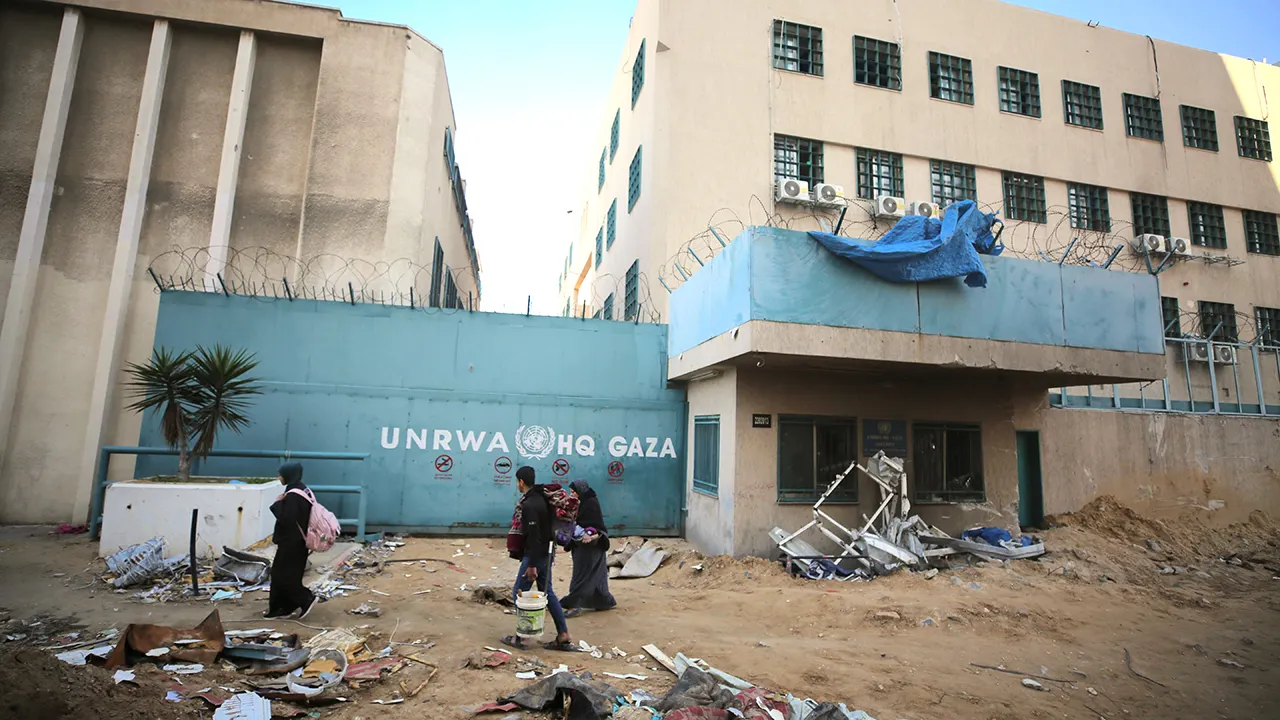
A fierce diplomatic battle has erupted over the future of humanitarian aid in Gaza, thrusting the United Nations Relief and Works Agency (UNRWA) into a high-stakes standoff between the United States and the United Nations. At the heart of the debate is a fundamental disagreement over who can be trusted to rebuild the war-torn enclave. While the United Nations aggressively lobbies member states to sustain their financial lifelines to UNRWA, the United States is championing a radical pivot. Washington is urging international donors to abandon the embattled agency entirely, arguing that it has become hopelessly compromised by Hamas, and to instead redirect their capital toward the Security Council-backed Board of Peace—a transitional governing body designed to foster long-term economic stability and counter-extremism.
The ideological rift crystallized during UNRWA’s annual pledging conference, where U.S. Ambassador Jeff Bartos delivered a blistering critique of the agency’s operations. Invoking the classic definition of insanity—repeating the same actions while expecting a different outcome—Bartos accused the international community of enabling a broken system that perpetuates conflict rather than solving it. He claimed that UNRWA has effectively functioned as a “subsidiary of Hamas,” alleging that its schools actively indoctrinate Palestinian youth with antisemitic propaganda and glorify martyrdom. Pointing to highly publicized allegations that UNRWA staff members took part in the October 7, 2023, attacks against Israel, Bartos urged world governments to defund the agency and embrace the Board of Peace as a viable, accountable pathway to prosperity and peace.
In response to these sharp accusations, the United Nations has mounted a vigorous defense of its premier relief agency. U.N. Spokesman Stéphane Dujarric pushed back against the U.S. narrative, emphasizing that UNRWA performs an irreplaceable humanitarian mission under a direct mandate from the General Assembly. Addressing the allegations of terrorist infiltration, Dujarric maintained that the agency’s leadership had consistently taken swift, decisive action whenever credible evidence of misconduct was presented. He further argued that even the Security Council resolutions establishing the Board of Peace rely on the existing U.N. infrastructure to execute critical humanitarian logistics, cementing UNRWA’s status as an indispensable engine of survival for millions of Palestinian refugees.
This intense diplomatic friction has exposed deep geopolitical divisions, with European allies breaking ranks with the United States to reaffirm their commitments to the legacy agency. During the pledging conference, the United Kingdom announced a massive funding package of £23 million, declaring UNRWA’s vast network of schools, medical clinics, and food distribution centers irreplaceable across Gaza and the wider Middle East. Similarly, France pledged its unwavering support, highlighting its cumulative contribution of €123 million. French officials argued that while the allegations of infiltration must be taken seriously, the agency is actively implementing robust neutrality and transparency reforms recommended by independent reviews, steering toward an eventual, orderly transition of services to a reformed Palestinian government.
An already volatile situation has been further complicated by intense legal pressure from independent watchdogs. UN Watch, a Geneva-based human rights organization, has formally demanded that U.N. Secretary-General António Guterres strip former UNRWA Commissioner-General Philippe Lazzarini of his diplomatic immunity. The watchdog group claims to have compiled a mountain of evidence detailing systematic support for terrorism among UNRWA’s rank-and-file employees, including school principals and union leaders. UN Watch Executive Director Hillel Neuer argued that waiving immunity is a necessary step to allow national law enforcement authorities to conduct a thorough, unobstructed criminal investigation into whether top leadership turned a blind eye to Hamas’s penetration of the agency.
As the geopolitical tug-of-war intensifies, the future of aid distribution in Gaza hangs in a delicate balance. The clash between the U.S.-backed Board of Peace and the U.N.-defended UNRWA represents two fundamentally different visions for the region’s recovery: one that seeks to completely dismantle the existing humanitarian framework to eliminate security threats, and another that believes the current system is too vital to fail. With millions of lives hanging in the balance, the international community is left to grapple with a profound dilemma—how to deliver life-saving aid to a population in desperate need while ensuring that not a single dollar of international charity is weaponized to fuel further violence.