



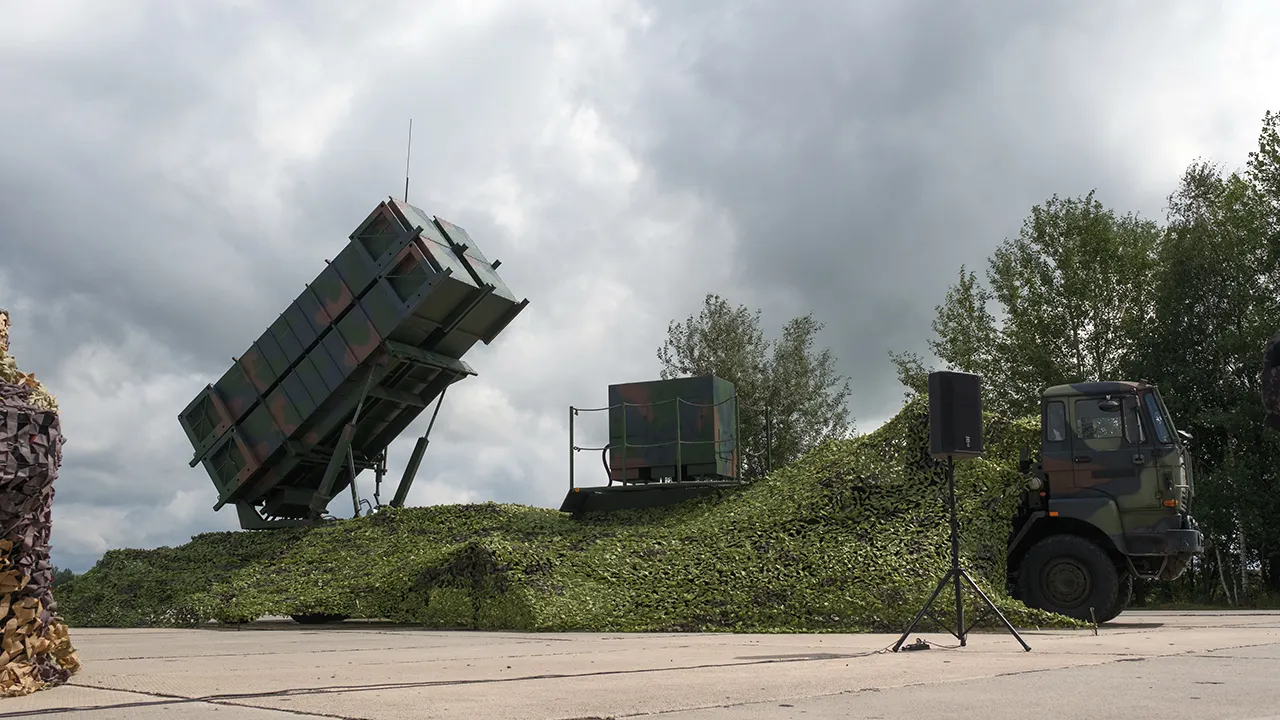
The devastating reality of modern warfare was brought into sharp, tragic focus following a relentless overnight Russian missile and drone barrage on Kyiv. The attack claimed the lives of at least ten civilians and left dozens more injured, leaving behind a trail of shattered glass, smoking rubble, and profound grief. This latest tragedy prompted Ukrainian President Volodymyr Zelenskyy to issue a renewed, emotionally charged appeal to Western allies, specifically targeting the United States for its highly sought-after Patriot missile interceptor systems. Taking to the social media platform X, Zelenskyy voiced the collective frustration of a nation under constant aerial siege, arguing that the political hesitation of international partners is costing human lives on a daily basis. He emphasized that the global community possesses the necessary defensive technology, but what is desperately missing is the political courage to deliver these vital packages to the front lines. In a poignant critique of bureaucratic delay, Zelenskyy declared that anti-ballistic missiles are engineered to save lives and protect vulnerable populations, rather than sit idly in foreign stockpiles while Ukrainian families are terrorized in their sleep. His plea underscores the high-stakes geopolitical struggle where military aid is measured not just in dollars, but in the survival of innocent civilians who wake up every day to the sound of air-raid sirens.
However, beneath the high-profile international appeals for advanced Western military hardware lies a deeply troubling domestic crisis that threatens the safety of millions of Ukrainians from within. Former Ukrainian government spokesperson Luliia Mendel has brought this internal vulnerability to light, describing a scandalous state of affairs regarding the country’s civilian defense infrastructure. In a candid assessment, Mendel argued that a nation cannot secure its survival solely by continually begging foreign partners for advanced missile defense systems. She suggested that President Zelenskyy’s frequent public demands for Patriot batteries serve, in part, to shift political accountability away from his own administration’s glaring domestic failures in civil protection. According to Mendel, the systemic neglect of bomb shelters has left ordinary citizens facing an agonizing lottery of survival. This desperation has forced civilians to invent dark, colloquial coping mechanisms, such as drawing “anti-drone curtains” or closing “anti-missile windows”—frail, symbolic gestures that highlight how much their survival depends on pure luck rather than on a reliable, state-sponsored safety net. The stark reality is that while the skies are fiercely contested, the ground beneath the feet of ordinary Ukrainians offers shockingly little refuge when the missiles inevitably break through.
The depth of this domestic vulnerability has been laid bare by a series of alarming government audits and inspections that have sparked widespread public outrage. Despite the Ukrainian government allocating billions of hryvnias to build and renovate bomb shelters since the onset of the full-scale invasion in 2022, systemic corruption, mismanagement, and administrative neglect have left the system in a state of near-collapse. A nationwide investigation conducted by Ukraine’s Human Rights Commissioner, Dmytro Lubinets, revealed a terrifying statistic: out of 1,066 bomb shelters inspected across the country, a staggering 93 percent were found to have critical deficiencies. Many of these designated sanctuaries were discovered to be securely locked during active air raids, while others were completely flooded, structurally compromised, or entirely inaccessible to individuals with physical disabilities. In response to public fury following a major missile strike, Prime Minister Sergii Koretskyi ordered a comprehensive nationwide inspection of all civil defense shelters. Meanwhile, in the capital city of Kyiv, where Mayor Vitali Klitschko has committed billions of hryvnias for shelter repairs—including more than 1.1 billion hryvnias earmarked for 2026 on top of the 7 billion hryvnias spent between 2022 and 2025—an urgent audit was launched to investigate how local district administrations actually utilized these massive public funds.
For the average Ukrainian citizen, these bureaucratic failures translate into terrifying, daily choices between life and death. When the air-raid sirens begin their mournful wail in the dead of night, families are often forced to resort to the “rule of two walls,” sheltering in cramped bathrooms or narrow corridors that offer virtually no protection against a direct missile hit but might shield them from flying shrapnel. Others venture down into damp, unreinforced basements, fully aware that they run the catastrophic risk of being buried alive under tons of concrete rubble if the building collapses above them. The human stories emerging from this shelter crisis are both heartbreaking and absurd; one woman recounted being heartlessly denied entry to a municipal shelter because she was accompanied by her pet dog, while another desperate resident explained that she resorted to renting a local hotel room simply to gain access to its functional, private basement shelter. Many others have given up on public facilities entirely, choosing to drag mattresses and blankets down into freezing, drafty underground parking garages to sleep on the cold concrete. As Russia relentlessly expands its fire control and forces the mandatory evacuation of dozens of vulnerable front-line towns and villages, the lack of basic, standardized shelter options has left a deeply traumatized population feeling abandoned by the very institutions meant to protect them.
This internal crisis is further compounded by the evolving nature of Russian military tactics, which renders traditional air defense systems increasingly insufficient on their own. While President Zelenskyy recently revealed that he had requested an emergency shipment of approximately 300 Patriot interceptors from Donald Trump to protect the country’s fragile energy grid ahead of the freezing winter months, military experts and former officials warn that missiles alone cannot win this war of attrition. Mendel pointed out that Russia has significantly intensified its use of devastating guided aerial bombs, also known as glide bombs, across the entire front-line region stretching from northern Sumy to southern Kherson. These highly destructive, heavy munitions are launched from aircraft far beyond the reach of standard air defenses and can pulverize entire apartment blocks upon impact. Because no air defense system can completely neutralize this specific aerial threat, the absolute necessity of a robust, deeply buried, and fully functional network of physical ground shelters becomes a matter of national survival. Relying solely on a high-tech sky shield while ignoring the crumbling state of ground-level civil defense is a strategic error that places the lives of millions of civilian men, women, and children in constant, mortal jeopardy.
Looking ahead, Ukraine faces the grim prospect of an incredibly harsh winter, with government officials already preparing the public for potential humanitarian catastrophes as the national power grid remains highly vulnerable to Russian targeting. The geopolitical dimension of this crisis remains equally fraught, characterized by deep political friction and cautious hesitation from key Western leaders. During a recent television appearance, Zelenskyy claimed that Donald Trump had agreed to grant Ukraine licenses to domestically produce Patriot interceptors, a move that Zelenskyy hoped would bypass foreign supply bottlenecks. However, Trump quickly walked back those assertions during a press conference at Camp David, warning that the United States must exercise extreme caution when transferring highly sensitive military technology, citing the risk that such advanced intellectual property could eventually be turned against American interests. As international leaders engage in protracted geopolitical debates and local municipal offices scramble to audit their paper trails, the ordinary people of Ukraine remain trapped in a perilous limbo. They are forced to navigate the terrifying disconnect between the high-flying rhetoric of global diplomacy and the harsh, cold reality of a locked basement door during an air raid, waiting for a safety net that is continuously promised but tragically slow to arrive.