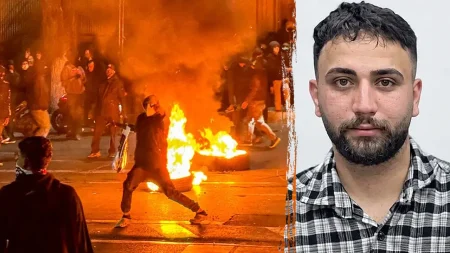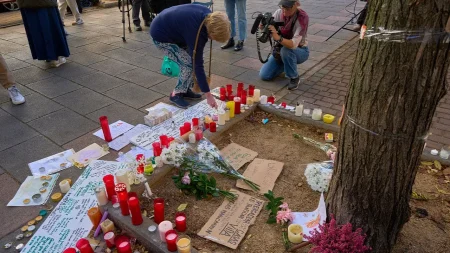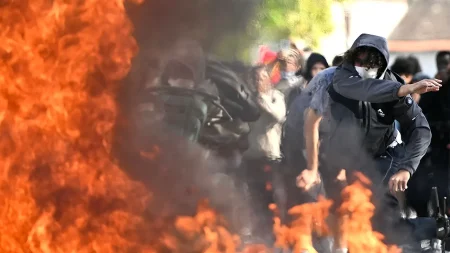



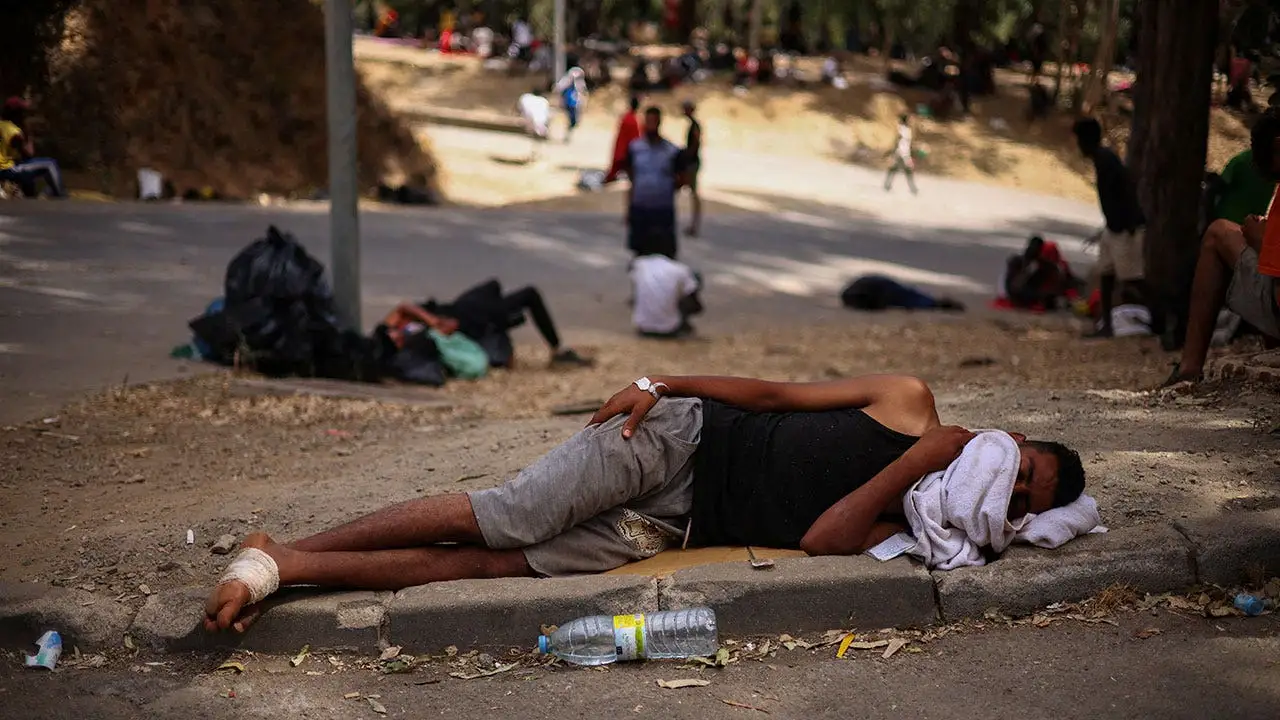
The border dividing the Spanish enclave of Ceuta from Morocco became the stage for an unprecedented humanitarian and geopolitical crisis during the final days of July, as an overwhelming surge of humanity descended upon the frontier. Over a chaotic forty-eight-hour period, approximately 80,000 migrants—a staggering figure equivalent to the entire permanent population of the city—attempted to breach the heavily fortified border. The sheer volume of people, comprised largely of young men driven by economic desperation, lack of opportunity, and the hope of securing a viable future in Europe, overwhelmed local security forces and border infrastructure. This sudden, massive movement of people was not merely a logistical challenge but a profound human tragedy, as authorities confirmed that at least 100 individuals lost their lives during the desperate rush to cross. The waters of the Mediterranean and the towering border fences became a scene of profound grief, panic, and chaos, leaving families shattered and highlighting the extreme, life-threatening risks that people are willing to take to escape their circumstances. Many of those who attempted the crossing were incredibly young, searching for dignity and survival, yet their hopes collided violently with the physical barriers of international borders. The immediate aftermath of this surge left the small coastal enclave reeling, permanently altering the lives of both those who risked everything to cross and the local community that suddenly found itself at the epicenter of an international emergency. The stark contrast between the tranquil Mediterranean coast and the scenes of mass desperation painted a vivid, heartbreaking picture of the global migration crisis, where human lives are routinely risked in search of safety.
In the wake of this historic border breach, Ceuta’s President, Juan Jesus Vivas, addressed the European Parliament’s Committee on Civil Liberties, Justice and Home Affairs via a somber video conference, seeking to articulate the gravity of the crisis to continental leaders. In his address, Vivas did not hesitate to characterize the events of late July as an “invasion,” a term he carefully defended by citing the Royal Spanish Academy’s secondary definition of the word, which denotes the irregular or abnormal occupation of a specific territory. This semantic distinction was crucial for Vivas, who sought to convey that the influx was not a routine migration event but an unprecedented disruption of territorial sovereignty that challenged the very definition of a nation-state. This perspective was strongly echoed by Spain’s leftist Prime Minister, Pedro Sánchez, who visited the enclave immediately following the incident and declared the surge to be a direct, unacceptable attack on Spain’s territorial integrity. By framing the crisis in these terms, both local and national leaders signaled to the European Union that the breach at Ceuta was an existential threat to the collective borders of Europe, demanding a coordinated, high-level political and security response rather than standard localized management. This high-level alignment underscored the gravity of the event, transforming what began as a sudden border crossing into a profound constitutional and diplomatic discussion about sovereignty, security, and the responsibilities of European member states to protect their external borders.
While swift diplomatic negotiations and border operations resulted in the return of approximately 75,000 migrants to Morocco, the crisis in Ceuta is far from over, leaving a deep and lingering impact on the city’s infrastructure and social fabric. Between 3,000 and 5,000 migrants remain within the enclave, trapped in a state of legal and physical limbo that has pushed local resources past their breaking points. The city’s reception centers, designed to temporarily house and support migrants, have completely collapsed under the sheer volume of those remaining, particularly with regard to unaccompanied minors and vulnerable adults who require specialized care. This logistical failure has transformed a political border dispute into an acute, daily humanitarian emergency, with overcrowding leading to squalid living conditions, strained sanitation, and inadequate access to basic necessities such as healthcare and psychological support. The overflow of people has spilled into the public sphere, resulting in frequent disruptions to public order and elevating security concerns among the populace, who watch as their city struggles to cope with a humanitarian burden it was never equipped to carry alone. The strain is visible on every street corner, as local charities, volunteers, and municipal workers work tirelessly around the clock to provide basic human dignity to thousands of stranded individuals, even as the systems designed to support them remain in a state of absolute paralysis.
Beyond the visible strain on municipal services and physical infrastructure, the psychological toll on the residents of Ceuta has been profound, deeply wounding the collective morale of a community that prides itself on its resilience. The sudden transition of their peaceful, multicultural home into a flashpoint of international conflict and humanitarian desperation has left the local population feeling incredibly sad, helpless, and anxious. Parents find themselves having difficult conversations with their children about the sudden presence of military personnel and the crowded processing areas near their schools and neighborhoods. Neighbors who once walked their streets with a sense of security now harbor a quiet, pervasive fear, constantly wondering if another sudden surge is on the horizon and whether the next occurrence will be the “definitive plunge into the abyss” that strips them of their stability. The realization that their safety, their economy, and their very way of life are incredibly vulnerable to external forces has shaken their sense of identity as both Spaniards and Europeans. For the citizens of Ceuta, the crisis has forced a painful confrontation with their geographic reality: they are a small European outpost on the edge of North Africa, whose peace of mind is largely dependent on the political decisions of a neighboring country. This existential anxiety has created a dark cloud over the city, where the fear of tomorrow has replaced the vibrant optimism that once characterized this historic gateway between continents, leaving many to wonder if their beloved home will ever truly return to normal.
This vulnerability highlights the complex and often tense geopolitical relationship between Spain and Morocco, a dynamic where human lives are frequently caught in the crossfire of international diplomacy. Ceuta’s unique status as a Spanish territory on the African continent means its border security relies heavily on the active cooperation of Moroccan authorities, who do not officially recognize Spanish sovereignty over the enclave. This structural dependency allows migration to be utilized, intentionally or unintentionally, as a powerful political lever, exposing Spain and the wider European Union to sudden vulnerabilities whenever diplomatic relations cool between Madrid and Rabat. The recent crisis exposed this leverage to the entire world, demonstrating that the integrity of Europe’s southern Schengen border is ultimately dependent on the goodwill of a third country. This realization has sparked widespread concern among policymakers and citizens alike, who fear that without a fundamental shift in how these borders are managed, the enclave will remain permanently exposed to political maneuvering, leaving its residents in a perpetual state of geopolitical uncertainty. The situation serves as a stark reminder of the limits of physical barriers, showing that true security cannot be achieved through fences alone, but must be built on stable, reliable, and mutually respectful international partnerships that prioritize human rights alongside state sovereignty.
To pave a sustainable path forward and restore a sense of normalcy to the battered enclave, President Vivas proposed a comprehensive strategy that calls for immediate action and long-term structural reform from both Madrid and Brussels. His proposed solutions include the systematic and lawful expulsion of the remaining Moroccan migrants, a substantial increase in financial and security resources to bolster the city’s overwhelmed humanitarian facilities, and the implementation of a new, resilient economic model under the banner of “More Spain and More Europe.” This model aims to integrate Ceuta more deeply into the European economic and political fold, reducing its structural dependence on Morocco and reinforcing its identity as an integral, protected part of the European family. In closing his address, Vivas made a powerful appeal to the enduring spirit of Ceuta’s residents, expressing confidence in their ability to overcome adversity as they have done throughout their history, while reinforcing that European solidarity is not optional, but an indispensable requirement to protect this fragile frontier. Ultimately, the crisis in Ceuta is a microcosm of a larger global challenge, urging the international community to balance border security with human compassion, and reminding Europe that the defense of its outermost borders is a shared responsibility that cannot be abandoned to the tides of geopolitical fortune.