


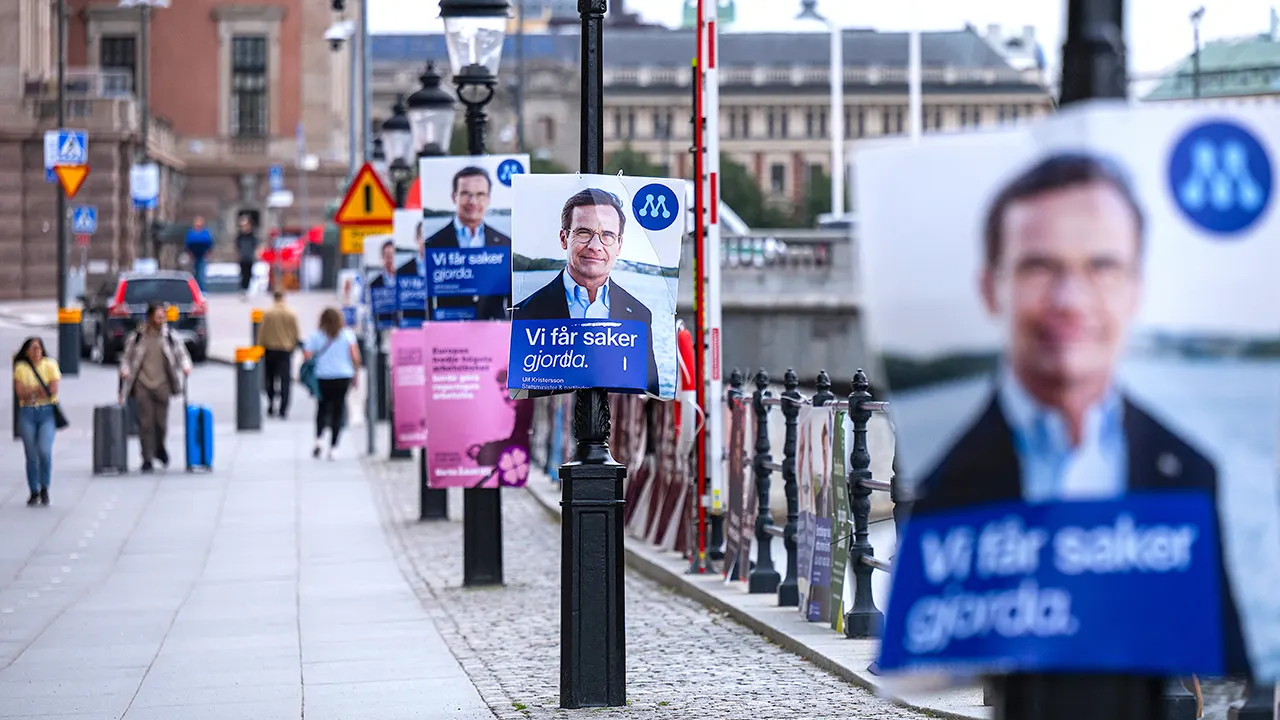
On Sunday, Sweden will hold an election that feels less like a routine political event and more like a national reckoning. For generations, Swedes have seen their country as a moral beacon, a place that opened its arms to the oppressed, built a welfare state that took care of everyone from birth to old age, and managed to blend capitalism with compassion in a way that inspired the world. But that image has cracked. The campaign has been dominated not by proud promises of solidarity but by raw, anxious debates about migration, crime, and the cost of living. Prime Minister Ulf Kristersson’s center-right coalition is running slightly behind the center-left Social Democrats, led by former prime minister Magdalena Andersson, and the polls are so close that nobody can predict the shape of the next government. What makes this election especially heavy is the underlying feeling that Sweden’s very identity is on the line. Voters are not just deciding which party should manage the budget; they are deciding whether the country’s famously generous, open-hearted model can survive the pressures of the modern world. Daniel Schatz, foreign policy expert and author, perfectly framed the stakes: “Years of gang violence, Islamist extremism, persistent unemployment and pressure on public services have intensified the debate over whether integration has kept pace with immigration.” This is the question that haunts every doorstep conversation in Sweden, from upscale Stockholm neighborhoods to struggling immigrant suburbs. It is a question about fairness, safety, and belonging, and it has no easy answer.
Perhaps no party embodies Sweden’s transformation better than the Sweden Democrats. Once a fringe movement rooted in neo-Nazi and far-right extremist circles, the party has spent years cleaning up its image under the careful leadership of Jimmie Åkesson, who has led the party since 2005. Åkesson has been described as the architect of the party’s success: he toned down the most offensive rhetoric, expelled openly racist members, and repositioned the Sweden Democrats as a respectable, tough-on-crime, anti-immigration force. The strategy worked. After years of being completely ostracized by mainstream parties, the Sweden Democrats gradually became a legitimate partner for the center-right. They have supported Kristersson’s government from outside, but if the prime minister wins another term, they are now in a strong position to actually enter the cabinet and take government posts. This would have been almost unthinkable a decade ago, but the political landscape across Europe has shifted dramatically. Only days before Sweden’s vote, Germany’s far-right Alternative for Germany party celebrated a historic victory in a state election, and Denmark’s left-wing prime minister has warned that the “big enemy has started to grow from within” as Europe faces a migrant reckoning. Sweden, once the continent’s most welcoming country, is now part of that broader wave. The anti-immigration parties are no longer shouting from the margins; they are sitting at the table, shaping policy, and demanding a complete rethink of the country’s approach to asylum, integration, and national identity. For many Swedes, this is a troubling development, but for others, it is simply democracy catching up with reality.
The deeper story here is about the welfare state and the promises that once held Swedish society together. Sweden was widely described as a “humanitarian superpower,” a country that accepted more refugees per capita than almost anywhere else and still managed to provide generous social benefits. But the strain of mass migration, combined with economic pressures, forced governments from both the left and the right to restructure the welfare system. Benefits remain extensive by international standards, but they are no longer as expansive or secure as they once were. Meanwhile, public expectations have not faded: Swedes still want excellent healthcare, education, housing, and social security, but they are increasingly asked to accept cuts, waiting lists, and crowded services. This creates a powerful resentment that cuts across ethnic and economic lines. As Schatz put it, “Sweden went from being described as a ‘humanitarian superpower’ to a ‘humanitarian basket case.’ Discontent with migration policies extends to both foreign-born and native-born residents. Shootings have declined sharply, but fewer shootings do not mean the integration problems are solved.” That last sentence is crucial. Politicians can point to statistics showing improvement, but ordinary people are not just looking at numbers; they are living with the consequences of failed integration. They see neighborhoods where unemployment remains high, where young people feel left out, where schools struggle, and where a black market economy thrives. The welfare state was supposed to bind the nation together, but today many Swedes feel that the social contract has been broken. The sense of common purpose that once made Sweden a model for the world has been replaced by a quieter, more cynical feeling that the system is no longer fair to those who play by the rules.
The issue of crime has been at the center of the election for a very simple reason: Sweden has a serious gun violence problem. When Kristersson’s government took power in 2022, the country was in the middle of a terrifying wave of shootings. According to the Swedish National Council for Crime Prevention, there were 391 shootings that year, resulting in 62 deaths. The homicide rate had been climbing since 2013, driven largely by gang-related gun violence, and Sweden now ranks much higher than most European countries: about four deaths per million inhabitants per year, compared with an average of roughly 1.6 per million in the rest of Europe. For a country that once prided itself on safety and equality, this was a shocking reversal. The recent trend has been more hopeful, with the number of shootings falling to 158 and fatalities dropping to 44 this year, a clear improvement attributed to tougher policing and targeted interventions. But the fear has not disappeared. Every shooting, even a decline, reminds people of the gang wars, the young victims, and the neighborhoods where gunfire has become a part of life. This fear is deeply intertwined with immigration, because many of the worst affected areas are immigrant communities where poverty and marginalization have created the conditions for gangs to thrive. Voters are not sociologists, though; they see the headlines, they hear the sirens, and they make a connection. The government may argue that the situation is improving, but for many Swedes, the emotional memory of the violence is far stronger than any statistical trend. They want to feel safe, and they are not sure any party has the answer.
Immigration policy has changed radically since 2015, when Sweden took in more than 160,000 asylum seekers, a staggering number that represented 12 percent of all those seeking protection in the European Union. The reception system, designed for a much smaller number, was overwhelmed. Shelters were packed, municipalities struggled to house and school newcomers, and the public mood began to sour. After that, Sweden started tightening its borders, and the current government has taken that shift much further, making it harder to seek asylum and imposing stricter rules on family reunification and residency. This is a historic reversal for a country that once welcomed refugees with open arms. The political vacuum left by this crisis was filled by the Sweden Democrats, who made migration and law and order their core issues. Nicholas Aylott, professor of political science at Södertörn University in Stockholm, explained that the link between immigration and rising crime fundamentally changed Swedish politics. “Migration and law and order became much higher electoral priorities,” Aylott said. “The Sweden Democrats based their pitch on them. The other parties, rather belatedly, adapted their positions. The Sweden Democrats had at first been completely ostracized by the other parties, but they were gradually accepted as a legitimate partner by three of the other parties of the right between 2018 and 2022.” That acceptance was a turning point. It meant that the anti-immigration perspective was no longer radical, but mainstream. And as the Sweden Democrats gained influence, the entire political center shifted to the right on migration. What once would have been considered harsh border policies now seemed normal. Yet the deeper integration problems remain unresolved. Whether fewer people are arriving is almost beside the point, because the people who are already there, many of them born in Sweden but living on the margins, are still struggling. Cutting immigration may ease future pressure, but it cannot erase the past or solve the challenge of making a divided society whole.
Now, as the country heads to the polls, the outcome is anything but certain. The government can point to real achievements: asylum claims have dropped dramatically, and gun violence has been cut by more than half. But voters are often driven more by feeling than by statistics, and the feeling on the streets is still anxious. Kristersson’s coalition might not survive, and Andersson’s center-left alliance could take power, but either way, the next prime minister will face the same impossible balancing act. If the right wins again, the Sweden Democrats are likely to demand cabinet positions, which would push Swedish politics even further in a nationalist direction. If Andersson wins, she will have to govern a country that has tired of open borders but still believes in compassion, and she will face pressure from both sides. There are no easy victories here, only difficult compromises. Sweden is no longer a country that can pretend the old answers still work. The election on Sunday is, in many ways, a vote on whether the country can forge a new identity, one that preserves its humanitarian soul while acknowledging the fears and frustrations of its people. The rest of Europe is watching closely because Sweden’s struggle is Europe’s struggle. Every country that has embraced immigration now faces the same questions about integration, security, and social cohesion. Sweden is simply the clearest example. On Sunday, the world will learn a little more about the future of the European political order, but more importantly, the Swedish people will have to live with the choice they make. Whatever happens at the ballot box, one thing is certain: the Sweden of the past, confident, open, and unquestionably generous, is gone. The challenge now is to decide what comes next, and how to build a society that can stay true to its values without losing the trust of its citizens.