


Paragraph 1
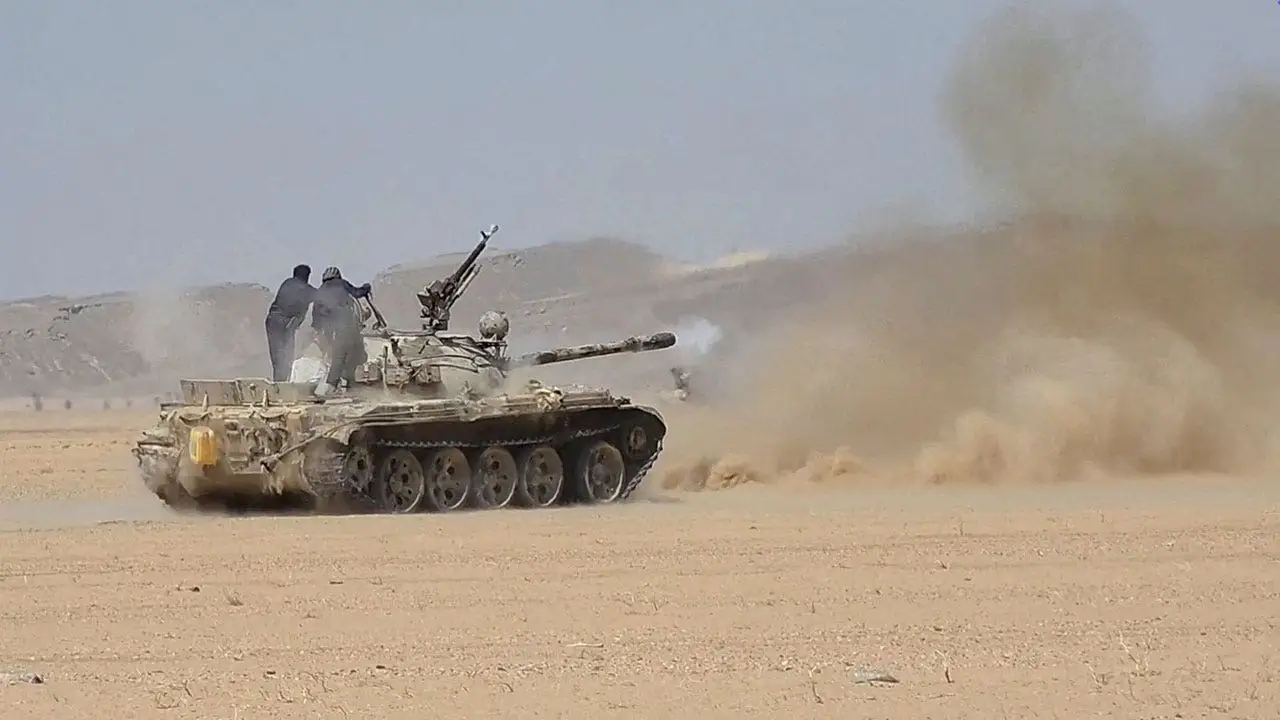
The strategic map of the Middle East shifted dramatically this week as Iran-backed Houthi forces captured the Yemeni port city of Mocha and pushed toward positions overlooking the Bab el-Mandeb Strait, a narrow waterway that serves as the southern gateway to the Red Sea and one of the world’s most vital trade arteries. The advance opens a dangerous new front in a region already on edge, coming at a time when shipping through the Strait of Hormuz remains severely constrained by the broader conflict with Iran. For years, Saudi Arabia and its allies have increasingly relied on the Red Sea route to bypass Hormuz, moving oil and commercial goods through Bab el-Mandeb as an alternative. Now, with Houthi fighters entrenched near that passage, critical shipping lanes on both sides of the Arabian Peninsula are under pressure, raising the risk of severe disruptions to global energy supplies and trade. Hisham Al-Omeisy, a senior Yemen advisor at the European Institute of Peace, summed up the gravity of the situation in stark terms. “Now you have Iran on one side of the Arabian Peninsula controlling Hormuz, and now the Houthis controlling Bab el-Mandeb on the other side of the peninsula,” he told Fox News Digital. “Which basically is going to drive prices — oil prices, goods and everything else — up exponentially.” The seizure of Mocha is not just a military development; it is a signal that the Houthi movement, long seen as a local actor in Yemen’s civil war, has become a central player in a much larger regional struggle with global consequences. The town itself, once known for its historic coffee trade, now sits at the heart of a confrontation that could reshape how energy moves from the Persian Gulf to the markets of Europe, Asia, and beyond.
Paragraph 2
The United States responded cautiously but with clear focus, with a senior administration official telling Fox News Digital on background that Washington remains committed to protecting core national security interests, particularly freedom of navigation in the Red Sea, while empowering regional partners to take the lead in managing and resolving security challenges. The official emphasized that the U.S. is in continuous dialogue with Saudi Arabia and the Republic of Yemen Government regarding regional stability. On the ground, Yemeni government sources reported Thursday that the Houthis had captured Mocha and reached the Hanish Islands, while Saudi-backed Yemeni government forces withdrew south toward Dhubab, a town that sits directly on the Bab el-Mandeb Strait. The advance was confirmed by multiple sources, including Reuters, which cited Yemeni government officials. The geography makes the stakes unmistakable: Bab el-Mandeb is only about 18 miles wide at its narrowest point, yet it connects the Indian Ocean with the Red Sea and the Suez Canal beyond. That short stretch of water carries a significant share of the world’s maritime trade, including oil, natural gas, consumer goods, and food shipments. Its importance has grown dramatically during the Iran conflict, as tankers and cargo vessels have been rerouted to avoid the Strait of Hormuz, where Iranian forces have harassed, detained, and attacked commercial shipping. For Saudi Arabia, the Red Sea corridor has become a lifeline, allowing the kingdom to export oil to Western markets without passing through Hormuz. Now, that lifeline is threatened by a force that has proven capable of striking deep into Saudi territory with drones and missiles, and whose leadership has vowed to continue targeting Saudi vessels as part of a self-declared blockade. The withdrawal of Yemeni government forces, while tactical, raises tough questions about who can hold the line against the Houthis, and whether the international community is prepared to defend a waterway that the entire global economy depends on.
Paragraph 3
The Houthi offensive did not happen in a vacuum. According to reporting from Reuters, Iranian arms and direct guidance from Iran’s Revolutionary Guards helped the Houthis make their latest territorial gains, with Yemeni government, Iranian, and regional sources pointing to Tehran’s active role in planning and supporting the operation. Two Iranian sources told Reuters that Tehran had issued instructions for the escalation, part of what they described as a broader strategy to pressure Saudi Arabia and its allies while the world’s attention remains fixed on the conflict with Iran. The U.S. Energy Information Administration reported on September 9 that crude oil and petroleum liquids transiting through the region are increasingly at risk, and the violence has already taken a human toll. According to reports, at least 73 people were injured in the recent attacks tied to the Houthi advance, a stark reminder that behind the talk of supply chains and oil prices are real people whose lives have been upended by war. The Houthis, for their part, have sought to reassure the international community that navigation through the Red Sea and Bab el-Mandeb remains safe, while simultaneously maintaining that Saudi vessels are subject to their previously announced blockade. That contradiction has done little to calm shipping companies, insurers, or energy traders, who understand that the mere threat of attack is enough to reroute vessels, spike insurance premiums, and delay deliveries. The presence of Iranian Revolutionary Guards and the flow of advanced weapons into Yemen transforms what was once a civil war into a proxy confrontation with global implications. It is no longer a question of whether the Houthis can disrupt trade; they have already demonstrated that capability, and their footprint near Bab el-Mandeb means they can do so at a moment’s notice. For the millions of people in Yemen who have endured years of conflict, the latest offensive is another chapter in a story of suffering, but its effects will be felt far beyond the country’s borders.
Paragraph 4
The widening crisis is also testing the limits of a new regional security arrangement. This month, Saudi Arabia signed a defense agreement with Pakistan and Turkey in Mecca, under which an armed attack against one member is considered an attack against all three. The pact was widely seen as a signal of collective resolve in the face of Iranian and Houthi aggression. But when Houthi drones and ballistic missiles struck Saudi cities and energy infrastructure this week, Pakistan quickly moved to dampen expectations of an immediate military response. “There is no such thing under discussion right now,” Pakistani Foreign Ministry spokesperson Sajjad Haider Khan said, according to Reuters. “When time comes [we] will act under the agreement.” The cautious language highlights the difficult position facing Pakistan and Turkey, both of which have their own complex relationships with Iran and their own domestic political dynamics. For Saudi Arabia, the pact was meant to provide an additional layer of deterrence, but the Houthi advance suggests that deterrence has not yet taken hold. Al-Omeisy warned that reversing the Houthis’ latest territorial gains will be extremely difficult. “The Houthis are really good at capturing a position, they entrench really well,” he said. “They send these massive reinforcements, and then it’s going to be extremely difficult to push them out of those areas.” That assessment is sobering. The Houthis have shown time and again that they are willing to absorb heavy losses and endure prolonged sieges, and their ability to hold ground has been proven throughout Yemen’s civil war. The international community, meanwhile, remains divided on how to respond. Some nations, particularly those with strong ties to Saudi Arabia, are calling for a more robust military response, while others urge restraint, fearing that a wider war could destabilize the entire region and send energy prices soaring even further. The defense pact may eventually lead to coordinated action, but for now, the Houthis appear to be dictating the tempo, and the window for a quick reversal may be closing.
Paragraph 5
Oil markets were already responding to the widening regional threat on Thursday, with Brent crude jumping more than 5% to $106.60 a barrel by late morning, while U.S. crude climbed above $100 for the first time since May, according to Reuters. These are not abstract numbers on a trading screen. Higher oil prices translate directly into higher costs for gasoline, diesel, heating oil, and jet fuel, which in turn ripple through the global economy, raising the price of food, transportation, and nearly every manufactured good. For ordinary families, especially those in low- and middle-income countries already struggling with inflation and debt, the impact can be devastating. The threat to Bab el-Mandeb is particularly acute because it is not just an oil route; it is also a corridor for shipping containers filled with electronics, clothing, medical supplies, and grain. If the strait becomes too dangerous to transit, ships must take a lengthy detour around the southern tip of Africa, adding weeks to voyages and significantly increasing costs. Some shipping companies have already begun to reconsider their routes, and insurance premiums for vessels passing through the Red Sea have risen. The Houthis’ ability to strike from the coastline with drones, missiles, and fast attack boats makes the strait a high-risk zone, even if the actual number of successful attacks remains limited. The perception of danger can be nearly as damaging as the reality, because commerce depends on predictability and safety. Every day that the Houthis remain in control of Mocha and the nearby islands, the risk of a major incident grows, and the cost of doing business in the region continues to climb. The humanization of this crisis lies in the choices people now face: a truck driver in Yemen wondering whether his route is safe, a shipping executive deciding whether to reroute a tanker, a family in Europe filling up their car, a farmer in Africa needing fertilizer. They are all connected by a narrow stretch of water that most of them have never seen.
Paragraph 6
In the end, the fall of Mocha and the advance toward Bab el-Mandeb represent a turning point in a conflict that has already exacted an enormous human and economic toll. The Houthis, with Iran’s backing, have positioned themselves to threaten one of the world’s most important maritime chokepoints, and their entrenchment will be difficult to reverse. The United States, Saudi Arabia, and their allies face a difficult choice: they can escalate their military involvement, accept the risk of a prolonged and costly confrontation, or seek a diplomatic solution that addresses the underlying drivers of the conflict. So far, the international response has been measured, with Washington emphasizing regional leadership and Riyadh seeking to mobilize its new defense partners. But the reality on the ground is moving faster than diplomacy. The Houthis are not waiting for negotiations; they are taking territory, fortifying positions, and issuing threats. The global economy is already feeling the effects, and the potential for further disruption remains high. For the people of Yemen, the crisis is an ongoing nightmare of violence, displacement, and deprivation, made worse by the involvement of outside powers who view their country as a battleground for larger interests. For the rest of the world, the crisis is a reminder of how fragile the systems that deliver energy, goods, and food truly are. The Bab el-Mandeb Strait has always been a link between worlds, a place where the Indian Ocean meets the Red Sea, where ancient trade routes carried spices, coffee, and textiles. Today, it is a fault line. Whether the international community can rise to the challenge and prevent a full-blown crisis remains uncertain, but one thing is clear: the events unfolding in a small port city on the coast of Yemen will resonate far beyond the region, shaping the price of oil, the security of shipping lanes, and the lives of millions in ways that are only beginning to be understood. The next few weeks will be critical, and the world is watching.