



Russia Launches Deadly New Missile Attack on Ukraine Amidst Rising Tensions
In a dramatic escalation of the ongoing conflict, Russia deployed its new Oreshnik intermediate-range ballistic missile against Ukraine on Friday, resulting in four deaths and injuring at least 22 people. The Russian Defense Ministry framed this attack as retaliation for an alleged Ukrainian drone strike on President Vladimir Putin’s residence last month—a claim that both Ukraine and U.S. President Donald Trump have publicly disputed. The missile strike came just hours after Ukrainian President Volodymyr Zelenskyy warned his nation about an impending large-scale Russian offensive, suggesting that Moscow was strategically timing its attack to coincide with frigid weather conditions in Kyiv, where icy roads and streets would complicate emergency responses and civilian movement.
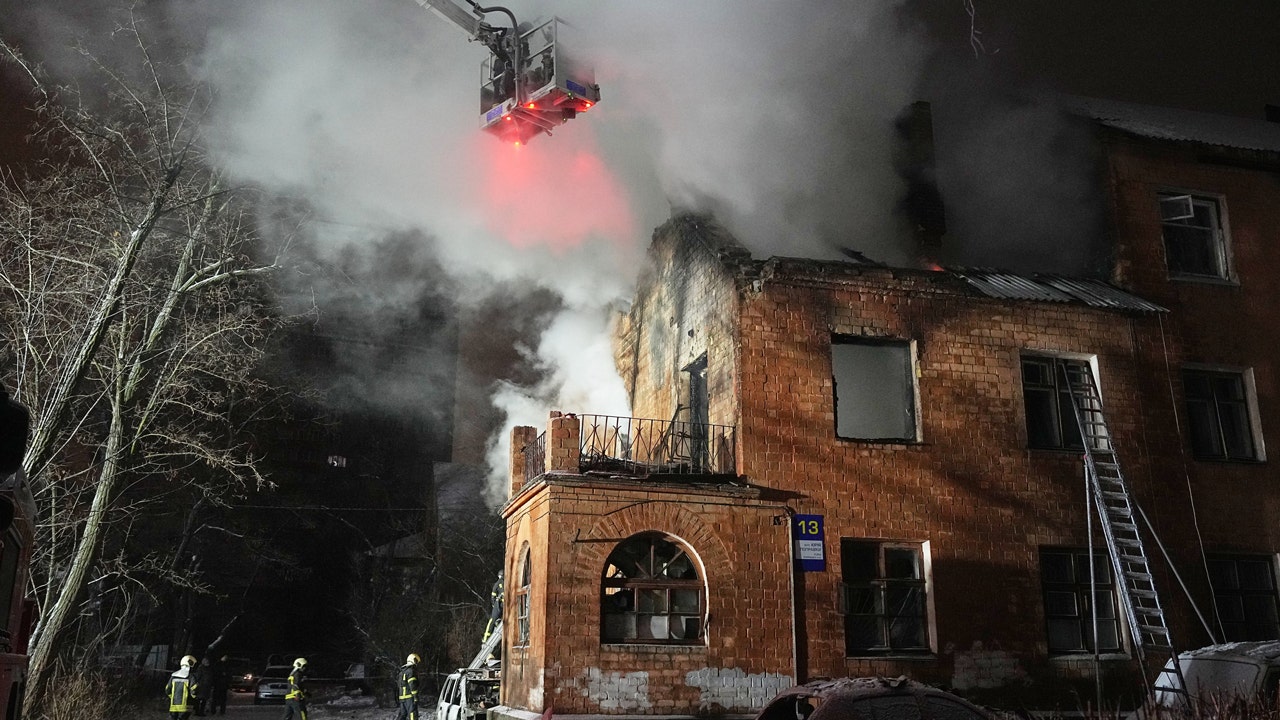
The technological sophistication of this attack has raised serious concerns among Western military analysts. According to Ukraine’s Air Force Western Command, the Oreshnik missile traveled at speeds exceeding 8,000 miles per hour, making it extraordinarily difficult to intercept with conventional air defense systems. The strike targeted multiple districts across Kyiv, claiming the life of an emergency medical aid worker among its four casualties. Tymur Tkachenko, head of Kyiv City Military Administration, reported significant damage to residential areas, while Ukraine’s security service confirmed that five rescue workers sustained injuries while responding to the ongoing attacks. In one district, a drone crashed onto the roof of a multistory building, and elsewhere the first two floors of a residential building were severely damaged, highlighting Russia’s continued targeting of civilian infrastructure.
The humanitarian impact of the missile strike extended beyond the immediate casualties, disrupting essential services throughout parts of Ukraine’s capital. Kyiv Mayor Vitali Klitschko reported interruptions to running water and electricity in several districts, compounding the suffering of civilians already enduring harsh winter conditions. The attack wasn’t limited to Kyiv—Russia simultaneously launched ground-and-sea-based missiles targeting critical infrastructure in other regions, including the western city of Lviv, according to its mayor, Andriy Sadoviy. This coordinated assault appears designed to degrade Ukraine’s ability to maintain basic services during winter months when the population is most vulnerable to disruptions in heating, electricity, and water supplies.
The timing of this attack carries significant political implications, occurring during a period of potential diplomatic transition. With ongoing international discussions about potential paths to peace in Ukraine, Russia’s decision to escalate with a new weapons system sends a clear message about its negotiating posture. The Kremlin’s explicit linking of this attack to the alleged drone strike on Putin’s residence—despite international skepticism about that claim—suggests Russia is creating justification narratives for what could be a broader winter offensive. President Zelenskyy’s warning to his nation just hours before the attack indicates Ukrainian intelligence had detected preparations for this escalation, but the country’s air defenses, despite significant Western support, remain unable to fully protect civilian areas from Russia’s most advanced missile technologies.
The introduction of the Oreshnik missile represents a concerning development in Russia’s military approach to the conflict. This intermediate-range ballistic missile significantly expands Russia’s strike capabilities and presents new challenges for Ukrainian defense systems. Military experts note that such weapons were previously restricted under the Intermediate-Range Nuclear Forces Treaty, from which Russia withdrew in 2019. The use of increasingly sophisticated weaponry against civilian targets highlights Moscow’s willingness to employ its advanced military arsenal in this conflict, raising questions about what other weapons systems might be deployed in the future. For Ukrainian civilians, the psychological impact of facing weapons with such destructive potential adds another dimension of terror to daily life under the threat of air raids.
International response to this escalation will likely shape the next phase of the conflict. Western nations have consistently condemned Russia’s targeting of civilian infrastructure, viewing it as a potential war crime under international law. This latest attack, with its high civilian toll and use of advanced weaponry, may prompt Ukraine’s allies to reconsider the types and quantities of defensive systems they’re willing to provide. For Ukrainian citizens, especially those in Kyiv who have endured nearly three years of periodic bombardment, this attack represents yet another traumatic episode in a war that continues to exact an enormous human cost. As emergency workers clear debris and restore essential services, and as families mourn those killed in the strike, the fundamental question remains whether diplomatic efforts can find a path to peace before further escalations cause even greater suffering.