


Paragraph 1: The Day the Thrill Turned to Terror
The sun beat down on the sprawling expanse of Parque Warner Madrid, a vibrant playground where the distant shrieks of delighted riders harmonized with the cheerful, looping melodies of cartoon themes. It was a quintessential Saturday afternoon, built for escapism—a time when families traded the mundane burdens of work and school for the intense, fleeting promise of adrenaline. But for one 49-year-old visitor, the promise curdled into a waking nightmare. Secured inside the sleek, menacing train of the park’s flagship attraction, the Batman Gotham City Escape, he was subjected to forces far beyond the gentle thrill of a coaster. As the train navigated the second of its three high-speed launches, a shudder ripped through the track at roughly 4:30 PM local time. The vehicle violently decelerated, a brutal mechanical lurch that launched riders forward against their harnesses. For the 49-year-old man, his legs positioned awkwardly to brace for the intense lateral G-forces, the sudden shift was catastrophic. The impact shattered bones in both of his legs—an open fracture tearing through the skin on his left, a closed fracture on his right. In an instant, the cacophony of laughter and joyful screams was replaced by an unnatural silence, followed by the piercing wail of emergency alarms. The sprawling park, moments ago a temple to escapist joy, froze into a tableau of shock and dread. On the ground, parents clutched their children, their faces pale with confusion and fear, unsure whether the screams they heard were of delight or of agony. The colossal steel monstrosity of the ride, punctuated by a massive bat symbol, made the emergency response seem pathetically small. Paramedics sprinted across the hot asphalt while security personnel desperately tried to cordon off the area, the vibrant painted scenery of Gotham City now a grim backdrop for a medical crisis. The air, once thick with the smell of popcorn and sunscreen, carried the faint, acrid tang of brake fluid and the metallic bite of fear. Bystanders stood in stunned silence, their mobile phones capturing not the fun of the afternoon but the ominous sight of rescue teams ascending the towering structure, their florescent vests blinking against the Spanish sun, signaling that this was not a drill, and that lives had been irrevocably altered in the span of a single, terrifying second.
Paragraph 2: A Marvel of Engineering Becomes a Source of Brutal Physics
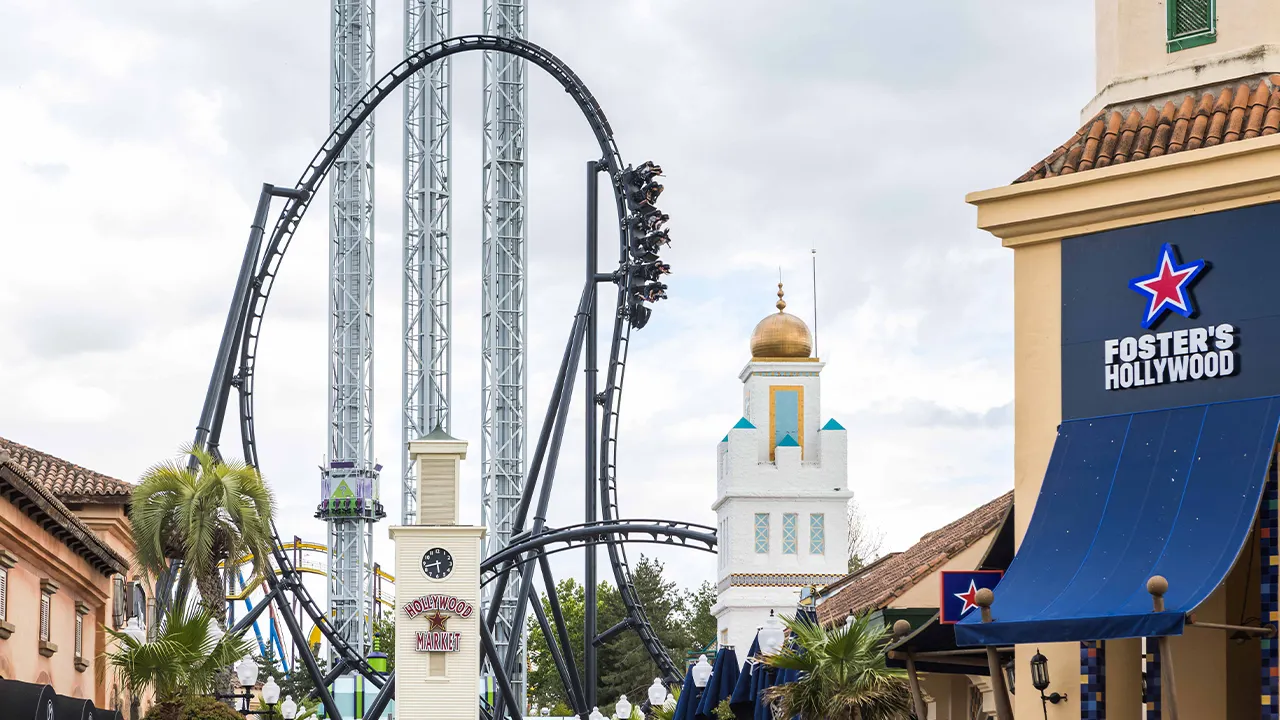
The Batman Gotham City Escape was, until this moment, a source of immense pride for Parque Warner and a monumental achievement in amusement park engineering. Opened in 2023 amid great fanfare, it was heralded as Spain’s first multi-launch roller coaster, a cutting-edge thrill machine designed to push the boundaries of what the human body could endure. Stretching over 1,000 feet of twisted track and rising to a dizzying height of over 150 feet, the coaster was a masterpiece of synchronized technology. It featured three distinct launch sections, utilizing powerful linear synchronous motors that catapulted the trains from a standstill to speeds exceeding 80 miles per hour in mere seconds. The ride’s layout was a brute force assault on the senses, incorporating four aggressive inversions—twisting corkscrews and a massive vertical loop—that subjected riders to constantly shifting positive and negative G-forces, slamming them into their seats, then violently suspending them upside down, blood rushing to their heads. The allure of this ride lay in its controlled chaos, a carefully calibrated ballet of electromagnets, friction brakes, and gravity. However, on this Saturday, the ballet turned into a violent collision. When the second launch sequence malfunctioned, the sophisticated braking systems engaged prematurely, converting the immense kinetic energy of the train into a sudden, bone-jarring stop. For a healthy rider, this might have been a jarring jolt, causing whiplash. But for the 49-year-old victim, the physics were merciless. The abrupt deceleration created immense inertial forces, projecting his lower body forward and outward at an unnatural angle against the rigid structure of the car. The mechanics of the human body, designed for walking and running, were never meant to withstand the sheer torque of a high-speed coaster’s emergency stop. The result was a clean, palpable snap of bone, a sound that witnesses later described as sickening amidst the otherwise mechanical noise. The failure highlighted the razor-thin margin between the thrill of defying physics and the agony of being crushed by it.
Paragraph 3: A Shattering Injury and the Race Against Time
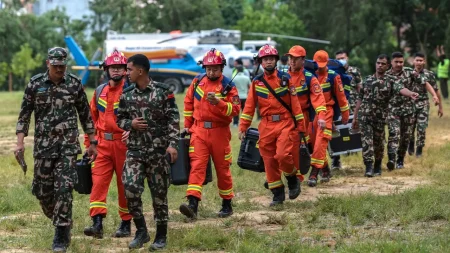
The specific nature of the victim’s injuries—an open fracture to his left leg and a closed fracture to his right—painted a grim picture of the violence he had endured. An open fracture, also known as a compound fracture, is a catastrophic injury where the broken bone pierces through the skin, exposing the internal skeletal structure to the environment. This dramatically increases the risk of severe infection, blood loss, and long-term neurological damage. The closed fracture on his right leg, while less visually alarming, still indicated a massive transmission of force, tearing through muscle tissue and potentially damaging blood vessels. Immediately upon the ride coming to a halt, the park’s internal emergency response team swung into action. Highly trained paramedics, stationed within the park for such eventualities, reached the elevated track within minutes, their gear clanking against the steel stairs as they ascended. They found the man conscious but in profound, agonizing pain, his face pale from shock. Stabilizing his spine and limbs was the priority; any careless movement could cause further irreversible damage. Recognizing the severity of both fractures, the decision was made to call for an air ambulance. A helicopter, its rotors deafeningly loud, appeared over the skyline, kicking up dust and debris as it hovered to land on a nearby service road. The spectacle drew a crowd of onlookers between the gates, some crying, others praying. The extraction process was agonizingly slow and meticulous. Rescue workers had to carefully cut away the over-the-shoulder restraints and leg harnesses that had held him in place, rigging a complex block-and-tackle system to safely lower his stretcher down the towering lift hill to the ground. As he was loaded into the helicopter and flown to a specialized trauma center in Madrid, the park fell into a heavy silence. The airlift symbolized the sheer magnitude of the event; this was not a bump or a scrape that could be treated at the first-aid station, but a critical, life-altering trauma that required the full might of the region’s emergency medical infrastructure.
Paragraph 4: The Witnesses and the Psychological Scars Left Behind
In the chaos that unfolded, the stories of the other riders and park guests became as crucial to the narrative as the victim’s medical condition. Juan José Molina, a visitor who was waiting in the ride’s queue line, provided a visceral, haunting account of the minutes following the incident. “There were people crying and having anxiety attacks,” he told reporters, his voice trembling with the residual shock. “We could see the train just stopped there, high up. Some riders were screaming for help, others were just frozen, staring ahead. The panic was palpable.” Molina described a scene of utter irrationality prevailing over logic. The ride, now a silent monolith, had become a prison for the other passengers, who remained strapped in their seats hundreds of feet above the ground, unsure if the structure was stable or if another catastrophic failure might send them plummeting. The wait for the rescue team to reach them felt like hours, an eternity of dangling in the air with the horrifying visual of the injured man bleeding beside them. The psychological trauma extended far beyond the train itself. In the park’s plazas, guests who had witnessed the violent deceleration and heard the sickening crunch were hysterical. Children wailed, unable to comprehend why the fun had stopped so abruptly. Adults sobbed, grappling with the fleeting nature of life. The serene theme of Gotham City, with its dark, comic-book architecture, suddenly felt grotesquely appropriate, mirroring the real-life villainy of mechanical failure. Many of these witnesses will carry the memory for the rest of their lives—the sound of the screams, the sight of the helicopter, and the profound helplessness of watching a stranger’s life hang in the balance. The park attempted to maintain order, offering free water and psychological support to those visibly shaken, but the damage was done. The joy that had permeated the air hours earlier had evaporated, leaving a heavy residue of sorrow and anxiety that no amount of cartoon character greetings could erase.
Paragraph 5: The Park’s Response, Official Investigation, and the Safety Paradox
Following the emergency operations, Parque Warner Madrid issued a brief, formal statement confirming the incident, expressing deep regret, and announcing the immediate and indefinite closure of the Batman Gotham City Escape ride. The statement emphasized that the park’s priority was the health and well-being of the guest and that they were fully cooperating with the relevant local and regional authorities to determine the exact cause of the malfunction. In Spain, such incidents trigger a mandatory investigation by the regional government’s industrial safety department, alongside housing and environment agencies. They will scrutinize every facet of the ride’s operation: the maintenance logs, the daily inspection checklists, the train’s onboard computer data—a “black box” that records every launch angle, brake pressure, and sensor reading—and the video surveillance cameras positioned along the track. The investigation aims to determine if the fault was mechanical (a failed brake caliper, a sensor glitch), software-related (a coding error in the launch sequence), or human error (a technician overriding a system). This incident once again highlights the paradox of modern theme parks. Statistically, roller coasters are incredibly safe, with the odds of a fatal injury being roughly one in 750 million rides. The industry relies on redundant safety systems, triple-checked harnesses, and daily mechanical inspections. Yet, when these complex systems fail, the consequences are often catastrophic because of the sheer, unforgiving power involved. The Batman Gotham City Escape was operated by a highly regarded international manufacturer known for its stringent standards, making this incident all the more shocking to the industry. As investigators pore over the wreckage and data, the broader amusement industry watches closely. The outcome of this probe will not only determine the fate of this specific ride—whether it will be repaired, modified, or permanently dismantled—but may also lead to new safety regulations for multi-launch coasters across Europe.
Paragraph 6: The Aftermath, a Life Changed, and a Reflection on Human Fragility
As the sun set over Madrid, the injured 49-year-old man lay in a hospital bed, facing a long and arduous journey to recovery. The open fracture requires multiple rounds of surgical debridement to clean the wound and prevent infection, followed by the surgical insertion of metal plates and rods to stabilize the shattered bones. Physical therapy will be a months-long, painful process, and it is entirely possible he may never regain full mobility in his legs. His life has been forever divided into “before” and “after” this Saturday at the theme park. His family, who waited helplessly on the ground, are now facing a future of hospital visits, mounting medical bills, and the emotional toll of watching a loved one suffer. For the witnesses like Juan José Molina, the scars are invisible but equally deep; many will struggle with nightmares and a newfound aversion to amusement rides. The park itself faces a public relations crisis, with questions raised about its safety protocols despite its sterling record. For the amusement park industry, this serves as a sobering reminder that no matter how advanced the engineering, the human body remains the most fragile component of the ride. The allure of the roller coaster is, fundamentally, the safe exploration of fear—a controlled way to flirt with mortality. But when that control slips, we are starkly reminded of our vulnerability. The Batman Gotham City Escape will remain closed, its towering silhouette now a monument to human ambition and its limits. Eventually, the park will likely reopen, laughter will once again ring through the air, and life will move on. But for the man who boarded the ride as a thrill-seeker and left as a trauma victim, and for all who watched his ordeal unfold, the memory of that Saturday afternoon will linger, a poignant reminder that in our quest to feel invincible, we are still, ultimately, made of flesh and bone, susceptible to the very machines we create to escape our own reality.