

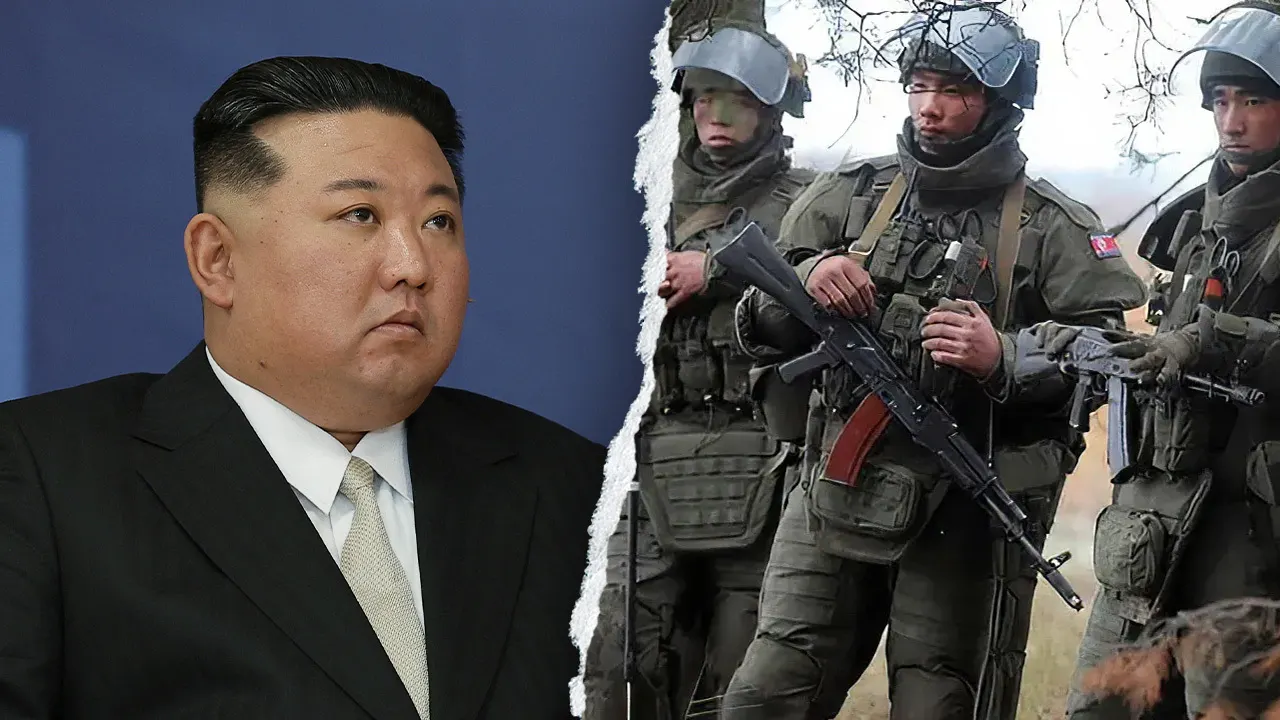
In the eerie glow of a North Korean state ceremony, dictator Kim Jong Un stood before grieving families and Russian officials, his voice steady as he honored the fallen soldiers from his nation who had been sent into the brutal chaos of Ukraine’s war. Imagine the weight of that moment: rows of families mourning sons, brothers, or husbands who never made it home from the blood-soaked fields of the Kursk region, where North Korean troops fought alongside Russians against Ukrainian forces. For the first time in the public eye, Kim didn’t just acknowledge the deaths—he celebrated them, praising those who chose a desperate, self-inflicted end over the humiliation of capture. It’s a stark reminder of the ironclad loyalty demanded by the regime, where a soldier’s ultimate honor lies in denying the enemy even the triumph of a prisoner. Reported widely in state media, Kim’s words echoed through the room like a grim hymn, transforming whispered battlefield rumors into an officially endorsed doctrine of martyrdom. This isn’t just propaganda; it’s a chilling insight into the psyche of a regime that views surrender as the ultimate betrayal, a policy so extreme it sends shivers down the spine. As someone reflecting on global conflicts, it’s heartbreaking to think of the human cost—young men indoctrinated from birth, sent thousands of miles away to fight for a foreign ally, all the while knowing their leaders’ expectations could push them to the edge of life itself. The ceremony wasn’t about victory or military strategy; it was a public affirmation of the highest sacrifice, where death by one’s own hand is framed as the pinnacle of patriotism.
Delving deeper into Kim’s speech, he singled out specific acts of heroism that border on the unimaginable. “It is not only the heroes who unhesitatingly chose the path of self-destruction and suicide to defend great honor, but also those who fell while charging at the forefront of assault battles,” he declared, his tone resolute and unyielding. This was no offhand comment—it was a deliberate spotlight on the soldiers who, in the heat of battle, chose grenades over handcuffs. For outsiders, it’s hard to fathom the mental gymnastics required to view such desperation as praiseworthy, but in North Korea’s tightly controlled world, it’s woven into the fabric of loyalty. Picture the families in that hall, clinging to his words for solace, nodding knowingly as if this act of self-erasure was the only way their loved ones could truly be honored. Kim went further, extending his praise to even those who “writhed in frustration” over not fully meeting their suicidal duties—guilt-ridden warriors who felt they’d let down their party and leader. It’s a profound look at ideological fervor, where the regime’s honor trumps individual life, and death becomes a badge of honor. In humanizing this, we can’t ignore the personal toll: these are stories of fathers who won’t see their children grow, lovers parted forever, all because of orders that equate capture with eternal shame. The speech wasn’t just rhetoric; it was a message to any remaining troops, reinforcing that there’s no middle ground in North Korea’s version of warfare—only total commitment or total oblivion.
To understand the gravity, zoom out to the scale of North Korea’s involvement in Russia’s war against Ukraine. Reports indicate Pyongyang deployed around 14,000 troops to bolster Moscow’s efforts in the Kursk region, a number that paints a picture of a massive commitment for a regime already grappling with internal shortages and isolation. Western intelligence, South Korean assessments, and even Ukrainian accounts paint a grim picture: these soldiers endured some of the fiercest fighting of the conflict, with estimates placing casualties over 6,000—half the force wiped out in relentless artillery barrages, tank assaults, and urban skirmishes. Imagine the solitude of those young men, far from home, navigating foreign landscapes mined with danger, their every move shadowed by the regime’s unbending resolve. They weren’t trained mercenaries; many were conscripted youth, product of a society where dissent is erased before it blooms, sent here not for glory alone but to prove North Korea’s reliability as Russia’s new partner in arms. The human side emerges in the staggering losses—families back home receiving telegrams that offer no details, just the cold finality of loss. It’s a reminder of the global ripples of this war, where North Korea’s soldiers become expendable pawns in a larger game of geopolitics, their lives bartered for economic aid, food supplies, and perhaps even missile tech. Reflecting on this, one feels a pang for the indoctrinated masses, who march into hell not out of choice, but under the yoke of a system that demands absolute obedience, no matter the cost.
At the heart of Kim’s praise lies the heartbreaking policy of self-destruction, a subject that’s been a rumor for months but now stands confirmed as reality. Intelligence from multiple sources, including defectors and downed battlefield footage, revealed that North Korean troops were under strict orders to detonate grenades or find other means to end their lives rather than face capture by Ukrainian forces. This wasn’t just a tactic; it was an article of faith, drilled into them during training, where surrender equaled treason—and death was the only honorable escape. Two captured soldiers now held in Kyiv exemplify the terror of this directive: both attempted to kill themselves upon being cornered, their bodies too ravaged by injuries to complete the act. Words from one, translated through interpreters, convey the crushing guilt of survival—of waking up as a prisoner, branded a failure by the standards back home. It’s a deeply personal horror, humanizing the faceless soldiers into individuals burdened by impossible choices. For families, this revelation twists the knife; the praised “heroes” of Kim’s speech are sons who grappled with the dread of failing their ultimate test. In broader strokes, this policy underscores North Korea’s isolationist paranoia, a regime so fearful of exposure that it prefers its own to die before revealing secrets of troop numbers, training, or even the extent of their alliance with Russia. It’s not just military doctrine—it’s a cultural bedrock, where individual sacrifice props up the supreme leader’s narrative of invincibility.
Expanding on the human impact, consider the ripple effects this ideology has on real lives beyond the battlefield. For the bereaved families eulogized in Kim’s ceremony, the praise is a double-edged sword—comfort in knowing their kin are hailed as patriots, but sorrow in the void left by voluntary deaths that could have been avoided. Mothers in Pyongyang might share stories in hushed tones, wondering if their boys faced those final moments alone, terrified yet resolute. In our own lives, with access to global news, we can empathize with the individual stories buried in state rhetoric: a young soldier named perhaps after a grandfather, drafted into service dreaming of honor, only to be thrust into a foreign war where the exit strategy is suicide. The captured men in Ukrainian custody add layers of tragedy—they’re not villains, but survivors of a system that sees enemies everywhere, including within. This extends to defectors who spill more details, painting lives of deprivation in North Korea: soldiers fed minimal rations, trained on outdated gear, yet sent abroad with promises of glory and supplies for starved families. Ethically, it raises questions about modern warfare—is it right for allies like Russia to accept such zealous proxies, knowing the human toll? In humanizing this, we see echoes of universal struggles: loyalty, fear, and the search for meaning in oppressive structures, reminding us that behind totalitarian facades are people grappling with the same desires for dignity and belonging.
Finally, Kim’s endorsement of this suicide policy shines a light on the strengthening bond between North Korea and Russia, a partnership fueled by desperation and mutual gains. Pyongyang isn’t just offering soldiers; as South Korean intelligence suggests, they’ve also sent munitions, artillery shells, and potentially ballistic tech in exchange for Russia’s economic lifelines like oil and grain. This deepening alliance, forged in the fires of Ukraine’s Kursk offensive, represents a pivot for Kim’s regime, maneuvering out of isolation toward strategic alliances that bolster their own military swagger. Yet, it’s not without irony—the troops praising self-destruction are tools in Russia’s “rearmament” race, even as questions linger about Moscow’s overall military mettle amid Ukraine’s resilient defenses. For the global stage, this affirms North Korea’s image as a rogue actor, willing to export extremism for aid, while Russia gains a reliable buffer of fanatic fighters. In human terms, it poses a moral quandary: what future for the families grieving in that ceremony, living under a rule where such sacrifices perpetuate a cycle of fear and loss? As we process this, it inspires reflection on peace—how we, in our democratic bubbles, might advocate for those trapped in regimes where dissent means death. Ultimately, Kim’s words aren’t just history; they’re a call to ponder the price of loyalty in a world where leaders demand the ultimate from their people, leaving behind stories of bravery mingled with untold heartache. This isn’t distant geopolitics; it’s a vivid tapestry of human resilience and tragedy, urging us to seek empathy across divides.