

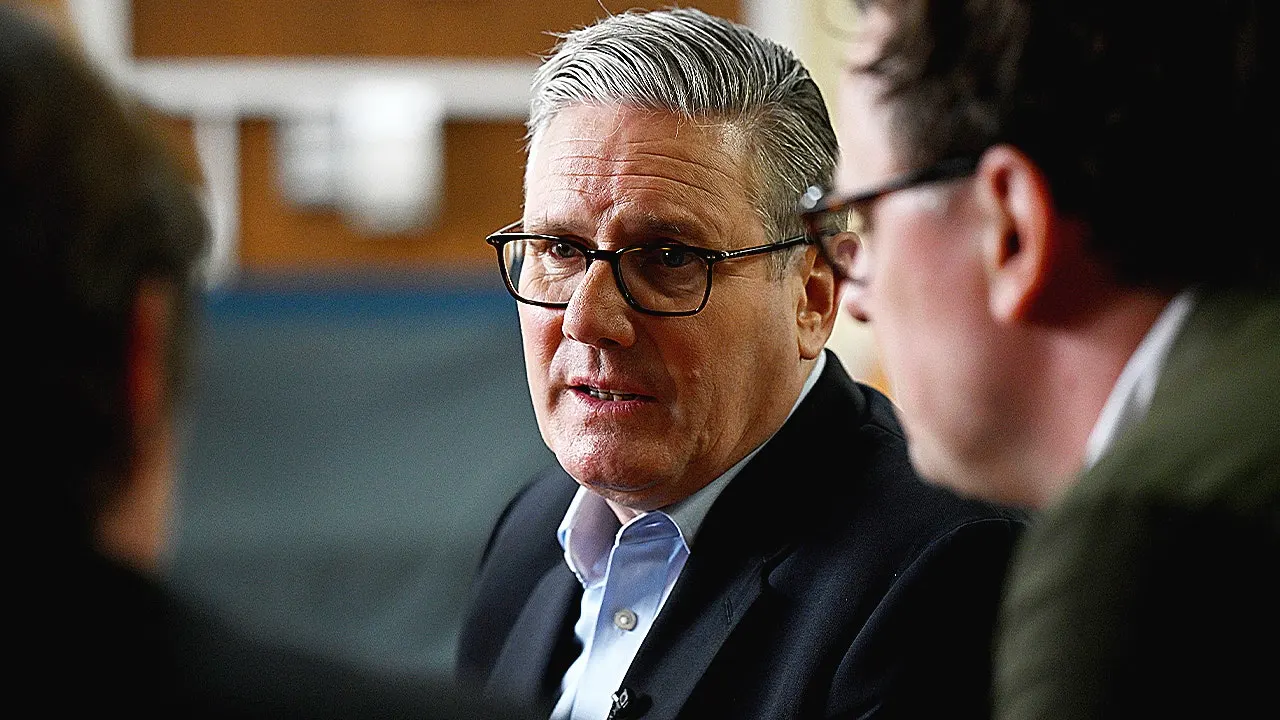
The rain-slicked pavement outside 10 Downing Street has stood silent witness to the rise and fall of many political eras, but few departures have carried the quiet, heavy-hearted finality of Prime Minister Keir Starmer’s resignation. Standing behind the solitary podium on a gray morning, Starmer laid bare the painful reality that his ambition to heal a fractured nation had ultimately been undone by the fractures within his own political home. With his voice carrying the exhaustion of months of relentless internal warfare, he announced his decision to step down as both prime minister and leader of the Labour Party, admitting that his presence had become a barrier to the unity he so desperately sought to foster. It was a moment of profound personal and political reckoning, marking the end of a leadership that had promised stability but ended in mutiny. He spoke of having already held a solemn conversation with King Charles III to convey his surrender of authority, a duty he carried out with the same quiet dignity that had characterized his rise. For Starmer, a man who had built his career on the principles of forensic precision and public service, the realization that he could no longer lead was a bitter pill to swallow, yet he chose to frame his exit not as a defeat by his rivals, but as a final act of service to the country he deeply loved. By stepping back and assuming a caretaker role while the party searched for its next path forward, he attempted to restore a dignity to the office of prime minister that many felt had been lost in the chaotic cycles of modern British politics.
The catalyst for this spectacular fall from grace was a devastating rejection at the ballot box during the recent local elections, an event that shook the very foundations of the Labour Party and left its grassroots volunteers in a state of profound despair. Across the United Kingdom, the party suffered a catastrophic hemorrhage of support, losing roughly 1,500 local council seats and surrendering control of more than 25 councils that had long been considered untouchable fortresses of Labour support. This was not merely a tactical setback; it was a cultural earthquake that signaled a deep and bitter estrangement between Starmer’s centralized leadership and the working-class communities the party was built to represent. The vacuum left by Labour’s retreat was quickly seized upon by Nigel Farage’s Reform UK, which marched into traditional industrial heartlands with a populist message that resonated with voters who felt ignored by Westminster’s sterile bureaucracy. Simultaneously, in Britain’s vibrant urban centers, traditional Labour voters migrated in droves to the Green Party, accusing Starmer of abandoning his progressive ideals in a desperate bid to win over the middle class. The double-edged sword of populist anger from the right and progressive disillusionment from the left squeezed Starmer’s coalition to the breaking point, leaving local party organizers to pick up the pieces of a shattered campaign. This electoral shellacking shattered the illusion of Starmer’s electoral invincibility, transforming quiet whispers of discontent within the Parliamentary Labour Party into a roaring chorus of open rebellion that could no longer be ignored or managed.
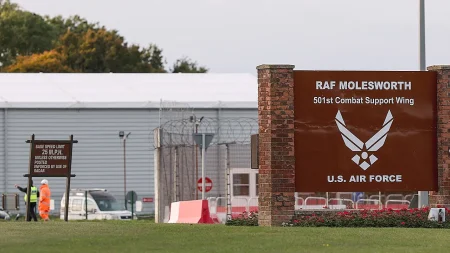
Compounding this domestic electoral nightmare was a deeply damaging and highly public foreign policy dispute with the United States that cast a harsh spotlight on Starmer’s perceived vulnerability on the global stage. When tensions erupted into conflict in Iran earlier this year, the British prime minister found himself trapped between the demands of an assertive Washington administration and a fiercely anti-war faction within his own party back home. Starmer initially sought to project strength by resisting requests from President Donald Trump to allow American military forces to utilize strategic British airbases for offensive operations against Iranian targets. This move, intended to demonstrate British sovereignty and appease his party’s left wing, instead drew the immediate, scorching wrath of Trump, who publicly humiliated the prime minister on March 3 by declaring to the international media that the world was certainly “not dealing with Winston Churchill” in Keir Starmer. Feeling the immense geopolitical pressure and fearing a permanent rupture in the historic “Special Relationship,” Starmer eventually buckled, quietly approving a series of limited defensive cooperation measures with American forces. This classic political compromise pleased absolutely no one; it thoroughly alienated the passionate peace advocates within his own cabinet while simultaneously reinforcing a damaging public perception of Starmer as a hesitant, indecisive leader who lacked the stomach for global crises. Focus groups conducted by polling organization YouGov captured a growing, corrosive public consensus that viewed the prime minister as a man desperately reacting to events rather than steering them, a leader caught in the agonizing middle ground between principle and pragmatism.
Inside the corridors of Westminster, this perception of executive weakness rapidly turned into a tangible, coordinated mutiny as key members of Starmer’s own government began to publicly jump ship, demonstrating that the loyalty holding the cabinet together had completely dissolved. The crisis reached a fever pitch with the high-profile resignation of Jess Phillips, a widely respected and fiercely independent ministerial voice who chose to walk away from her government role after a tense cabinet meeting where she reportedly demanded Starmer step aside. In her characteristically blunt resignation statement, Phillips lamented that the government had lost its vital spark and desperately needed a leader who could command the room with genuine “gusto” and deliver the transformative change that the British electorate had been promised. Her departure was quickly followed by that of Miatta Fahnbulleh, another prominent minister who publicly called for an “orderly transition” of power, signaling to the wider party that the prime minister’s departure was no longer a question of “if,” but “when.” The rebellion was not confined to a single faction; indeed, it was the sheer ideological diversity of the revolt that sealed Starmer’s fate, with more than 80 Members of Parliament signing letters of no confidence or publicly demanding his resignation. Journalistic observers, including Steven Swinford of The Times, noted with astonishment that the mutiny cut cleanly across the traditional battle lines of the Labour Party, uniting pragmatists from the centrist wing with long-time rebels from the soft-left and hard-left factions in a collective agreement that the Starmer era had run its course. Even the valiant efforts of loyalists like John Healey, who pleaded with colleagues that further political instability would jeopardize national security, fell on deaf ears, as the party’s collective instinct for self-preservation overrode any remaining loyalty to their leader.
Perhaps the most culturally damaging blow to Starmer’s personal brand of clean, ethical governance was his controversial decision to appoint the legendary but highly polarizing political strategist Peter Mandelson as the British ambassador to Washington. This appointment, intended to inject seasoned diplomatic weight into Britain’s relationship with the United States, instead acted as a lightning rod for intense public fury and media scrutiny regarding Mandelson’s historical associations with the disgraced, convicted sex offender Jeffrey Epstein. For a public already deeply cynical about the political class and weary of perceived elite entitlement, the resurrection of these dark associations felt like a betrayal of everything Starmer had promised when he vowed to clean up British politics after years of ethical scandals. The resulting backlash was swift and merciless, uniting political adversaries and clean-government advocates in their condemnation of what they viewed as a tone-deaf, establishment appointment that prioritized backroom political networking over moral integrity. The controversy dominated the airwaves and tabloid headlines, systematically dismantling Starmer’s carefully constructed image as a principled former Director of Public Prosecutions who stood above the grubby compromises of the political swamp. It was a self-inflicted wound of catastrophic proportions, one that stripped the prime minister of his remaining moral authority and left him utterly defenseless when his parliamentary colleagues decided that the time had come to cleanse the party’s image by removing its leader.
As the dust begins to settle over the political wreckage of Downing Street, Keir Starmer begins his final, quiet chapter as a caretaker prime minister, a transitional figure tasked with keeping the machinery of state running while his party embarks on a soul-searching quest for its next leader. The upcoming leadership contest promises to be a defining battleground for the future identity of the Labour Party, pitting competing visions of Britain’s future against one another in a bid to capture both the party crown and the keys to Number 10. From the pragmatic, modernizing wing of the party, Health Secretary Wes Streeting has emerged as a formidable contender, offering a polished, reform-minded vision designed to win back the suburban voters who abandoned the party in the recent local elections. Meanwhile, Andy Burnham, the charismatic and immensely popular figure who recently secured a return to Parliament after years of championing the interests of northern communities, represents a powerful grassroots alternative who promises to reconnect the party with its traditional working-class roots. Looming large over this entire battle is Deputy Prime Minister Angela Rayner, a political powerhouse whose authentic, working-class voice and deep connections to the trade union movement make her a critical kingmaker, if not a leading candidate herself, in the dramatic struggle to define the post-Starmer era. For Starmer himself, the coming weeks will likely be a period of painful reflection as he watches his successor prepare to take the stage, serving as a reminder of the fleeting nature of political power and the immense, often tragic cost of trying to lead a nation in an era of deep division.