

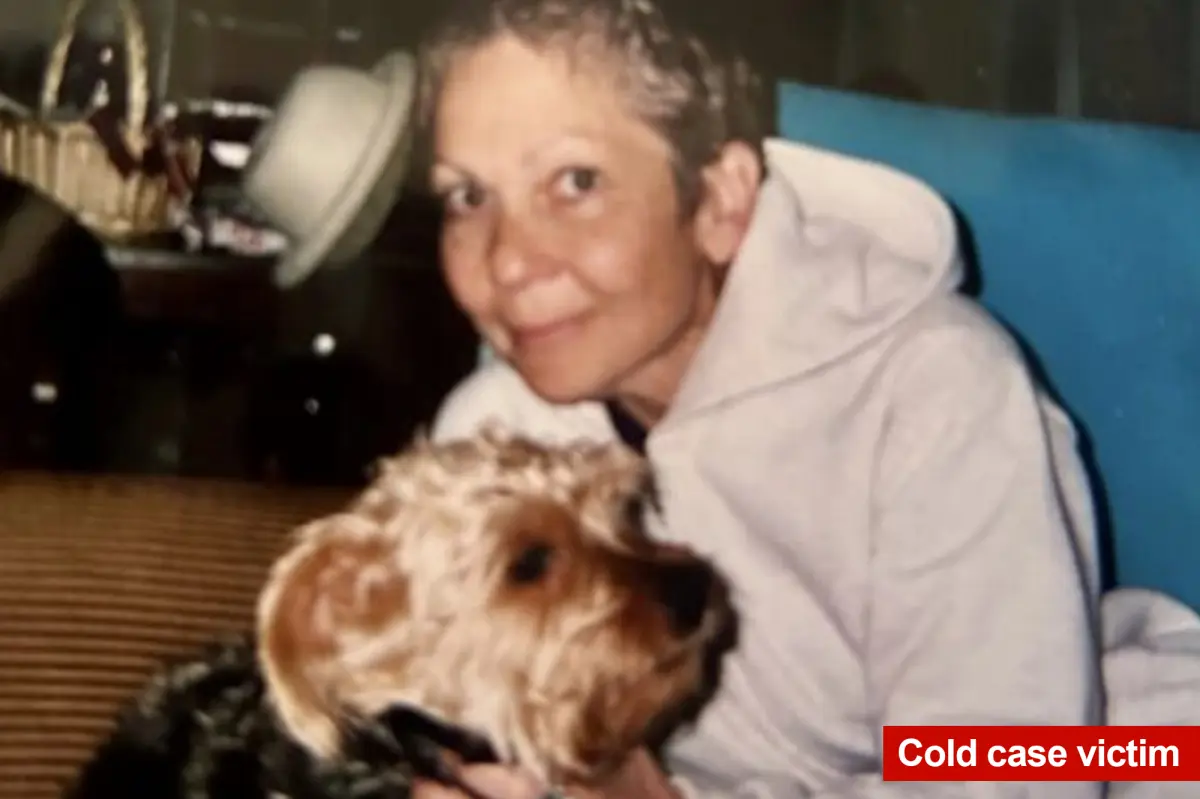
Long ago, before she was a tragic headline or an unsolved file in a dusty cabinet, Ada Beth Kaplan was a young girl filled with hopes, grace, and an abundance of promise. Growing up in the vibrant, bustling neighborhoods of Queens, New York, she attended Forest Hills High School, where her dedication and intellect earned her a prestigious New York State Scholarship Award during her senior year. To those who knew her in her youth, Ada was a creative soul who possessed a deep, burning passion for the arts, harboring a beautiful dream of one day taking the stage as a professional prima ballerina. The discipline, elegance, and expressiveness required for ballet seemed to mirror her inner spirit. However, as is so often the case, the winding road of adulthood took her far from the coordinates of her childhood dreams. Eventually, Ada journeyed across the country, trading the familiar skylines of New York for the golden, sun-drenched landscapes of California, where she built a life, married, and eventually settled in the suburban community of Santa Clarita. Yet, somewhere along the way, the melody of her life began to quiet down, and by 2009, she had separated from her husband, gradually slipping into an isolated existence that ultimately left her vulnerable to a terrifying and mysterious fate. She was a woman who had lived, loved, studied, and dreamed, yet when her life was violently cut short at the age of sixty-four, there was no one left to immediately report her missing, leaving her identity to fade into the ether of unanswered questions.
The ultimate horror of Ada’s fate began to unfold on a deceptively peaceful spring morning, March 29, 2011, when her mutilated remains were discovered abandoned on a dirt access road running alongside a grape vineyard just east of Wheeler Ridge Road in Arvin, California. Located in the sweeping agricultural expanse of Kern County, roughly sixty miles north of the Santa Clarita home she had once occupied, the scene was one of jarring and surreal contrast. The lush, sprouting vines of the grape country stood in stark opposition to the unspeakable cruelty that had been inflicted upon the body left in the dirt. When first responders and local deputies arrived at the remote location, they were met with a sight so profoundly disturbing that it paralyzed even the most hardened, media-weathered homicide detectives. Throughout Kern County, bodies are unfortunately sometimes found in rural, isolated fields, but the sheer depravity of this particular scene was unprecedented. The responding officers, the scene sergeant, and the arriving coroner’s investigator stood in a heavy, stunned silence, unable to immediately articulate or process the level of calculated malice laid out before them. As former Kern County Sheriff’s detective Ray Pruitt would later recall, it was a surreal, sickening moment where words failed everyone present, leaving them to simply stare at one another in a state of utter disbelief, realizing they were looking at a level of darkness that few human beings ever have to witness in their entire lifetimes.
The profound difficulty in identifying the victim was not an accident of nature or decay, but rather the result of a meticulously planned and horrifyingly executed effort by the killer to erase every trace of her humanity and identity. Ada’s head had been severed and removed from the scene, and both of her thumbs—the primary sources for fingerprint identification—had been carefully cut away. Furthermore, her body was completely unclothed, stripped of any personal items, jewelry, or identifying garments, and forensic evidence strongly suggested that her remains had been systematically drained of blood before being transported to the lonely dirt road. What made the crime scene even more chilling to veteran investigators like Homicide Sergeant David Hubbard was the deliberate manner in which her body had been positioned. Rather than being hastily hidden, discarded in a ditch, or buried beneath the fertile soil, her remains appeared to have been intentionally posed and laid out, indicating that the perpetrator not only wanted the body to be found but actively sought to send a grotesque, theatrical message. This level of extreme staging and surgical, methodical physical destruction suggested a killer who was patient, highly deliberate, and entirely devoid of human empathy, presenting a case of such rare and singular brutality that investigators openly admitted it was the kind of horrifying mystery a detective might encounter only once in an entire career.
For nearly thirteen years, Ada’s memory was locked away in a cold-storage unit, preserved only as “Jane Doe 2011” while her file sat on the desks of frustrated investigators who refused to let her story end in a vacuum. Every traditional law enforcement tool had yielded absolutely nothing: there were no active missing persons reports that matched her description, regional and national fingerprint databases were useless without her hands, and the absence of dental records or a skull halted traditional forensic reconstruction. Year after year, the case remained frozen, a haunting monument to an anonymous woman whose life had been stolen under the cover of darkness. That silence was finally shattered in January 2024, when the Kern County Sheriff’s Office announced a triumphant breakthrough achieved through the cutting-edge science of investigative genetic genealogy. By extracting degraded DNA from her remains and uploading it to public genealogical databases, forensic genealogists were able to painstakingly map out her family tree, linking the anonymous Jane Doe to living relatives and ultimately restoring her name. After more than a decade of being known only by a cold, clinical tracking number, she was finally returned to the world as Ada Beth Kaplan Moore, transforming her from a nameless victim back into a human being with a history, a youth, and a family.
While the technological miracle of genetic genealogy successfully restored Ada’s name, it also reopened a historical Pandora’s box, revealing a complicated and highly enigmatic pre-death existence that has left investigators scrambling to reconstruct her final years. Following the announcement of her identity, details of her fractured personal life began to emerge, including a bizarre and highly intriguing paper trail from the months following her disappearance. In August 2011, just five months after Ada’s body was discovered but years before she was ever identified, her estranged husband—from whom she had separated in 2009—published a curious letter to the editor in The Santa Clarita Valley Signal. In this public letter, he claimed that Ada had abruptly left him and their shared life to pursue a relationship with an unnamed “multimillionaire.” Though detectives have remained tight-lipped and have not publicly confirmed whether this sensational claim is directly connected to her horrific murder, it has added an undeniable layer of psychological intrigue to the case, leaving investigators to wonder if she fell victim to a wealthy predator, a deceptive lover, or if her path crossed with someone who capitalized on her isolation to commit an act of unspeakable violence without fear of her ever being missed.
Today, the quest for justice for Ada Beth Kaplan Moore has entered a critical and deeply urgent phase, as law enforcement recognizes that while science can identify a body, only the memories of living classmates, neighbors, and friends can help catch a killer. The Kern County Sheriff’s Office is now making a passionate, public appeal to anyone who may have crossed paths with Ada at any point in her life, whether they knew her in her youth as Ada Kaplan in New York or in her later years as Ada Beth Moore in California. Detectives are pleading with the community to look deep into their memories for any fragment of information—no matter how seemingly insignificant, mundane, or trivial it may appear—including old friendships, past workplaces, social acquaintances, or details about her daily routines and romantic associations in the late 2000s and early 2011. There is a firm belief that somewhere out there, someone holds the missing piece of the puzzle that can finally bridge the gap between her quiet disappearance and the horrific scene at the Wheeler Ridge vineyard. Anyone who possesses even the smallest memory or lead is urged to contact Detective Thompson at the Kern County Sheriff’s Office at (661) 861-3110, or to leave an anonymous tip via the Kern Secret Witness Line at (661) 322-4040, helping to ensure that the woman who once dreamed of dancing on the world’s grandest stages finally receives the dignity, answers, and justice she so desperately deserves.