


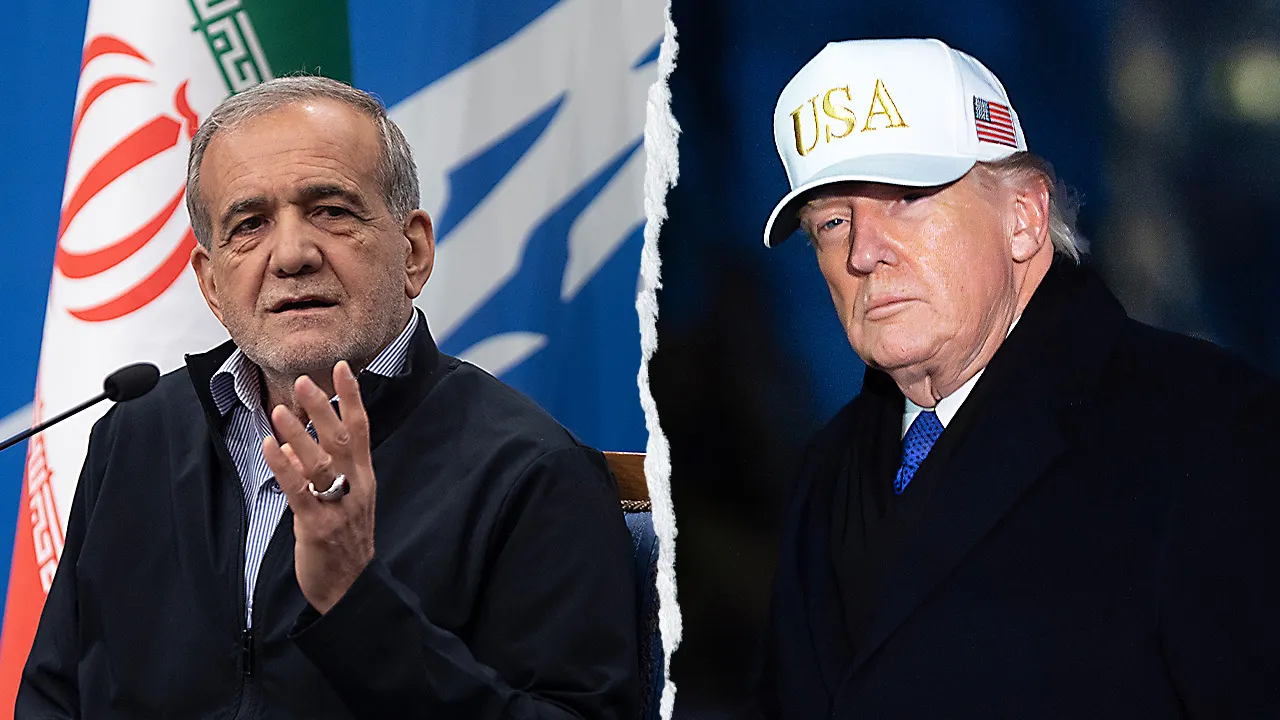
In the high-stakes theater of global diplomacy, words are rarely just words; they are heavily loaded vessels carries of history, pride, and existential warnings. This psychological reality was laid bare on May 24, when Iranian President Masoud Pezeshkian utilized one of the most sacred and emotionally charged symbols of his nation’s modern history to signal Tehran’s unwavering stance against the United States and Israel. He did so during an incredibly delicate diplomatic window, just as former U.S. President Donald Trump publicly claimed that a comprehensive deal with Iran to end the regional war was already “largely negotiated.” Trump’s characteristic rhetoric presented a stark ultimatum—that the United States would either secure “a great and meaningful” historic agreement or walk away from the negotiating table entirely. While Iranian officials quietly acknowledged a basic, broad alignment with Washington on several key points of contention, they quickly and publicly tempered expectations, asserting that a final agreement was by no means imminent and that agonizingly complex negotiations over the remaining details were still actively underway. By projecting defiance precisely when a deal seemed closest, Pezeshkian sought to remind both his domestic audience and global adversaries that Iran’s leadership would not allow itself to be perceived as negotiating from a position of absolute weakness.
To truly understand the human and emotional weight of Pezeshkian’s rhetoric, one must travel back to the darkest, most painful chapters of the late twentieth century. In a social media post marking the anniversary of the 1982 recapture of the southwestern city of Khorramshahr from Iraqi forces during the devastating Iran-Iraq War, Pezeshkian wrote: “Khorramshahr today is Iran, the Persian Gulf, and the Strait of Hormuz,” adding that “resistance, self-sacrifice, and repelling aggression are rooted in the culture of this land.” For Iranians, Khorramshahr is not simply a geographical dot on a map; it is a psychological monument of national trauma, resilience, and ultimate survival. Captured early in the conflict by Saddam Hussein’s heavily armed military, the city was subjected to brutal, bloody urban warfare and a crushing occupation. When young, ill-equipped Iranian forces finally retook the city after months of agonizing combat, it transformed into a legendary symbol of civilian sacrifice and the triumph of the human spirit over insurmountable odds. By mapping this visceral historical victory onto today’s geopolitical map—explicitly linking it to modern hot zones like the Persian Gulf and the Strait of Hormuz—Pezeshkian resurrected a deep collective memory of survival, reminding the world that the Iranian people have historically proven willing to bleed and sacrifice everything to defend their homeland from foreign intervention.
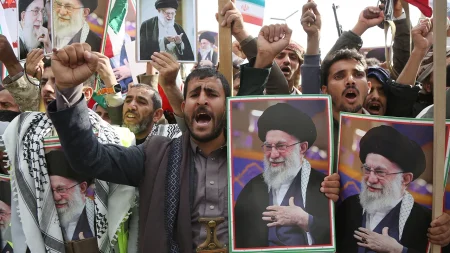
This deliberate invocation of past trauma to navigate present geopolitical crises was analyzed by Dr. Omar Mohammed, a counterterrorism expert and director of the Antisemitism Research Initiative Program on Extremism at George Washington University. Mohammed explained that Pezeshkian’s choice of timing and historical framing was a calculated masterclass in statecraft and public mobilization, serving as the cultural equivalent of Russia’s “Great Patriotic War” narrative. During the early 1980s, the newly born Islamic Republic found itself isolated, facing a professional invading army with little more than the raw determination of regular citizens, including the legendary Basij volunteer fighters who marched into battles untrained but fiercely loyal. By drawing a direct parallel between that historical defensive war and the current crushing direct pressures coming from the United States and Israel, the Iranian president is actively preparing his populace for the possibility of prolonged hardship. The underlying message directed toward the Iranian public is that their current economic struggle and geographical isolation are not mere political inconveniences, but rather another chapter in a long, heroic history of noble resistance. It constructs a domestic narrative wherein enduring sanctions and standing firm against Western demands becomes a sacred duty, transforming everyday economic suffering into an act of patriotic martyrdom.
However, the implications of Pezeshkian’s rhetoric extend far beyond emotional domestic mobilization; they represent a severe, calculated warning to international shipping, global energy markets, and the United States Navy. By explicitly including the Strait of Hormuz within this “wartime mobilization frame,” the Iranian president touched a highly sensitive global nerve. The Strait of Hormuz is the most vital maritime oil transit choke point in the entire world, a narrow stretch of water through which a massive portion of the global petroleum supply flows daily. Over the years, Iran has repeatedly used the threat of closing or disrupting traffic in this strait as its ultimate leverage against international pressure. Dr. Mohammed emphasized that invoking this strategic maritime corridor alongside the defensive rallying cry of Khorramshahr is a deliberate and dangerous signal of potential escalation, rather than mere political posturing. This rhetorical warning was underscored by Iran’s announcements of upcoming live-fire military drills in the strait, organized in direct, uncomfortable proximity to the formidable presence of the U.S. Navy’s armada in the Middle East. For the international community, this serves as a chilling reminder that if Iran feels backed into an existential corner, it possesses the geographic and military capability to disrupt the global economy, turning a localized diplomatic dispute into a catastrophic worldwide crisis.
This fiery posture of resistance stands in stark, illustrative contrast to the transactional and pragmatic nature of American diplomacy, creating a profound psychological disconnect between Washington and Tehran. While Donald Trump’s public statements approach the situation as a business negotiation where a deal can be struck through sheer leverage and pressure, the Iranian elite view the confrontation through the lens of ideological survival, historical pride, and national sovereignty. To the Iranian leadership, agreeing to a deal under the public threat of American ultimatums looks less like diplomacy and more like a humiliating capitulation, which would violate the very foundational myths of their revolutionary state. This leaves the civilian population of Iran caught in a painful and exhausting limbo. On one hand, millions of ordinary Iranian citizens endure the heavy, everyday burden of hyperinflation and scarcity caused by crippling international sanctions, quietly hoping for a diplomatic breakthrough that would restore normalcy and economic stability to their lives. On the other hand, they are bombarded by state rhetoric that glorifies sacrifice, preparing them for conflict and reminding them through historical parallels that their honor can only be preserved through defiance.
Ultimately, President Masoud Pezeshkian’s brilliant yet dangerous rhetorical maneuvering reveals the incredibly thin line that separates war from peace in the modern Middle East. The invocation of Khorramshahr serves as a powerful reminder that even as diplomatic messengers quietly exchange draft agreements in backrooms, the public face of Iran will always remain fiercely unyielding. By signaling that the country is prepared to treat any modern diplomatic or military challenge with the same total, existential resolve it brought to the battlefields of the 1980s, the Iranian regime is warning its adversaries that it cannot be easily intimidated or forced into a corner. As the world watches this tense, high-stakes game of geopolitical chess unfold between Washington, Tel Aviv, and Tehran, the true tragedy remains the human cost. Behind the grand historical metaphors, the military parades, the live-fire naval drills, and the defiant social media posts lie the fragile, anxious lives of millions of everyday people. Whether the future brings a historic, hard-fought peace deal or a devastating regional escalation depends entirely on whether leaders on both sides can look past their own pride, recognize the common humanity of those they govern, and find a way to resolve their differences without resorting to the destructive, tragic path of the past.