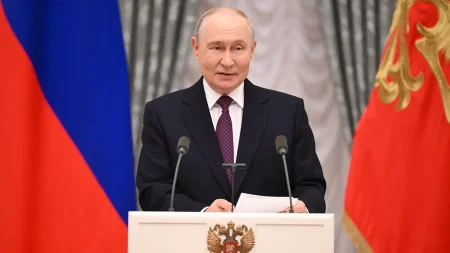


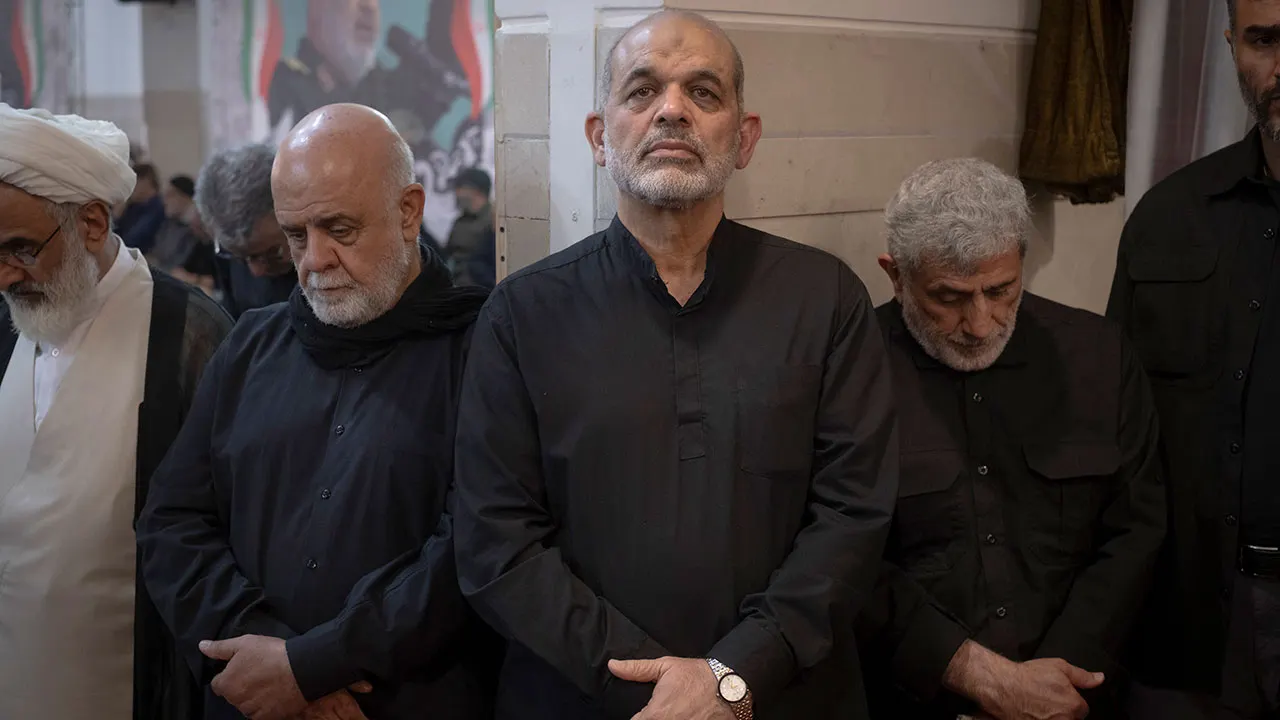
In the shadow of smoldering ruins and the lingering echoes of devastating airstrikes, a quiet but seismic shift is taking place within the highly fortified and deeply paranoid halls of Tehran. Faced with the monumental task of rebuilding a military and political command structure shattered by months of relentless, high-precision U.S. and Israeli strikes, Iran’s newly installed Supreme Leader, Mojtaba Khamenei, has taken a decisive, wartime step. On a Monday heavy with geopolitical tension, Khamenei’s office formally announced the appointment of six battle-hardened military commanders to key positions across the nation’s armed forces, the Islamic Revolutionary Guard Corps (IRGC), and the Basij paramilitary force. Among those elevated to guide the Islamic Republic through its most perilous chapter in decades are Ali Abdollahi, appointed as the chief of staff of the armed forces, and Kioumars Heydari, who will serve as his deputy. Additionally, the formidable Ahmad Vahidi was officially named commander-in-chief of the IRGC and promoted to the prestigious rank of major general, while Mostafa Izadi assumed the role of deputy IRGC commander, Ali Azmaei took charge of the IRGC Navy, and the notorious Hossein Taeb was placed at the helm of the Basij. This sweeping administrative reshuffle is far more than a routine bureaucratic transition; it represents a desperate, calculated effort to resurrect a decapitated defense apparatus. For the ordinary citizens of Iran and the watching world, these appointments are a chilling reminder that the regime, despite suffering catastrophic losses at the highest echelons of its leadership, is refusing to capitulate. Instead, it is actively patchworking its defense mechanisms to project an aura of unbroken resilience, attempting to signal to both domestic allies and foreign adversaries that the heart of its military command still beats, even if it must do so from deep within the bunkers of a nation under siege. This aggressive posture shows a regime determined to survive by doubling down on its militaristic foundations rather than reforming.
This strategic reorganization does not merely serve as an internal shield; it is a carefully choreographed message aimed squarely at the international community, signaling that Iran is girding itself for a long and bitter fight rather than seeking a diplomatic exit ramp. According to Dr. Omar Mohammed, director of the Antisemitism Research Initiative at George Washington University’s Program on Extremism, the calculated timing and medium of these announcements speak volumes about Tehran’s true intentions. Published prominently in English on the social media platform X, the decrees were released at a highly sensitive diplomatic juncture—just as Iranian and Omani negotiators were putting the final touches on a proposed maritime shipping corridor through the highly volatile Strait of Hormuz. By deliberately sequencing these actions, Tehran is establishing its newly minted, aggressive wartime command structure as an unalterable fact on the ground before any diplomatic papers are signed, effectively holding a pen in one hand and a sword in the other. Furthermore, the very language embedded within these official state decrees has elevated the ideological stakes of the conflict. By formally attributing the deaths of their military predecessors to the “Zionist-American enemy,” the regime has codified the United States not merely as a hostile foreign power, but as an active, co-belligerent in an ongoing war. This rhetorical shift is a deliberate rejection of compromise, revealing a leadership that is actively planning for a prolonged, multi-front confrontation with Washington and Jerusalem, rather than paving the way for a peaceful settlement or a relaxation of regional hostilities. By using English to broadcast these decrees, Iran ensures that its message of defiance is read clearly in Western capitals, leaving no room for misinterpretation about its readiness for a sustained conflict.
To understand the gravity of these appointments, one must look closely at the dark and blood-stained histories of the men whom Mojtaba Khamenei has chosen to lead this new era of defiance. Far from being moderate technocrats, these commanders are individuals with deeply troubling records of violence, both on the international stage and against their own citizens. Major General Ahmad Vahidi, the new chief of the IRGC, is a man whose name is synonymous with global terrorism, currently subject to an Interpol Red Notice requested by Argentina for his alleged orchestrating role in the horrific 1994 bombing of the AMIA Jewish community center in Buenos Aires, which claimed 85 innocent lives. Similarly, Hossein Taeb, the new leader of the Basij paramilitary, is a figure feared within Iran for his ruthless suppression of domestic dissent, having been blacklisted by the United States Treasury Department in 2010 for presiding over severe human rights abuses, including the torture and silencing of peaceful protesters during the disputed 2009 presidential election. Meanwhile, Kioumars Heydari, the newly appointed deputy chief of staff, carries his own legacy of domestic brutality, having been sanctioned by both the United States and the European Union after publicly boasting about his forces’ instrumental role in the bloody crackdown on the November 2019 protests, where hundreds of ordinary Iranians demanding economic justice were systematically gunned down in the streets. By placing these specific individuals at the absolute pinnacle of military power, the Iranian regime is sending an unmistakable message to its own population and the world: any internal dissent will be met with uncompromising, lethal force, and the nation’s foreign policy will continue to be driven by the same ruthless methods that have characterized its most violent chapters. The selection of these sanctioned and internationally condemned figures underscores Tehran’s complete disregard for international norms and its commitment to internal terror.
This dramatic consolidation of hardline military power is unfolding against a backdrop of unprecedented grief, vulnerability, and systemic trauma within the Iranian political establishment. The regime is currently reeling from a series of devastatingly precise U.S. and Israeli intelligence operations that have systematically dismantled its traditional leadership structure, leaving the country exposed and deeply shaken. The most catastrophic blow came on February 28, when a powerful strike claimed the life of Ayatollah Ali Khamenei, the supreme patriarch who had governed the Islamic Republic with an iron fist since 1989. In the chaotic aftermath of his death, his son, Mojtaba Khamenei, was swiftly elevated to the position of Supreme Leader in March, inheriting a country teetering on the edge of collapse. The bleeding, however, did not stop there; just weeks later, on March 17, another wave of targeted strikes eliminated Ali Larijani, the influential secretary of the Supreme National Security Council and a titan of Iranian diplomacy, alongside Gholamreza Soleimani, the head of the Basij. These rapid-fire assassinations of iconic regime figures have left the corridors of power in Tehran smelling of smoke and paranoia, forcing the remaining leadership to operate under the constant, terrifying realization that their movements are being watched, their communications are compromised, and their survival is measured in days rather than years. The sudden loss of decades of institutional knowledge and personal authority has forced Mojtaba Khamenei to rush these appointments, desperate to fill the massive voids left by his father’s closest allies.
Compounding this atmosphere of existential dread is the profound mystery surrounding the physical state and leadership style of Mojtaba Khamenei himself. Since his sudden elevation to the supreme leadership in March, the younger Khamenei has not made a single public appearance, fueling intense speculation that he was severely wounded in the very same February 28 airstrike that claimed his father’s life. This physical absence has cast a long, spectral shadow over the government, forcing officials to go to extraordinary lengths to project an image of active, stable governance. In a bid to quell growing rumors of a power vacuum, President Masoud Pezeshkian publicly claimed that he had engaged in a grueling, nearly seven-hour-long meeting with the Supreme Leader to discuss the country’s catastrophic economic conditions, the strangling impact of international sanctions, and pressing domestic crises. During this marathon session, which marks only the second such meeting disclosed since Mojtaba took power, the Supreme Leader reportedly placed a heavy emphasis on the absolute necessity of national “unity and cohesion.” Yet, to the struggling Iranian public, which is forced to endure hyperinflation, basic resource shortages, and the constant threat of war, these calls for unity ring hollow, coming from a leader who remains entirely invisible, ruling from the safety of an undisclosed bunker while the rest of the nation bears the brunt of the regime’s geopolitical ambitions. The image of a phantom leader trying to guide a sinking ship through turbulent waters only deepens the sense of anxiety gripping both the citizenry and the political elite.
Ultimately, while these high-profile military appointments are designed to project strength and stability, they cannot conceal the massive, festering wounds at the very heart of Iran’s intelligence and counterintelligence networks. As Dr. Omar Mohammed points out, the regime’s massive military rebuilding effort has conspicuously failed to extend into its highly sensitive and thoroughly compromised security apparatus. Crucially, the IRGC Intelligence Organization and its counterintelligence wings still have no announced chiefs, and the country remains without permanent defense or intelligence ministers, exposing a paralyzing internal debate over accountability. Before these vital positions can be filled, the regime must confront the agonizing and politically explosive task of assigning responsibility for the catastrophic intelligence failures that allowed foreign adversaries to decapitate Iran’s leadership in the first place. This ongoing struggle for control between the Supreme Leader’s tight-knit inner circle and the institutional leadership of the Revolutionary Guards represents a quiet, high-stakes civil war within the regime itself. Until Tehran can resolve this internal crisis of trust and determine who actually holds the reins of its intelligence network, all the military appointments and aggressive rhetoric in the world will do little to secure a regime that is hollowed out from within, terrified of its own shadow, and bracing for a prolonged confrontation it may not survive. The true test of Iran’s survival will not be decided on the battlefields of the Middle East, but within the secretive, tension-filled rooms where its leaders must decide whom they can still trust.