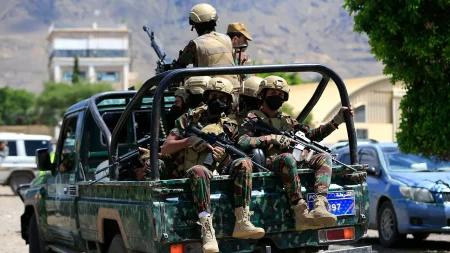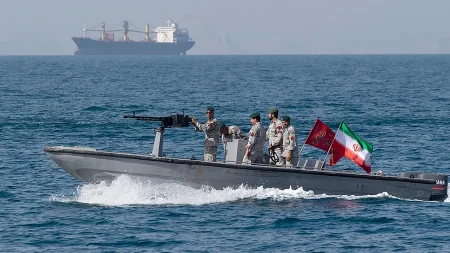



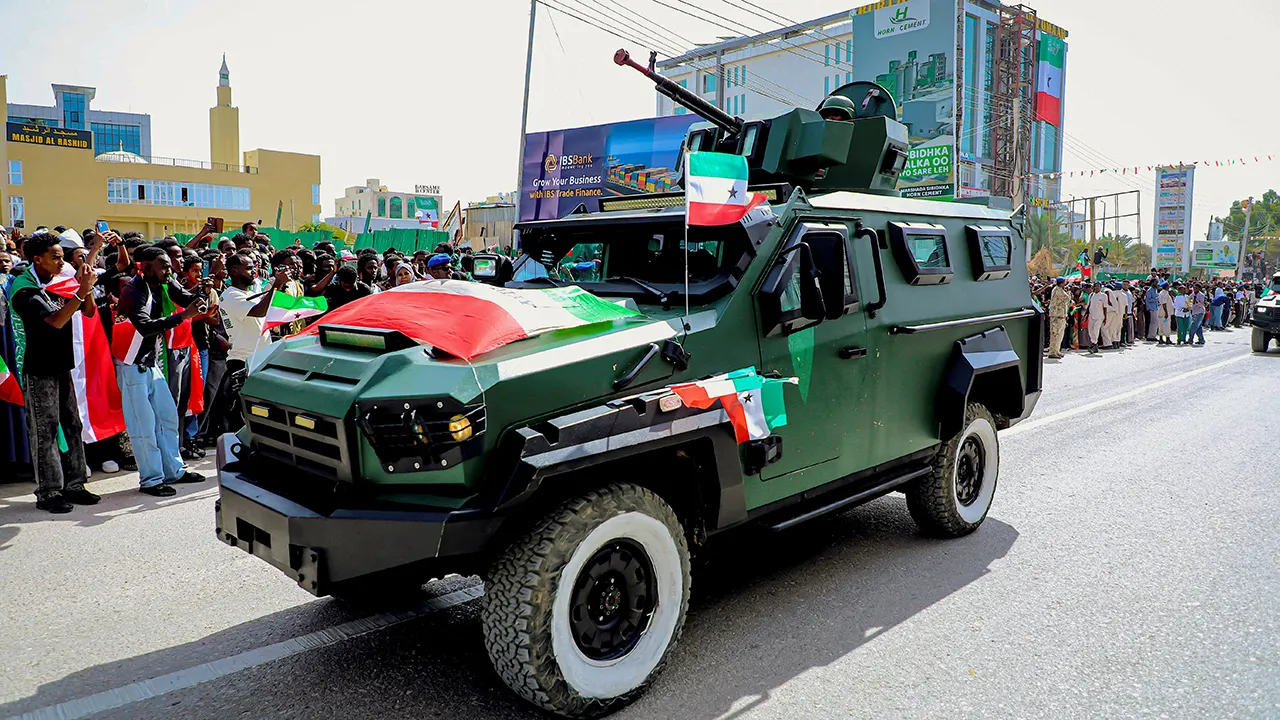
For the merchant mariners who routinely navigate the sun-bleached and increasingly perilous waters of the Red Sea, the journey has transformed from a standard commercial voyage into a nerve-wracking gauntlet of survival. These sailors must constantly scan the horizon for incoming drone strikes, piracy, and sea-skimming ballistic missiles—threats that are carefully orchestrated from the safety of command centers thousands of miles away in Tehran. Yet, as the Islamic Republic of Iran seeks to tighten its grip on global shipping, its strategic planners are growing deeply rattled by an unexpected geopolitical wildcard on the Horn of Africa: the small, self-declared breakaway state of Somaliland. Having quietly carved out an oasis of democratic stability and security since separating from war-torn Somalia in 1991, Somaliland has suddenly found itself at the absolute center of a high-stakes struggle for maritime dominance. The source of Iran’s intense anxiety lies in Somaliland’s pristine, highly coveted geography overlooking the Bab-el-Mandeb Strait. This narrow, crucial maritime choke point has become the primary artery for Middle Eastern oil and international commercial shipping heading toward the West, particularly as the Strait of Hormuz has grown too dangerous to navigate freely. For years, Iran has exploited this vital bottleneck by utilizing its proxy, the Houthi rebel movement in Yemen, to harass, attack, and seize commercial vessels, effectively holding the global economy hostage. However, the prospect of the United States, Israel, and other Western powers establishing a permanent, highly sophisticated military presence at Somaliland’s deep-water port of Berbera and its adjacent strategic airbase threatens to dismantle Tehran’s proxy network. Foreign policy expert Lisa Daftari observes that Somaliland represents a uniquely resilient, pro-Western, and potentially pro-Israel foothold that could fundamentally blunt Tehran’s regional influence. Sensing the gravity of this threat, the Houthis have already issued explicit warnings, threatening direct military strikes against any Western or Israeli footprint in Somaliland, demonstrating just how much this small African state terrifies the Iranian regime.
To truly understand how this unheralded African territory became a primary target of Iranian hostility, one must examine the quiet diplomatic and cultural shifts taking place within Hargeisa, Somaliland’s bustling capital. In a region where hostility toward Israel is frequently used by authoritarian regimes to burnish their domestic credentials and distract from internal failures, Somaliland took the remarkably bold and historically significant step of seeking mutual recognition with the Jewish state. This diplomatic overture, cemented by quiet agreements, sent immediate shockwaves through the Middle East’s “Axis of Resistance.” Edmund Fitton-Brown, a senior fellow at the Foundation for Defense of Democracies and former British ambassador to Yemen, explains that Iran’s opposition to Somaliland is deeply visceral and rooted in an ideological mandate to oppose any nation that seeks peaceful, constructive engagement with Israel. But the antagonism is also heavily grounded in practical military realities; the United Arab Emirates and the United States have maintained long-term, highly pragmatic security engagements with Somaliland, recognizing that its disciplined, professional security forces stand in stark contrast to the lawlessness of neighboring regions. By fostering these international relationships, Somaliland has naturally positioned itself as an ideal, enthusiastic partner for anti-Houthi maritime enforcement operations. For the regime in Tehran, the nightmare scenario is no longer a distant threat, but a rapidly approaching reality: a coordinated defensive network—comprising American naval vessels, Israeli intelligence-gathering assets, and Emirati logistical capabilities—anchored securely on the African coast. Such a partnership would not only guarantee safe passage for international cargo ships but would also isolate the Houthis, cutting off their illegal smuggling routes and neutralizing their sophisticated arsenal of Iranian-supplied weaponry.
For decades, the United States relied almost exclusively on its massive, sprawling military installation in neighboring Djibouti, Camp Lemonnier, to project power, run counterterrorism missions, and protect vital shipping lanes across the Horn of Africa and the southern Arabian Peninsula. However, the geopolitical landscape of Djibouti has grown increasingly crowded, tense, and unreliable, forcing American military planners to search for safer, more predictable alternatives. The primary catalyst for this shift is the aggressive, deep-pocketed expansion of the People’s Republic of China, which has established its own heavily fortified naval base just a stone’s throw away from American forces, alongside massive commercial port investments that have plunged the Djiboutian government into significant debt to Beijing. This growing Chinese footprint has transformed Djibouti from a secure American stronghold into a hotbed of international espionage, logistical friction, and geopolitical vulnerability, leading many defense analysts to warn that Washington can no longer treat Djibouti as a compliant or dependable ally. In this climate of mounting insecurity, Somaliland’s moment has arguably arrived to offer a fresh alternative. Military planners are beginning to realize that relying on a single, congested point of entry in the region is a dangerous strategic vulnerability. Somaliland offers the critical redundancy and operational flexibility that the U.S. military desperately craves. By opening up the port of Berbera, the U.S. and its international partners would gain a highly reliable backup option that is free from Chinese state surveillance and political interference. As former AFRICOM coordinator Maj. Gen. Kenneth Ekman points out, the U.S. military simply cannot afford to ignore the tactical security that Berbera provides, especially when the hostile actions of Iran-backed forces require a rapid, unhindered maritime response that a compromised Djibouti can no longer guarantee without significant diplomatic friction.
Recognizing this strategic window of opportunity, the leadership in Hargeisa has launched a sophisticated diplomatic charm offensive, presenting the United States with an offer that is as practical as it is unprecedented. Somaliland’s Foreign Minister, Abdirahman Dahir Adam, has repeatedly emphasized his government’s longstanding willingness to grant the U.S. military unrestricted access to its coastlines, airfields, and ports, framing this potential alliance not as a fair-weather arrangement but as a deep, enduring commitment to international security. In a move that highlights their pragmatic approach to modern warfare, Somaliland officials have even offered to host storage facilities for American Tomahawk cruise missiles. While this proposal may sound highly technical, its human and logistical implications are immense. Currently, when U.S. Navy destroyers patrol the hostile waters of the Red Sea, they must frequently expend their expensive missile batteries to intercept incoming Houthi drones and ballistic missiles aimed at commercial shipping. When these ships run out of ammunition, they are forced to embark on a grueling, perilous two-week journey back to distant, friendly ports just to resupply their arsenals, leaving a massive gap in Red Sea defenses. By storing advanced munitions directly on the Somaliland coast in Berbera, the U.S. could slash this transit time down to a matter of hours, allowing naval vessels to quickly rearm and return to their critical defensive stations. This unique offer demonstrates that Somaliland is not merely seeking a transactional handout or begging for recognition; rather, it is actively proposing logical, highly effective solutions to the very real logistical nightmares that paralyze Western military operations in the region, proving itself to be an indispensable asset in the defense of global trade.
Despite the obvious military and logistical benefits of a formal partnership with Somaliland, Washington remains trapped in a self-imposed diplomatic straightjacket, paralyzed by the complex legacy of Somali sovereignty. Officially, the United States government adheres to a “One Somalia” policy, recognizing the weak, heavily besieged Federal Government of Somalia in Mogadishu as the sole sovereign authority over the entire territory, including the breakaway region of Somaliland. This creates a severe policy dilemma for American diplomats and military commanders alike, as they must navigate the awkward reality of conducting vital counterterrorism operations in a territory whose independence they refuse to formally recognize. Proponents of a policy shift, such as Senator Ted Cruz, argue that this rigid adherence to diplomatic orthodoxy is actively harming American national security interests. Cruz has strongly advocated for the United States to take the bold step of officially recognizing the Republic of Somaliland as an independent nation, pointing to its remarkable stability, democratic institutions, and unwavering willingness to partner with the West in a region dominated by instability and anti-American sentiment. Critics of the current policy note the hypocrisy of relying on Somaliland’s security forces to keep the peace while publicly pretending their government does not exist. To maintain this delicate diplomatic fiction, the Pentagon and State Department continue to issue formal statements reaffirming their strategic partnership with the Federal Government of Somalia, even as they coordinate airstrikes against ISIS and al-Shabaab militants alongside regional partners. This diplomatic tightrope walk has created an environment of strategic ambiguity, where the pressing realities of global security are constantly clashing with the formalistic rituals of international diplomacy, leaving Somaliland in a frustrating state of limbo.
Yet, behind the sterile, public denials issued by the Pentagon, the reality on the ground tells a completely different story of deep, ongoing, and highly successful military cooperation. Beneath the radar of official diplomatic recognition, relationships have blossomed into an active, operational alliance, with high-ranking U.S. military delegations—including leaders from U.S. Africa Command (AFRICOM)—quietly traveling to Somaliland every two months to coordinate security efforts and inspect vital port facilities. This collaboration is not a new phenomenon; for years, American special forces and intelligence specialists have worked hand-in-hand with Somaliland’s security apparatus to neutralize shared threats. A prime example of this silent partnership occurred in 2023, when joint efforts culminated in a highly successful operation that eliminated Bilal al-Sudani, a notorious and powerful financier who facilitated ISIS’s global terror network from his stronghold in northern Somalia. This operation proved beyond a shadow of a doubt that Somaliland’s security forces possess the competence, local knowledge, and reliability that Western forces rarely find in other African partners. By providing an alternative, highly resilient platform on the African continent, Somaliland offers the United States and its allies a way to bypass the political and military compromises of dealing with unreliable regional partners or hostile regimes. As the geopolitical storm surrounding the Red Sea continues to intensify, the human cost of diplomatic inaction becomes clear: the merchant sailors, military personnel, and global citizens who rely on safe passage through these waters are left vulnerable to proxy terror because of political reluctance in Washington. Ultimately, Somaliland represents a rare beacon of stability and pro-Western resolve in a chaotic region, waiting for the day when the international community finally aligns its public policy with the undeniable realities of global security.