


1. The Close Call That Nearly Changed History
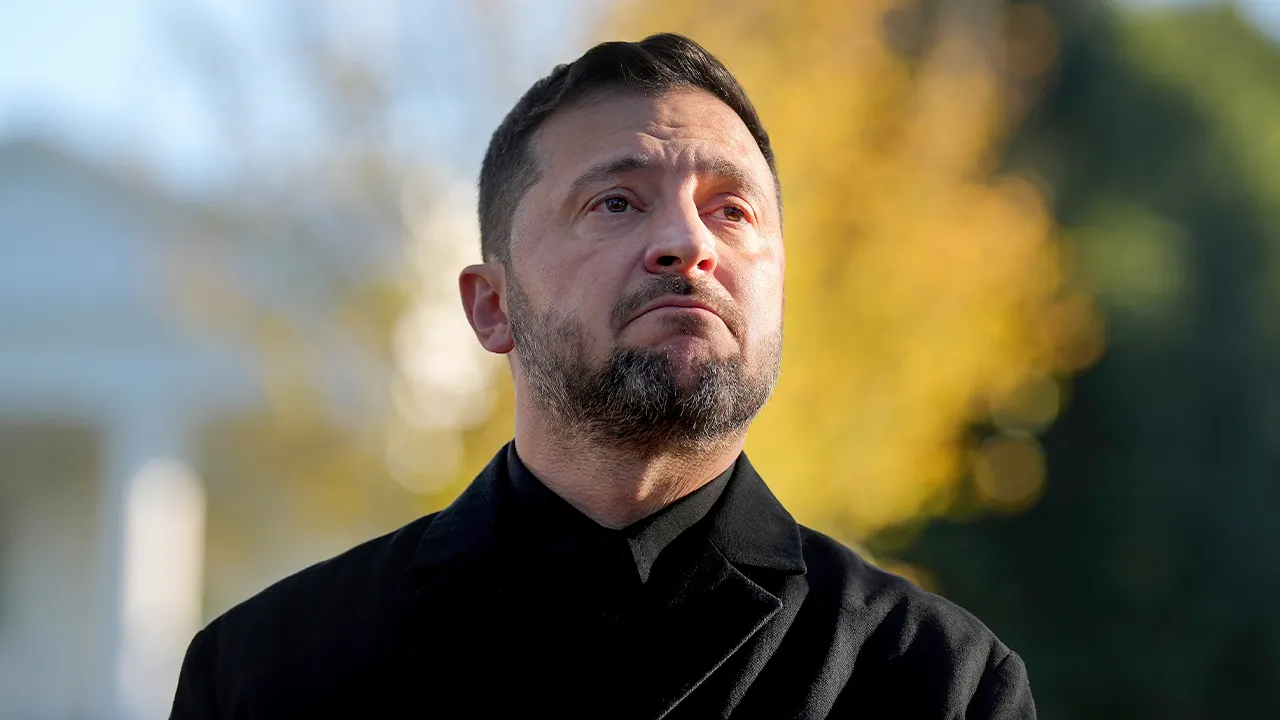
Some moments in history turn on the smallest margins—a few feet of altitude, a split second of pilot reaction, a drone’s erratic drift. Tuesday’s near-miss involving President Volodymyr Zelenskyy’s aircraft was precisely such a moment, though its significance was barely perceptible to the outside world until Norwegian Prime Minister Jonas Gahr Støre revealed it the following day. Speaking to public broadcaster NRK, Støre allowed a rare glimpse into the perilous reality that has become routine for Ukraine’s leader. “His plane was almost hit by a drone as it was about to take off from Moldova,” Støre said, his words carrying the weight of a man who understands the gravity of what nearly occurred. “That is the reality he is facing.” The statement was delivered with characteristic Nordic understatement, but its implications were staggering. Here was a sitting head of state, traveling to attend a king’s funeral—a solemn diplomatic mission meant to honor the dead—and yet the living could not escape the specter of death that has followed him since the earliest days of Russia’s full-scale invasion. The plane landed safely in Oslo that evening, and the protocol-heavy proceedings of the funeral would proceed as planned, but the incident served as a chilling reminder that for Zelenskyy, there is no safe space, no respite, no moment when danger is truly behind him. Even a journey of mourning could become a mission of survival.
2. The Anatomy of an Incursion
What exactly transpired in Moldovan airspace that Tuesday remains partially shrouded, with officials revealing details incrementally as the hours passed. According to a Moldovan government spokesperson, two Russian drones were involved in the incident. The discovery forced authorities to close the country’s airspace, delaying Zelenskyy’s departure to Oslo. One of the drones ultimately landed north of Chișinău, the Moldovan capital, sparking a fire in a field—a silent, destructive arrival that could so easily have been directed elsewhere. The other drone continued its trajectory into Romanian airspace, another NATO member feeling the unsettling consequences of drone warfare bleeding across borders. The impact on civilian infrastructure was immediate and disruptive. Chișinău International Airport suspended arrivals and departments, sending incoming flights into holding patterns or forcing them to divert to neighboring countries. Tracked data would later show the confusion and inconvenience rippling outward—travelers stranded, schedules upended, families waiting longer for reunions at arrival gates. What is often abstracted into geopolitics or military strategy was, in that moment, deeply personal for ordinary people: a student missing a connection, a business traveler rerouted through unfamiliar cities, a grandmother waiting anxiously for news of a delayed relative. Yet the ultimate tragedy was that this disruption, significant as it was for those affected, was merely collateral byproduct—unintended damage in a campaign whose human toll is measured in far starker terms.
3. Moldova’s Vulnerability and Grief
The incursions were not merely an inconvenience or a diplomatic embarrassment; they were an assault on a sovereign state that has found itself caught in the crossfire of a brutal and asymmetrical conflict. Moldovan President Maia Sandu responded with characteristic directness, denouncing the drone incursions as a “serious threat to people’s lives.” Her words carried particular resonance given that the same day witnessed a separate Russian drone strike on a border crossing with Ukraine that killed two people. For Moldova, a small European nation with no illusions about its precarious geopolitical position, the events underscored the reality that proximity to Russia’s war means vulnerability, regardless of one’s neutrality or aspirations for peace. The country has repeatedly found itself targeted or affected by Russian military activity—whether through drone overflights, missile debris, or the constant threat of destabilization from within. Sandu has navigated this terrain with remarkable poise, pressing for European integration while acknowledging the constraints imposed by geography and history. But the deaths at the border crossing and the near-miss involving a foreign president’s aircraft illustrated just how thin the margins remain. For Moldova’s citizens, the fear is not abstract. They see what has happened to their Ukrainian neighbors; they understand what Russian military doctrine implies for countries perceived as part of the West’s sphere of influence. The drones that crossed their skies were not just violations of airspace—they were messages, reminders that Moldova’s sovereignty exists only insofar as Russia chooses to respect it.
4. Diplomacy Under the Sword of Damocles
Remarkably, the incident did not derail the broader purpose of Zelenskyy’s journey. He arrived in Oslo Tuesday evening and proceeded with the diplomatic engagements that had drawn him to Norway. The king’s state funeral provided the ostensible occasion, a moment for European leaders to gather in solemn remembrance. But beneath the ceremonial surface, matters of life and death were being negotiated—not merely metaphorically, but in the literal sense of securing military support that would determine who lived and who died in Ukraine’s ongoing struggle. Zelenskyy met with Norwegian Foreign Minister Espen Barth Eide and Finance Minister Jens Stoltenberg, a name that resonates powerfully in the context of European security. Stoltenberg, who served as NATO Secretary General for a decade before assuming his current role, embodies the Atlantic alliance’s commitment to Ukraine’s defense. Discussions centered on military aid, including the air defense systems that Ukraine desperately needs to protect its cities from Russian drones and missiles—a strategic defensive requirement that now had grim personal resonance given what had nearly occurred hours earlier. The tragedy of the situation lay in its terrible symmetry: Zelenskyy was nearly killed by a drone en route to request more resources to defend against drones. The war follows him everywhere, even to a funeral. The image of these officials, gathered in Norway’s stately government buildings, discussing air defense funding just hours after a drone nearly ended the life of the man at the center of those discussions, captured something essential about the nature of this conflict—it is not contained within Ukraine’s borders, and its consequences fall unpredictably on all who engage with it.
5. The Bigger Threat to European Security
The Institute for the Study of War, which has tracked the conflict with meticulous detail, added a crucial piece of context: a Russian Shahed drone flew through Moldovan and Romanian airspace for approximately an hour on Tuesday before crashing in Moldova. The Shahed was never simply a drone—it was a pathfinder, a probe, a test of NATO’s vigilance and response times. Were those drones deliberately aimed at Zelenskyy’s plane, or was the near-miss a byproduct of broader surveillance and intimidation operations? Officials have not speculated publicly, and perhaps the distinction matters less than it seems. Whether intentional assassination or negligent crossfire, the message to European leaders was clear: no sky is safe from Russian drones, no border is impermeable, no political figure is beyond reach. The incident fits into a wider pattern that Western intelligence agencies have been monitoring with growing alarm. Recent reports have warned that Russia is using a shadow fleet of vessels to probe NATO drone defenses—deliberately testing the alliance’s capabilities, mapping vulnerabilities, and acclimatizing Western publics to the presence of hostile drones in their skies. The strategy appears designed to incrementally normalize Russian activity in NATO airspace, eroding the perception of inviolability that has underpinned European security since the Cold War. Romania, a NATO member, experienced drones crossing its territory—a fact that carries its own legal and political implications. Alliance members have responded with measured language, avoiding escalation, but the pattern suggests a deliberate campaign of testing boundaries and discovering weaknesses. What happened over Moldova was not an isolated incident; it was a symptom of a broader strategy of coercion that threatens to reshape the security architecture of Europe.
6. The Human Weight of an Unthinkable Routine
Perhaps the most profound aspect of the incident is its familiarity. When Støre described the near-miss, his tone suggested not shock, but grim acceptance—this is what supporting Ukraine means in practical terms. This is what the leaders of a nation at war experience daily. Zelenskyy himself has survived numerous purported assassination attempts, drone attacks on his offices, missile strikes near his locations. A minor heart attack in his early life was long before the war; the real test of physical and psychological endurance has come since. The man who travels to foreign capitals to plead for weapons, who walks cautiously through corridors mapped by security personnel, who understands that the next drone could carry his name—he does this because the alternative is the unthinkable failure of his nation. And yet, for all the macro-strategic significance of this story, its most human element lies in what it reveals about the ordinary heroes of an extraordinary era. The pilots who flew Zelenskyy’s plane, the air traffic controllers who rerouted aircraft, the Moldovan officials who made split-second decisions about closing airspace, the Romanian authorities who tracked the second drone’s path—all of them were engaged in a kind of protective choreography that most people never see and few could comprehend. And beyond them, the families of those killed at the border crossing, the travelers stranded in airports, the citizens of Moldova wondering how long the skies above them will remain contested—all of them are bearing the weight of a conflict that refuses to remain contained. As Zelenskyy laid flowers at the king’s funeral, as he shook hands with heads of state, as he signed documents and posed for photographs, he carried with him the knowledge of what nearly happened, and the certainty that it would happen again, somewhere, in some form. Such is the reality he faces—and the reality that Europe, too, is being forced to confront, one drone at a time.