





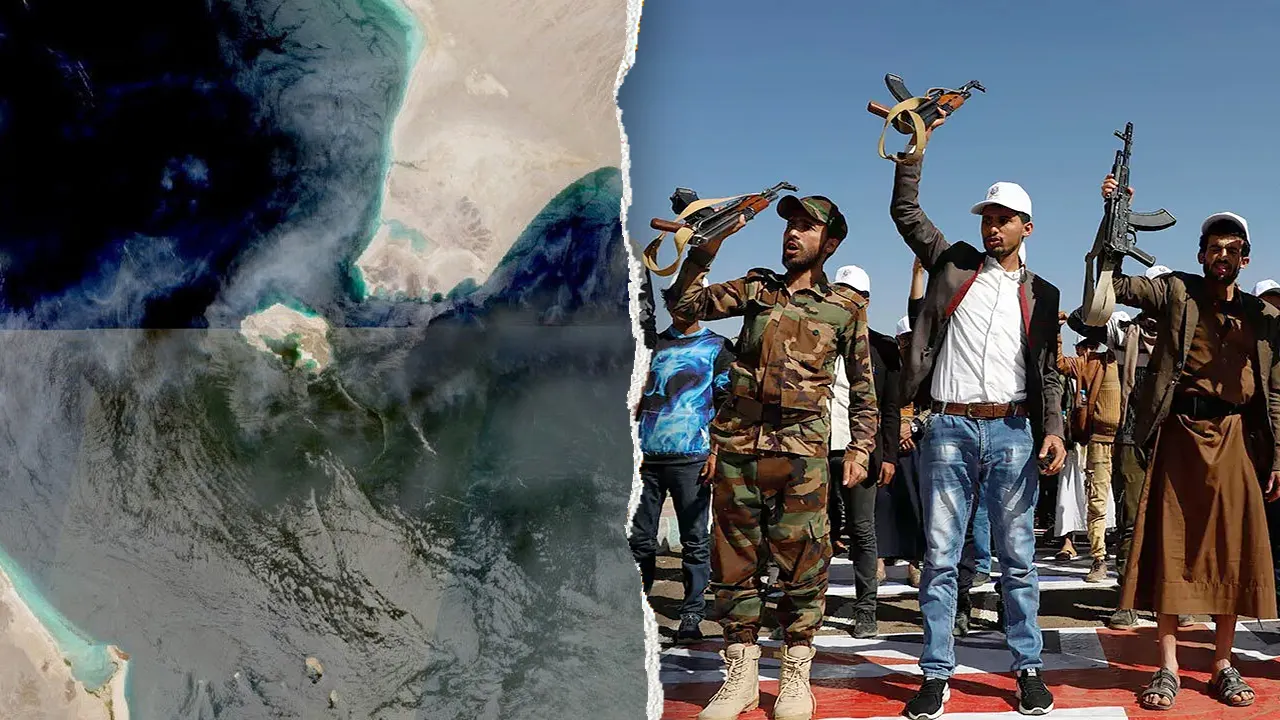
For over a decade, the Bab el-Mandeb Strait has been a vital artery of global commerce, a narrow channel connecting the Red Sea to the Gulf of Aden. Now, this critical waterway is at the center of a new and dangerous confrontation. The Iran-backed Houthi movement has escalated attacks on shipping, raising a stark question: could this strategic choke point become the next Strait of Hormuz? The situation is complex, shaped by both geography and the fractured reality of Yemen itself. Unlike the Strait of Hormuz, where Iran can directly threaten shipping from its own coastline, Tehran’s influence over Bab el-Mandeb is exercised at one remove, through its Houthi allies in Yemen. And the country that overlooks this vital waterway is not a unified state but a patchwork of warring factions. This fragmentation means the United States and its regional partners face a threat that naval power alone may not be able to solve, demanding a more intricate approach.
The human cost of this instability became starkly apparent when the Houthis attacked the Egyptian-owned cargo ship Tihamah in the Bab el-Mandeb Strait. According to Yemeni and Pakistani officials, four crew members—three Pakistanis and one Indonesian—were killed in the initial strike. The tragedy deepened when Houthi forces reportedly attacked again after rescue workers had arrived, killing two Yemeni Coast Guard rescuers. This marked a grim escalation, with Reuters reporting that these would be the first fatalities from a Houthi strike on shipping since the U.S.-Iran conflict intensified at the end of February. The incident underscores that the Houthis’ campaign is not just a disruption to global commerce but a direct threat to human life, elevating the stakes for international forces and regional governments.
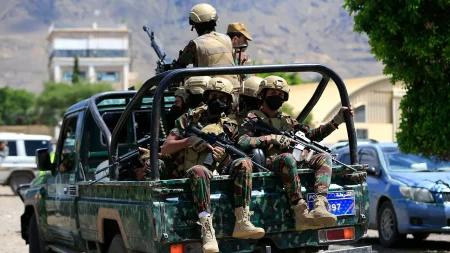
The strategic significance of the Bab el-Mandeb Strait is immense. Situated between Yemen and the Horn of Africa, it serves as the maritime gateway connecting the Gulf of Aden and the Arabian Sea to the Red Sea, and further north, to the Suez Canal and the Mediterranean. This waterway is a vital artery for global energy and commercial shipping. However, its southern flank is bordered by a nation fractured by over a decade of civil war, which fundamentally complicates the security equation. The Houthis control the capital, Sanaa, and large swathes of northern Yemen. The internationally recognized, Saudi-backed government holds other areas, while the Southern Transitional Council (STC), a separatist group backed by the United Arab Emirates, exerts significant influence in the south. This internal fragmentation is not a peripheral issue; it is now central to the security of one of the world’s most critical maritime corridors.
This political and military disunity means that a purely naval response may be insufficient. Amr Al Bidh, the STC’s foreign affairs chief, argued that while naval forces can protect individual vessels, they cannot eliminate the land-based threat. He emphasized that a naval presence does not remove Houthi launch sites, intercept the smuggling routes that resupply them, or hold territory. His conclusion is blunt: to truly secure Bab el-Mandeb, ground operations are necessary. This perspective gains weight as the situation on the ground deteriorates. U.N. Special Envoy Hans Grundberg recently warned the Security Council that Yemen faces its most serious threat of a return to full-scale war since the 2022 truce, with renewed Houthi attacks risking dragging the country into a wider regional conflict.
The Houthis have also intensified their economic warfare. On July 20, they declared a naval blockade of Saudi Arabia, threatening ships headed to the kingdom. This declaration has had a measurable impact; United Against Nuclear Iran (UANI), citing maritime data, reports a roughly 40% decline in tanker transits through the strait since that date. In an attempt to avoid attacks, some tankers have begun broadcasting messages like “CHINESE OWNER” and “ARMED GUARD ON BOARD,” hoping to pass more safely. These actions highlight the economic leverage the Houthis possess alerting global powers to the fragility of this vital shipping lane. The disruption comes at a time when Saudi Arabia is increasingly reliant on its Red Sea ports as a strategic alternative to the Strait of Hormuz, which has also seen instability. This makes the Red Sea not just an alternative route, but potentially a second vulnerability.
In response to this escalating crisis, regional and international powers are exploring new security frameworks. Saudi Arabia is spearheading an initiative for a multinational maritime-defense coalition specifically focused on protecting navigation in the Red Sea, the Bab el-Mandeb, and the Gulf of Aden. Announced on July 30, the coalition has already attracted support from Turkey, Pakistan, Egypt, and others. This effort runs parallel to a broader security pact—the Joint Defense Agreement signed on Aug. 7 between Saudi Arabia, Turkey, and Pakistan—which analysts say could lead to greater trilateral coordination near the Saudi-Yemeni border share and a firmer collective approach toward Iran-backed groups.
Yemeni voices, particularly those representing the STC, argue that these efforts must be coupled with a political vision that prioritizes rebuilding a functioning state. They contend that only a unified Yemeni government can ultimately defeat the militias and secure the country’s future. Meanwhile, analysts caution against drawing a direct parallel between Bab el-Mandeb and the Strait of Hormuzley. Iran does not have the same direct control here. The Houthis are not a conventional state navy; they are a proxy force with their own agenda. While they can disrupt traffic, they cannot completely close the strait. Furthermore, ships have an alternative route around the Cape of Good Hope, which, while longer and costlier, prevents Bab el-Mandeb from becoming a complete chokepoint. The core challenge is not a naval blockade but a sustained insurgency that threatens maritime trade, a problem that requires a multi-faceted response involving diplomacy, development, and ground security, not just warships.