







Every cat owner is intimately familiar with the hilariously frustrating experience of purchasing a luxurious, state-of-the-art pet bed, complete with memory foam padding and plush faux-fur lining, only to watch their feline companion ignore it entirely to sleep on a discarded piece of junk mail, a crinkly plastic grocery bag, or the bare hardwood floor directly adjacent to the bed. This classic scenario is a universal rite of passage for pet parents, prompting us to laugh, sigh, and wonder why our beloved companions choose such seemingly uncomfortable, bizarre places to rest. Felines are absolute champions of slumber, dedicatedly clocking in up to sixteen hours of shut-eye every single day, turning sleep into an art form that cycles through a dizzying, unpredictable array of locations throughout the house. While these erratic preferences may look completely random or even intentionally dynamic to human eyes, certified veterinary experts and animal behaviorists assure us that there is a fascinating, sophisticated method to this apparent madness. Michelle Bernstein, a prominent forensic animal behaviorist with the animal advocacy organization Switch4Good, notes that while every individual cat possesses a unique, highly distinct personality that shapes their eccentricities, their chosen sleeping spots are ultimately driven by powerful, deeply ingrained evolutionary instincts. When a cat selects a place to rest, they are not merely looking for a soft cushion; they are unconsciously scanning and evaluating their environment for physical security, thermal comfort, territorial dominance, and raw survival. By taking the time to understand the psychological motivations behind these quirky resting patterns, we can learn to read our cats’ silent, subtle body language, gain invaluable insights into their emotional well-being, and develop a much deeper, more empathetic bond with the miniature, wild predators living right under our roofs.
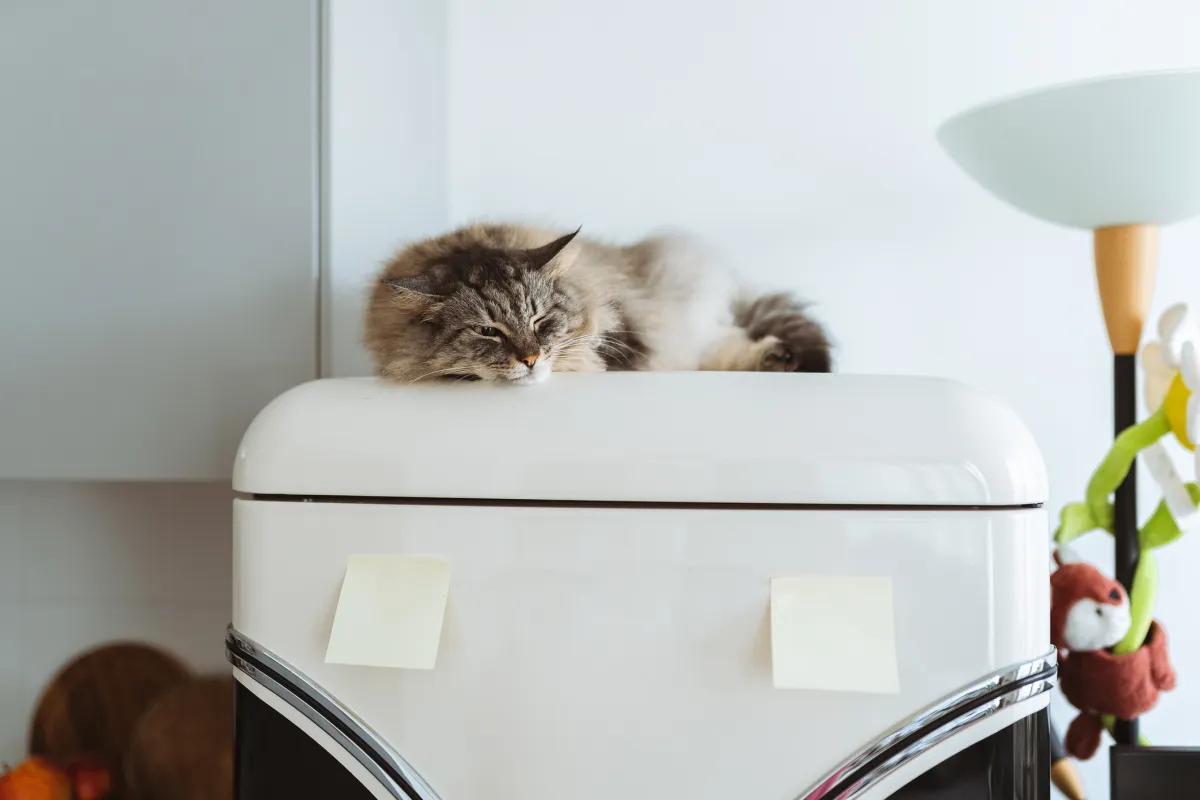
If your living space features a beautifully designed scratching post and a cozy floor-level basket, but your cat consistently bypasses them in favor of the terrifyingly high summit of a kitchen refrigerator, a towering bookshelf, or a narrow, drafty windowsill, you are witnessing the irresistible pull of ancient evolutionary history. To modern humans, sleeping on top of a dusty cabinet or a high ledge seems completely impractical, perilous, and altogether uncomfortable, but to a feline, that elevated peak represents the ultimate five-star sanctuary of safety and tactical control. Bernstein emphasizes that cats seek out these high-altitude retreats because height provides them with an exceptional, panoramic vantage point to survey their entire domestic kingdom. This instinctual preference aligns perfectly with professional guidance from PetMD, which reminds pet parents that cats exist in a very unique evolutionary niche: they are simultaneously highly efficient solitary predators and vulnerable prey animals in the wild. Because of this dual nature, their instincts constantly whisper to them that they are vulnerable to larger threats while they are unconscious. Sleeping high above the safety of the floor allows a domestic cat to comfortably monitor potential disruptions in the household—whether that looks like a rambunctious family dog, noisy children, a roaring vacuum cleaner, or just the sudden movements of their human owners—all without the fear of being snuck up on from behind or from below. Choosing a high-altitude resting place is rarely a sign of underlying anxiety or distress in your cat; rather, it is a healthy, self-preserving habit that allows them to fully lower their defenses, relax their muscles, and fall into a deep, restorative sleep with the comforting knowledge that they hold the absolute tactical high ground.
On the exact opposite end of the spatial spectrum from the towering heights of the refrigerator, we find the equally adorable and legendary feline obsession with cardboard boxes, laundry baskets, open suitcases, and tight spaces behind heavy furniture. This “if it fits, I sits” phenomenon has launched a million internet memes, but the underlying mechanisms behind why cats love squeezing their bodies into cramped, seemingly suffocating spaces are deeply scientific. According to industry experts, small and restricted enclosures provide felines with an immediate, powerful sense of physical containment, security, and psychological comforting. Bernstein explains that seeking out these snug hiding spots helps cats feel entirely shielded from potential threats, as it severely limits the physical directions from which an enemy could theoretically approach them while they are asleep. Additionally, there is a vital physiological element at play regarding temperature regulation: cats have a significantly higher average baseline body temperature than humans, hovering between 101 and 102.5 degrees Fahrenheit, which means they are constantly expending energy to keep themselves warm. A tightly fitted cardboard box, a plastic laundry basket, or a drawer stuffed with soft garments serves as a magnificent natural insulator, trapping their radiating body heat and shielding them from drafty household microclimates. Furthermore, the light, uniform physical pressure exerted by the walls of a small container has been shown to have a profound, deeply calming “swaddling” effect on a stressed feline. This explains why cats in high-pressure environments, such as rescue shelters, bustling multi-pet homes, or newly moved environments, will immediately seek out the tightest, darkest corners to self-soothe, find their emotional footing, and rest in absolute peace.
Feline sleeping logic becomes even more fascinatingly complex when they reject both the high bookshelves and the cozy cardboard boxes to melt into the smooth, curved basin of a bathroom sink, stretch out across the chilly floor tiles, or drape themselves directly across a high-traffic hallway doorway. While lounging inside a cold porcelain sink or on a hard tile floor seems like a recipe for chronic body aches to us, these smooth surfaces serve a highly practical, cooling purpose for our furry friends. During the warmer summer months, or in houses with central heating, carpeted surfaces and plush fabric beds trap heat, making it difficult for cats to cool down; resting on cool porcelain, ceramic tile, or cast iron allows them to efficiently dump excess body heat and comfortably regulate their temperatures. Conversely, when your cat decides to set up camp in a tight entryway, at the heavy base of the stairs, or directly in front of the master bedroom door where they are guaranteed to be stepped over, they are rarely trying to be annoying or intentionally construct a physical roadblock. Instead, these inconvenient locations are highly strategic checkpoints that allow cats to satisfy their innate curiosity and keep active tabs on the natural traffic flow of their family. Because felines are inherently territorial creatures who value stability, they will naturally rotate through several different sleeping locations around the house depending on the time of day, noise levels, and who is currently moving through the home. As Bernstein observes, this routine rotation allows them to assert their subtle dominance over their territory, stay closely connected to their human pack, and adjust their vulnerability based on how safe they feel at any given moment.
While embracing your cat’s quirky, unpredictable sleeping configurations is part of the sheer joy of living with them, it is also absolutely crucial for pet parents to recognize that sleep is one of the most reliable and sensitive barometers of a cat’s physical and mental health. Cats are creatures of extreme habit who thrive on highly structured daily schedules, which means that any sudden, dramatic shift in their sleeping location, overall duration, or social posturing should never be ignored. Michelle Bernstein warns that if an otherwise outgoing, social cat suddenly vanishes from their usual resting spots and begins isolating themselves in dark closets, deep under beds, or in places they have never shown interest in before, they may be trying to communicate that they are in pain or suffering from an underlying illness. Because cats are evolutionarily designed as potential targets in the wild, they possess an extraordinary instinctual ability to mask physical weakness and pain to avoid looking vulnerable. Consequently, a feline suffering from arthritis, dental disease, cognitive dysfunction, or internal discomfort will often instinctively withdraw from their human family and seek out extreme isolation. The American Veterinary Medical Association (AVMA) notes that increased hiding and sudden social withdrawal frequently mirror underlying medical issues, altered grooming habits, posture changes, or unmet environmental stressors that require immediate professional veterinary care. By becoming deeply familiar with your cat’s unique baseline sleeping behaviors and favorite lounging spots, you can easily spot these quiet, subtle red flags and act as their most compassionate advocate, ensuring they receive the veterinary attention they need before a secret health struggle escalates.
But not all changes or unusual choices in your cat’s daily sleeping routine are cause for clinical concern; in fact, some of the most endearing sleeping behaviors represent the ultimate, heartwarming triumphs of your domestic relationship. When your feline companion finally decides to bypass all the high kitchen ledges, cozy insulated cardboard boxes, and cool bathroom sinks to curl up directly on your lap, drape themselves across your chest while you sleep, or expose their soft underbelly while napping right next to you, they are offering you the highest possible compliment. Because sleep is the vulnerable state in which a cat is most exposed to danger, choosing to sleep directly on or near you is an unambiguous, beautiful declaration of complete safety, profound love, and absolute trust in your protection. It means they view you not just as a source of food and chin scratches, but as their ultimate guardian, their personal heating pad, and their safest refuge in the entire world. Rather than fighting our cats’ wild, instinctual sleeping quirks or feeling frustrated when they completely ignore the expensive beds we dutifully buy them, we should learn to appreciate and accommodate these behaviors as delightful expressions of their ancient, wild souls. By laughing at their box obsessions, providing safe vertical climbing perches, monitoring their health through their routines, and opening our laps for sleepy cuddles, we can build a truly harmonious, cat-friendly home where our cherished felines can spend all sixteen of their sleeping hours in absolute, blissful peace.